
 Image 1 of 2
 Image 2 of 2
Artist Unknown
浮绘:新板字画 三芝居歌舞伎狂言之图
Uki-e: Perspective View of Kabuki Theatre
Early 19th Century
木版画 | 横绘大判 | 24.5cm x 36cm
Woodblock-print | Oban Yoko-e | 24.5cm x 36cm
早期版次;颜色保存完好;非常轻微的托底;边缘处略有色变
Fine impression and strong color; thin backing; slight discoloration to edges.
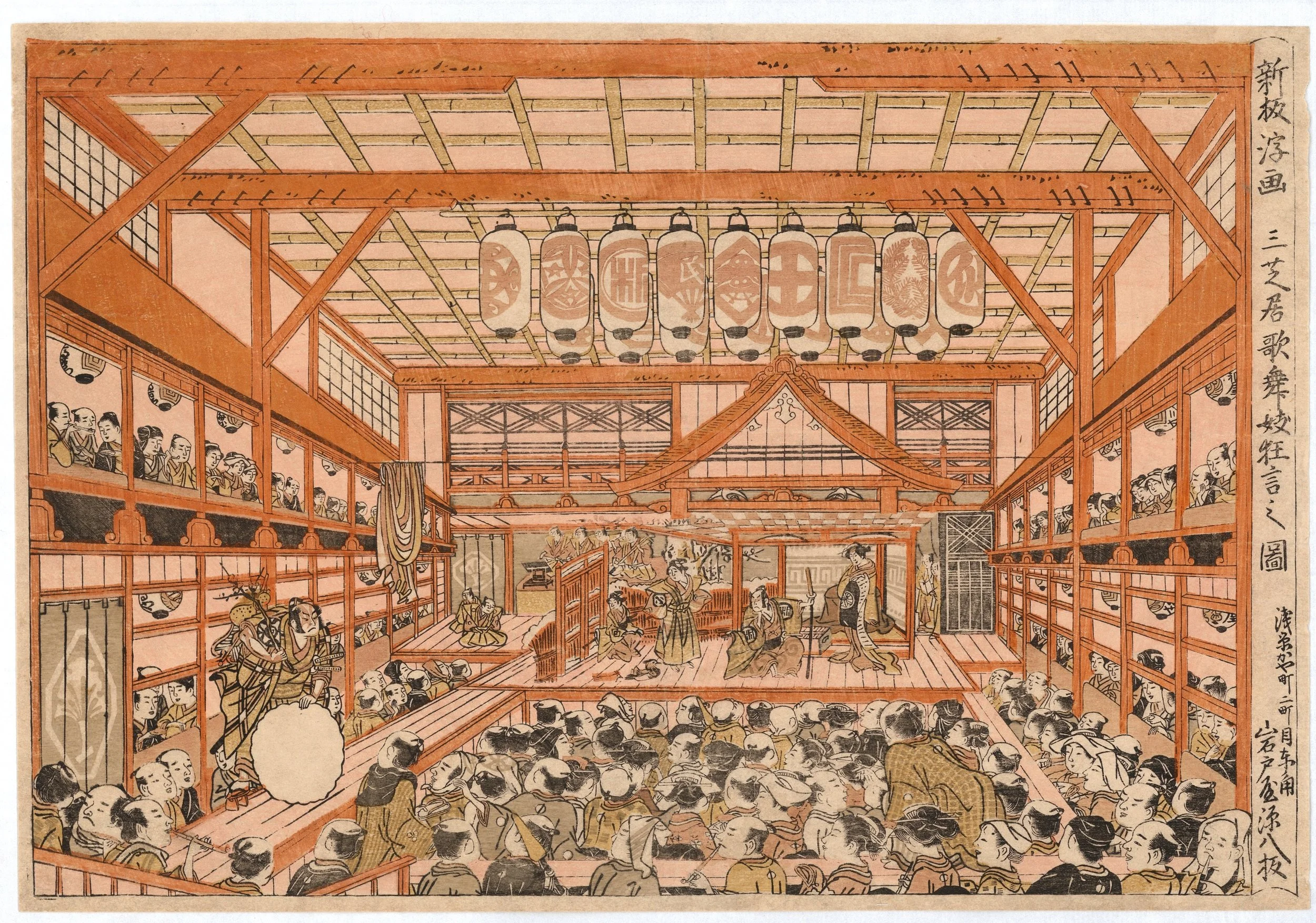
浮绘是早期到中期浮世绘中极具特色的类别。如该图所见,画家利用建筑物的结构引导视线,完成了东方绘画中少见的“立体透视”效果。它既是装饰品也是游戏道具,搭配专用的凸透镜箱欣赏时,人物和室内空间立体感更加强烈,好像“浮出平面纸张之外”一样,因此得名“浮绘”。
这一透视技法脱胎于当时传入日本的少数欧洲风景版画,也是日后浮世绘风景画的原点。早期浮绘技法并不完美,常常出现透视关系错误,导致画面空间扭曲,这张画的技法却显得十分娴熟,没有同期浮绘常见的别扭怪异感。在画面上方,天花板和二层观众席的栏杆向画面远处斜向延伸,在画面下发,舞台走廊和另一层观众席的隔板形成了另一组对称线条,2组线的延长交汇点处既为画面正中心,设置在此处的舞台和演员自然成为了视觉焦点。
碍于时代技术发展限制,这幅红摺绘作品只用到了红黄绿三色,在色彩上略显单调。但画面整体色彩和谐,线条复杂清晰,透视技法娴熟,人物虽多却不显杂乱,观众们各自有着极其生动自然的表情和动作。如画面左侧下方,一名男子为了看的更清楚,从人群中站了起来,他左边的男子没有面向舞台上的演员,而是扭头看向身边的突发情况,非常有生活感。确属浮绘中的典型佳作之一。
Uki-e is a fascinating sub-genre of early to mid-period Ukiyoe woodblock prints that emphasized Western-style single-point perspective. This wonderful example by an anonymous artist shows not only a very adept use of perspective but also a highly energized night at a packed Kabuki theater. Even though it’s busy image, the diminishing sizes of all the tiny heads of the audience members, the shorter-and-shorter roofbeams, and the diagonal lines all pointing to the center, work together to direct our attention to the performers on the stage.
Uki-e – which means “floating print” – derived from Western prints that were smuggled into then-closed Japan. Artists clearly had to work out the technique themselves, and some efforts were more successful than others. (This much later Eisen, for example, while not technically an uki-e, shows perspective gone haywire.)
The first artist in Japan to develop Uki-e showing interiors was believed to be Okumura Masanobu (1686–1764). Utagawa Toyoharu, founder of the Utagawa school, was the first to apply the device to landscapes.
We know this print is early, partly due to its limited palette of red, yellow and green, which is slightly monotonous but also harmonious. The lines are complex yet clear: although there are dozens of characters it is somehow not cluttered, and it is filled with numerous vignettes if you look closely. For example, in the lower left corner of the picture, a man stands up in order to see the action on stage more clearly, and the man on his left turned to look around him.
Artist Unknown
浮绘:新板字画 三芝居歌舞伎狂言之图
Uki-e: Perspective View of Kabuki Theatre
Early 19th Century
木版画 | 横绘大判 | 24.5cm x 36cm
Woodblock-print | Oban Yoko-e | 24.5cm x 36cm
早期版次;颜色保存完好;非常轻微的托底;边缘处略有色变
Fine impression and strong color; thin backing; slight discoloration to edges.
浮绘是早期到中期浮世绘中极具特色的类别。如该图所见,画家利用建筑物的结构引导视线,完成了东方绘画中少见的“立体透视”效果。它既是装饰品也是游戏道具,搭配专用的凸透镜箱欣赏时,人物和室内空间立体感更加强烈,好像“浮出平面纸张之外”一样,因此得名“浮绘”。
这一透视技法脱胎于当时传入日本的少数欧洲风景版画,也是日后浮世绘风景画的原点。早期浮绘技法并不完美,常常出现透视关系错误,导致画面空间扭曲,这张画的技法却显得十分娴熟,没有同期浮绘常见的别扭怪异感。在画面上方,天花板和二层观众席的栏杆向画面远处斜向延伸,在画面下发,舞台走廊和另一层观众席的隔板形成了另一组对称线条,2组线的延长交汇点处既为画面正中心,设置在此处的舞台和演员自然成为了视觉焦点。
碍于时代技术发展限制,这幅红摺绘作品只用到了红黄绿三色,在色彩上略显单调。但画面整体色彩和谐,线条复杂清晰,透视技法娴熟,人物虽多却不显杂乱,观众们各自有着极其生动自然的表情和动作。如画面左侧下方,一名男子为了看的更清楚,从人群中站了起来,他左边的男子没有面向舞台上的演员,而是扭头看向身边的突发情况,非常有生活感。确属浮绘中的典型佳作之一。
Uki-e is a fascinating sub-genre of early to mid-period Ukiyoe woodblock prints that emphasized Western-style single-point perspective. This wonderful example by an anonymous artist shows not only a very adept use of perspective but also a highly energized night at a packed Kabuki theater. Even though it’s busy image, the diminishing sizes of all the tiny heads of the audience members, the shorter-and-shorter roofbeams, and the diagonal lines all pointing to the center, work together to direct our attention to the performers on the stage.
Uki-e – which means “floating print” – derived from Western prints that were smuggled into then-closed Japan. Artists clearly had to work out the technique themselves, and some efforts were more successful than others. (This much later Eisen, for example, while not technically an uki-e, shows perspective gone haywire.)
The first artist in Japan to develop Uki-e showing interiors was believed to be Okumura Masanobu (1686–1764). Utagawa Toyoharu, founder of the Utagawa school, was the first to apply the device to landscapes.
We know this print is early, partly due to its limited palette of red, yellow and green, which is slightly monotonous but also harmonious. The lines are complex yet clear: although there are dozens of characters it is somehow not cluttered, and it is filled with numerous vignettes if you look closely. For example, in the lower left corner of the picture, a man stands up in order to see the action on stage more clearly, and the man on his left turned to look around him.