
 Image 1 of 2
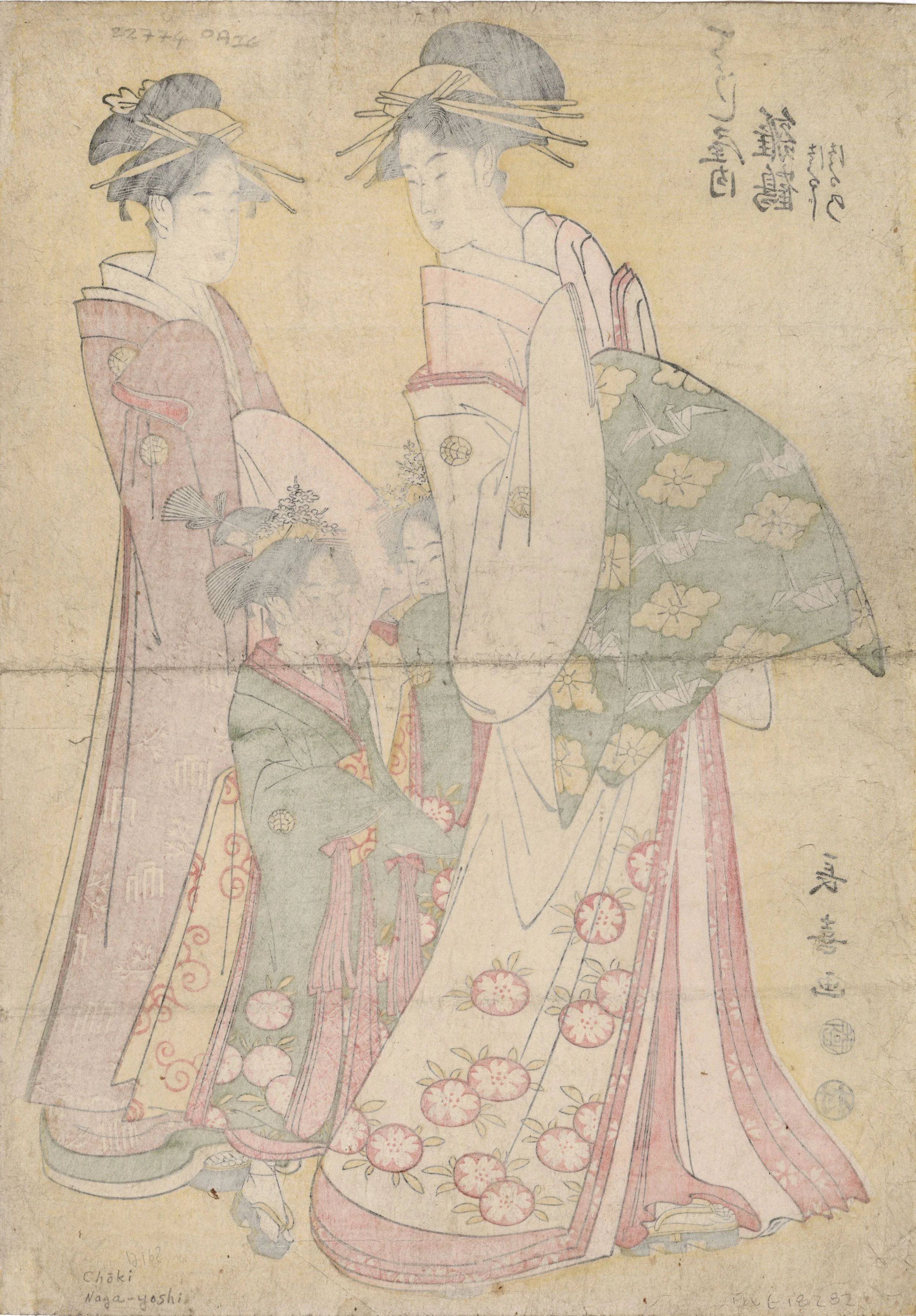 Image 2 of 2
栄松斎長喜 Eishosai Choki (active about 1786-1808)
丁子屋内 雏鹤
Hinazuru of the Chojiya House
1795
木版画|纵绘间判|32.5cm x 22.8cm
Woodblock-print| Aiban tate-e|32.5cm x 22.8cm
早期版次;颜色鲜艳;整体品相非常好;中间折痕仅背面可见,正面无损
Fine impression and color; Center fold visible on verso only, otherwise in good condition.
$6,588
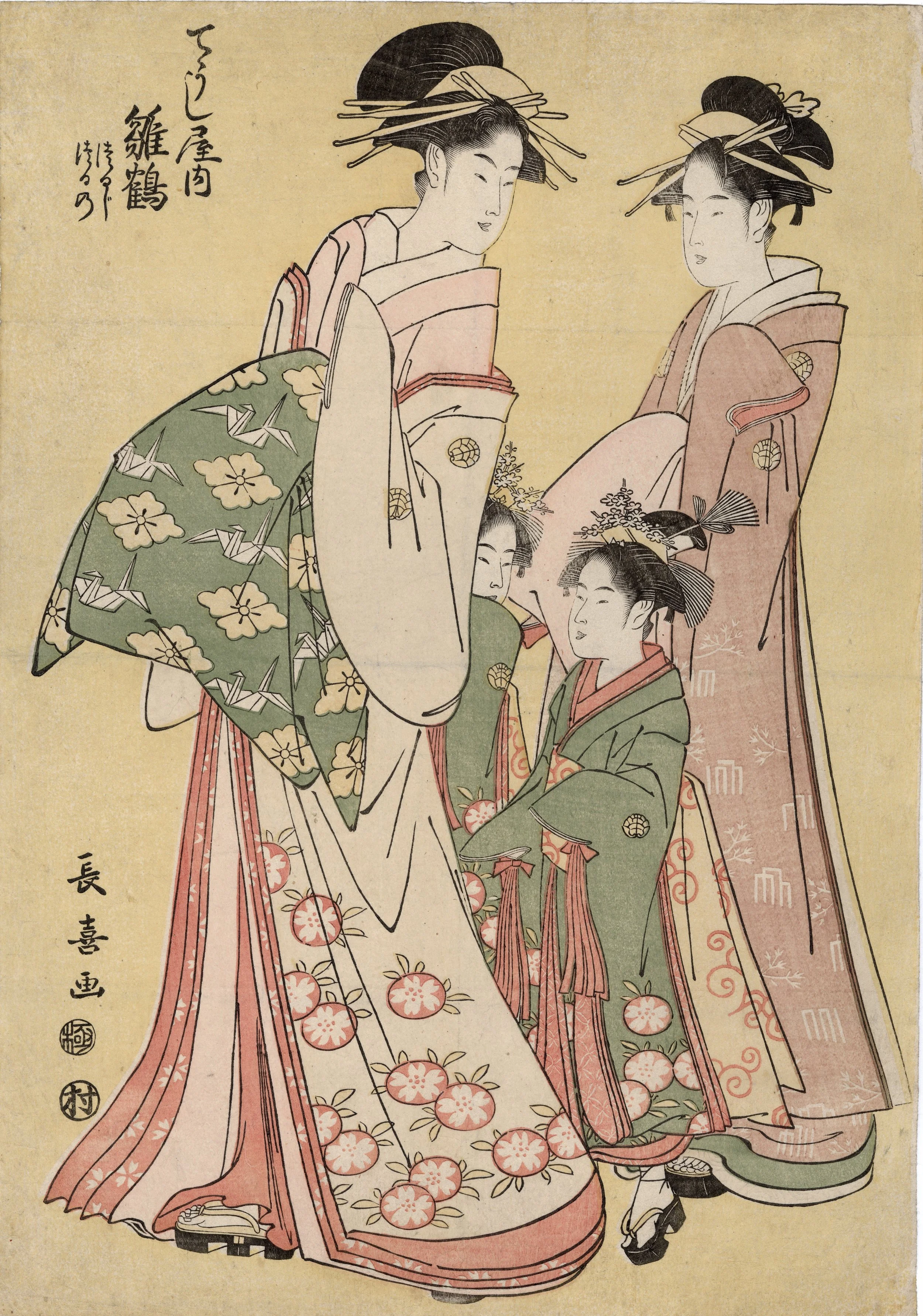
This elegant print depicts the famous prostitute Hinazuru of the Chojiya House, and in its many wonderful details demonstrates the prosperity of the storied Yoshiwara pleasure district. “Hinazuru” literally means “baby crane” and was a name adopted by several courtesans in this storied brothel over the years.
She is in front, to the left, dressed in light colors and with the slender figure and long face for which Chōki, a contemporary of Utamaro, was famous.Two attendants trail her, as does a lesser light of the floating world. The patterns of their kimonos interact with each other wonderfully. Hinazuru’s wide green obi (belt) is covered with cranes, further identifying her, while the small circular designs are the family crest of Chojiya House – in other words, not-so-subtle product placement.
Their garments are luxurious in the extreme.
The quartet seems to glide across the print, as if floating on air.
Chōki, along with Utamaro, was a student of Toriyama Sekien, who some scholars believe may have adopted him. He apparently lived in the home of his publisher, the famous Tsutaya Jūzaburō, Little is known about his life, but his prints of beautiful women (bijin), achieved a rare elegance.
在18世纪末的美人画中,荣松斋长喜以独特的“面长”造型和清秀画风独树一帜。这幅描绘丁子屋名妓雏鹤的作品,通过严谨的构图与华丽的纹样,展现了江户时代吉原名胜的繁荣景象。
画中共绘四人。最前方身着浅色打挂、体态修长者为丁子屋名妓雏鹤,是画面的核心人物。其身后分布三人:中间两位为秃;最右侧为新造,位于雏鹤身后偏侧。四人高低错落,前后穿插,使画面在紧凑之中仍具层次。
人物衣饰华美,纹样安排尤见心思。雏鹤腰间宽大的绿色“带”上布满了折鹤图案,与其名“雏鹤”相呼应,既寓长久与吉祥,也标明了其顶级名妓的身份;其衣摆则布满团花纹样,取花开繁盛之意。右侧新造则以细碎花纹处理,收敛而不张扬,在整体繁密之中起到平衡作用。衣纹间反复出现的圆形小纹,为丁子屋的家纹“丸に丁子”,既是一种身份的象征,也是一种直观的商业广告宣传。
荣松斋长喜师从鸟山石燕,与喜多川歌麿同门。他在鸟居清长之后、歌麿成熟之前的过渡时期,形成了自己淡雅内敛的个人风格。这幅画作不仅是对雏鹤形象的理想化描绘,更是研究江户后期美人画构图与服饰文化的重要参考。
栄松斎長喜 Eishosai Choki (active about 1786-1808)
丁子屋内 雏鹤
Hinazuru of the Chojiya House
1795
木版画|纵绘间判|32.5cm x 22.8cm
Woodblock-print| Aiban tate-e|32.5cm x 22.8cm
早期版次;颜色鲜艳;整体品相非常好;中间折痕仅背面可见,正面无损
Fine impression and color; Center fold visible on verso only, otherwise in good condition.
$6,588
This elegant print depicts the famous prostitute Hinazuru of the Chojiya House, and in its many wonderful details demonstrates the prosperity of the storied Yoshiwara pleasure district. “Hinazuru” literally means “baby crane” and was a name adopted by several courtesans in this storied brothel over the years.
She is in front, to the left, dressed in light colors and with the slender figure and long face for which Chōki, a contemporary of Utamaro, was famous.Two attendants trail her, as does a lesser light of the floating world. The patterns of their kimonos interact with each other wonderfully. Hinazuru’s wide green obi (belt) is covered with cranes, further identifying her, while the small circular designs are the family crest of Chojiya House – in other words, not-so-subtle product placement.
Their garments are luxurious in the extreme.
The quartet seems to glide across the print, as if floating on air.
Chōki, along with Utamaro, was a student of Toriyama Sekien, who some scholars believe may have adopted him. He apparently lived in the home of his publisher, the famous Tsutaya Jūzaburō, Little is known about his life, but his prints of beautiful women (bijin), achieved a rare elegance.
在18世纪末的美人画中,荣松斋长喜以独特的“面长”造型和清秀画风独树一帜。这幅描绘丁子屋名妓雏鹤的作品,通过严谨的构图与华丽的纹样,展现了江户时代吉原名胜的繁荣景象。
画中共绘四人。最前方身着浅色打挂、体态修长者为丁子屋名妓雏鹤,是画面的核心人物。其身后分布三人:中间两位为秃;最右侧为新造,位于雏鹤身后偏侧。四人高低错落,前后穿插,使画面在紧凑之中仍具层次。
人物衣饰华美,纹样安排尤见心思。雏鹤腰间宽大的绿色“带”上布满了折鹤图案,与其名“雏鹤”相呼应,既寓长久与吉祥,也标明了其顶级名妓的身份;其衣摆则布满团花纹样,取花开繁盛之意。右侧新造则以细碎花纹处理,收敛而不张扬,在整体繁密之中起到平衡作用。衣纹间反复出现的圆形小纹,为丁子屋的家纹“丸に丁子”,既是一种身份的象征,也是一种直观的商业广告宣传。
荣松斋长喜师从鸟山石燕,与喜多川歌麿同门。他在鸟居清长之后、歌麿成熟之前的过渡时期,形成了自己淡雅内敛的个人风格。这幅画作不仅是对雏鹤形象的理想化描绘,更是研究江户后期美人画构图与服饰文化的重要参考。