Eisen | Uki-e: Perspective Views of the New Yoshiwara: Cherry Blossoms in Full Bloom

$0.00

溪齋英泉 Keisai Eisen (1790–1848)

新版浮绘新吉原樱盛之图
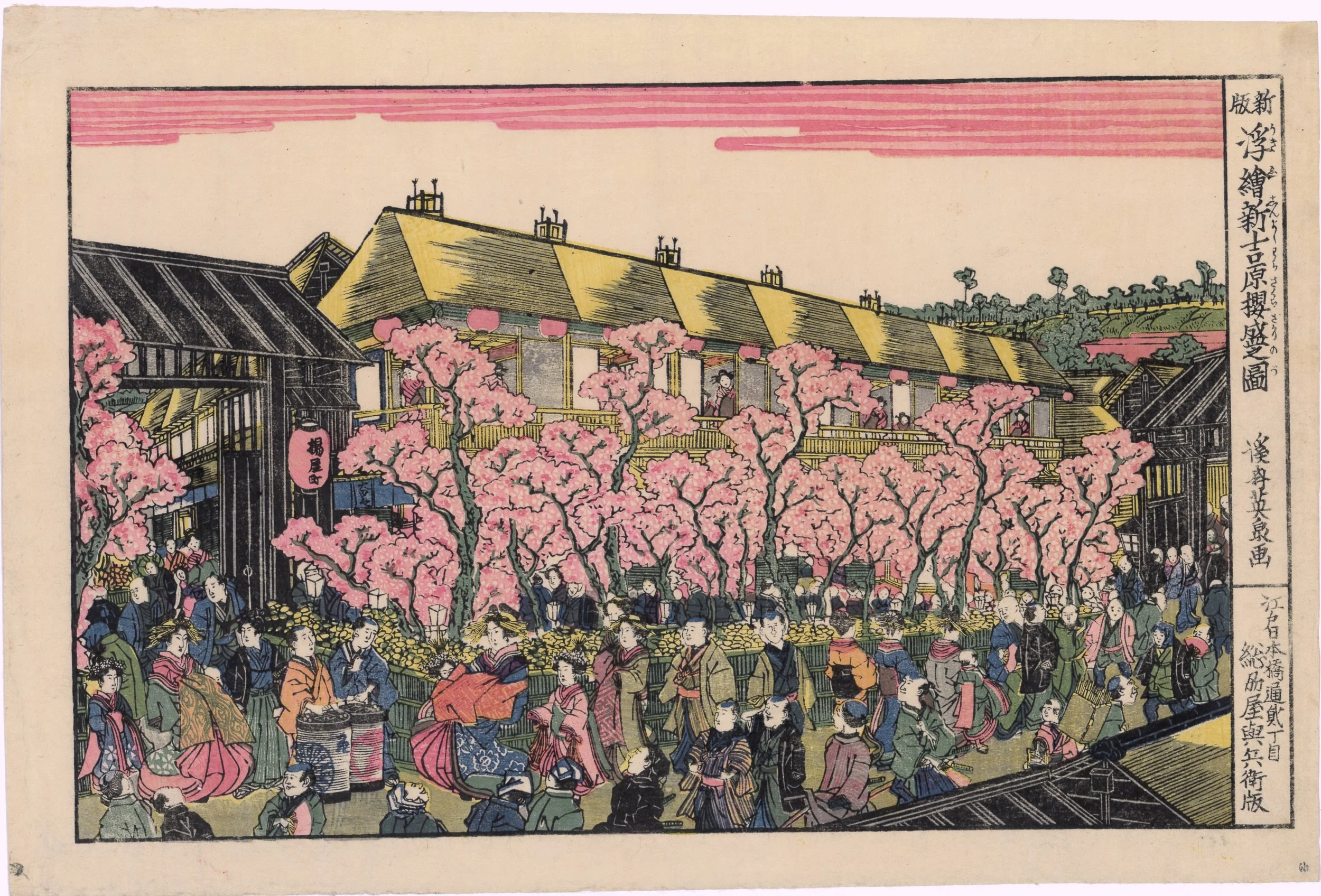
Uki-e: Perspective Views of the New Yoshiwara: Cherry Blossoms in Full Bloom

Early 19Ch

木版画 | 横绘大判 | 26 × 38.5cm
Woodblock-print | Oban yoko -e | 26 × 38.5cm

早期版本和版次;颜色鲜艳;整体品相非常好;极其轻微的中间折痕
Fine edition, impression and color; very slight centrefold, almost invisible, otherwise very good condition.

$5,000

新吉原的春日,总是最为繁密的。

樱花盛开,人流汇集,街道、树木与游廓层层叠加,使画面所需承载的空间远超一眼所见。英泉在此采用了“浮绘”的方式来处理这一复杂场景——通过带有透视意识的空间组织,将多重景物有序地纳入同一画面之中。

前景人物被拉近,成为观看的起点;中段以成排樱树作为过渡,既遮挡视线,又引导目光向内;远处则是整齐展开的楼阁。这样的层次安排,使画面在二维之中呈现出清晰的空间递进,这正是浮绘最具特点之处:不是简单铺陈,而是在画面中建立“可以进入”的结构。

日本桥等向远方展开的浮绘不同,此图的空间是向内收的。新吉原本身即是一个被围合的场所,秩序明确,人流集中。英泉通过建筑与人物的分布,使这种空间属性在画面中得以保留,画面虽满,却始终不散。

在这样的结构之中,细部尤见趣味。大片粉色樱花占据画面中段,形成鲜明而直接的季节感;人物则被处理为小而密的形象,分布其间,虽尺寸有限,却各具姿态,生动而不重复。这种处理,使画面在整体秩序之外,保留了一种近距离观看时的细腻趣味。

因此,此图所呈现的,并不仅是赏樱的场景,而是一个被完整组织起来的都市空间。“浮绘”的方法,使繁密得以展开,也使观看本身成为一种进入。

浮世万象,皆在一处。

Interested in purchasing?
Please contact us.

溪齋英泉 Keisai Eisen (1790–1848)

新版浮绘新吉原樱盛之图
Uki-e: Perspective Views of the New Yoshiwara: Cherry Blossoms in Full Bloom

Early 19Ch

木版画 | 横绘大判 | 26 × 38.5cm
Woodblock-print | Oban yoko -e | 26 × 38.5cm

早期版本和版次;颜色鲜艳;整体品相非常好;极其轻微的中间折痕
Fine edition, impression and color; very slight centrefold, almost invisible, otherwise very good condition.

$5,000

新吉原的春日,总是最为繁密的。

樱花盛开,人流汇集,街道、树木与游廓层层叠加,使画面所需承载的空间远超一眼所见。英泉在此采用了“浮绘”的方式来处理这一复杂场景——通过带有透视意识的空间组织,将多重景物有序地纳入同一画面之中。

前景人物被拉近,成为观看的起点;中段以成排樱树作为过渡,既遮挡视线,又引导目光向内;远处则是整齐展开的楼阁。这样的层次安排,使画面在二维之中呈现出清晰的空间递进,这正是浮绘最具特点之处:不是简单铺陈,而是在画面中建立“可以进入”的结构。

日本桥等向远方展开的浮绘不同,此图的空间是向内收的。新吉原本身即是一个被围合的场所,秩序明确,人流集中。英泉通过建筑与人物的分布,使这种空间属性在画面中得以保留,画面虽满,却始终不散。

在这样的结构之中,细部尤见趣味。大片粉色樱花占据画面中段,形成鲜明而直接的季节感;人物则被处理为小而密的形象,分布其间,虽尺寸有限,却各具姿态,生动而不重复。这种处理,使画面在整体秩序之外,保留了一种近距离观看时的细腻趣味。

因此,此图所呈现的,并不仅是赏樱的场景,而是一个被完整组织起来的都市空间。“浮绘”的方法,使繁密得以展开,也使观看本身成为一种进入。

浮世万象,皆在一处。

Interested in purchasing?
Please contact us.

Keisai Eisen (1790–1848)

Playright. Student painter. Face powder salesman. Bon Vivant. Brothel owner.

Born in 1790, Keisai Eisen lived 58 years, but in those decades inhabited many lives. Naturally, he is remembered most as an artist of the Floating World, with a specialty of portraying beautiful women, but with an undeniable talent at landscapes. He was born in Edo, the son of a noted calligrapher. After the death of his father he studied under Kikugawa Eizan. His initial works reflected the influence of his mentor, but he soon developed his own style after making a living in several other realms.

He also developed a talent for privately-printed, small-scale surimono prints. His most famous landscape series was the The Sixty-nine Stations of the Kisokaido, a project that he began but which was completed by Hiroshige, his junior, after his own work habits became erratic. His bijin-ga appeared more worldly and sensuous than those drawn by his predecessors, who had perhaps imbued them with too much stuffy elegance. Not Eisen’s. He died in 1848.