小林清亲 Kobayashi Kiyochika (1847–1915)
武蔵百景之内 两国花火
Fireworks at Ryogoku, from the series of One Hundred Views of Musashi
1884
木版画 | 纵绘大判 | 37.5cm x 25cm
Woodblock-print | Oban-tate-e | 37.5cm x 25cm
早期版次带极为漂亮的木纹;颜色鲜艳;品相非常好
Very early impression with clear woodgrain, crisp printing and fine, rich color.
Koboyashi Kiyochika ranged far and wide over woodblock print genres during his career – from Western-style cityscapes to war prints to comic satire – but “100 Views of Musashi,” published in 1884 by Maraya Tetsujiro, is generally considered his masterpiece. It was an homage to Hiroshige’s legendary “100 Famous Views of Edo,” which was then 30 years in the past, and part of a trend in fast-modernizing Japan to recall the perhaps simpler ways of Edo times; the future, after all, can be scary.
And what could be more classic than this, a rear-view of a woman on a yakatabune pleasure boat – the nape of her neck exposed in all its sexy beauty – as she enjoys the summer-night fireworks at Ryogoku Bridge? The bridge, the fireworks, the little wooden boats that plied the waterways of Edo, were all classic Hiroshige elements. Many other Ukioye artists also captured the scene. But Kiyochika puts his own spin on it. Most obviously: we just a tiny segment of the bridge and not the fireworks themselves – just their reflection in the calm waters of the Sumida River.
“100 Views of Musashi” was in the oban tate-e format, as was Hiroshige’s famous series, with cartouches and title boxes placed as Hiroshige’s were (although these feature synthetic pigments). In this design, they’ve been flipped to the left side. Almost all of the designs in this series feature dramatic and creative foreground elements competing with storied views in the background, as Hiroshige’s did.
And as we see here, spectacularly. This example has extraordinary color, with the reflected fireworks glittering and shimmering in the water. You can almost hear the joyous sake-fueled laughter on the other boats, and the booms! of the fireworks echoing over the river.
《武藏百景之内》是小林清亲于1884年发表的重要风景画系列,通常被视为他创作生涯中最具代表性的作品之一。该系列明显承继了歌川广重《名所江户百景》系列。三十年过去,日本已迅速迈入近代社会,在剧烈变化的时代氛围中,再次描绘江户的名所风景,本身便带着一种回望与留存的意味。
本作描绘的是隅田川两国桥一带的夏夜。屋形船静静停泊在河面上,一位女子背对观者,立于船舷。她的身影并不张扬,却自然地成为画面的中心:和服的纹样顺着身体垂落,后颈在夜色中显得柔和而明亮,仿佛正与河面上的光影一同呼吸。
人物身后的空间并未被明确交代。夜色、河面与远景被处理得含混而深远,仿佛刻意不让我们看清。正是在这种不确定之中,人物的存在显得更为突出,也为画面留下了充足的想象余地——她在看什么、在想什么,都未被说明,只能由我们自行补全。
桥梁与烟火,是浮世绘中反复出现的经典主题,也是广重笔下极为熟悉的场景。但在这幅作品中,清亲并未直接描绘烟火在夜空中绽放的瞬间,也几乎不让桥的形象进入画面。取而代之的,是烟火在隅田川水面上的倒影:点点光芒随水流轻轻晃动,在深色的河面上缓缓铺开。热闹被收起,只留下余光与回声,使整个场景显得安静而悠长。
《武藏百景之内》采用大判竖幅构图,并沿用了广重惯用的标题框布局。这一系列常以鲜明的前景与退后的名所景观形成对照,而在本作中,这种构图方式显得尤为柔和:人物的背影引导着视线,名所则隐于夜色之中,成为一种被记住、而非被强调的存在。
水面中闪烁的倒影,使画面在静谧中暗含流动感。烟火虽未出现,却仿佛仍在夜空中回荡。清亲并不试图再现一场盛大的景象,而是将那一刻之后的余韵轻轻留下——一段属于江户夏夜的、温柔而短暂的记忆。
Interested in purchasing?
Please contact us.
小林清亲 Kobayashi Kiyochika (1847–1915)
武蔵百景之内 两国花火
Fireworks at Ryogoku, from the series of One Hundred Views of Musashi
1884
木版画 | 纵绘大判 | 37.5cm x 25cm
Woodblock-print | Oban-tate-e | 37.5cm x 25cm
早期版次带极为漂亮的木纹;颜色鲜艳;品相非常好
Very early impression with clear woodgrain, crisp printing and fine, rich color.
Koboyashi Kiyochika ranged far and wide over woodblock print genres during his career – from Western-style cityscapes to war prints to comic satire – but “100 Views of Musashi,” published in 1884 by Maraya Tetsujiro, is generally considered his masterpiece. It was an homage to Hiroshige’s legendary “100 Famous Views of Edo,” which was then 30 years in the past, and part of a trend in fast-modernizing Japan to recall the perhaps simpler ways of Edo times; the future, after all, can be scary.
And what could be more classic than this, a rear-view of a woman on a yakatabune pleasure boat – the nape of her neck exposed in all its sexy beauty – as she enjoys the summer-night fireworks at Ryogoku Bridge? The bridge, the fireworks, the little wooden boats that plied the waterways of Edo, were all classic Hiroshige elements. Many other Ukioye artists also captured the scene. But Kiyochika puts his own spin on it. Most obviously: we just a tiny segment of the bridge and not the fireworks themselves – just their reflection in the calm waters of the Sumida River.
“100 Views of Musashi” was in the oban tate-e format, as was Hiroshige’s famous series, with cartouches and title boxes placed as Hiroshige’s were (although these feature synthetic pigments). In this design, they’ve been flipped to the left side. Almost all of the designs in this series feature dramatic and creative foreground elements competing with storied views in the background, as Hiroshige’s did.
And as we see here, spectacularly. This example has extraordinary color, with the reflected fireworks glittering and shimmering in the water. You can almost hear the joyous sake-fueled laughter on the other boats, and the booms! of the fireworks echoing over the river.
《武藏百景之内》是小林清亲于1884年发表的重要风景画系列,通常被视为他创作生涯中最具代表性的作品之一。该系列明显承继了歌川广重《名所江户百景》系列。三十年过去,日本已迅速迈入近代社会,在剧烈变化的时代氛围中,再次描绘江户的名所风景,本身便带着一种回望与留存的意味。
本作描绘的是隅田川两国桥一带的夏夜。屋形船静静停泊在河面上,一位女子背对观者,立于船舷。她的身影并不张扬,却自然地成为画面的中心:和服的纹样顺着身体垂落,后颈在夜色中显得柔和而明亮,仿佛正与河面上的光影一同呼吸。
人物身后的空间并未被明确交代。夜色、河面与远景被处理得含混而深远,仿佛刻意不让我们看清。正是在这种不确定之中,人物的存在显得更为突出,也为画面留下了充足的想象余地——她在看什么、在想什么,都未被说明,只能由我们自行补全。
桥梁与烟火,是浮世绘中反复出现的经典主题,也是广重笔下极为熟悉的场景。但在这幅作品中,清亲并未直接描绘烟火在夜空中绽放的瞬间,也几乎不让桥的形象进入画面。取而代之的,是烟火在隅田川水面上的倒影:点点光芒随水流轻轻晃动,在深色的河面上缓缓铺开。热闹被收起,只留下余光与回声,使整个场景显得安静而悠长。
《武藏百景之内》采用大判竖幅构图,并沿用了广重惯用的标题框布局。这一系列常以鲜明的前景与退后的名所景观形成对照,而在本作中,这种构图方式显得尤为柔和:人物的背影引导着视线,名所则隐于夜色之中,成为一种被记住、而非被强调的存在。
水面中闪烁的倒影,使画面在静谧中暗含流动感。烟火虽未出现,却仿佛仍在夜空中回荡。清亲并不试图再现一场盛大的景象,而是将那一刻之后的余韵轻轻留下——一段属于江户夏夜的、温柔而短暂的记忆。
Interested in purchasing?
Please contact us.

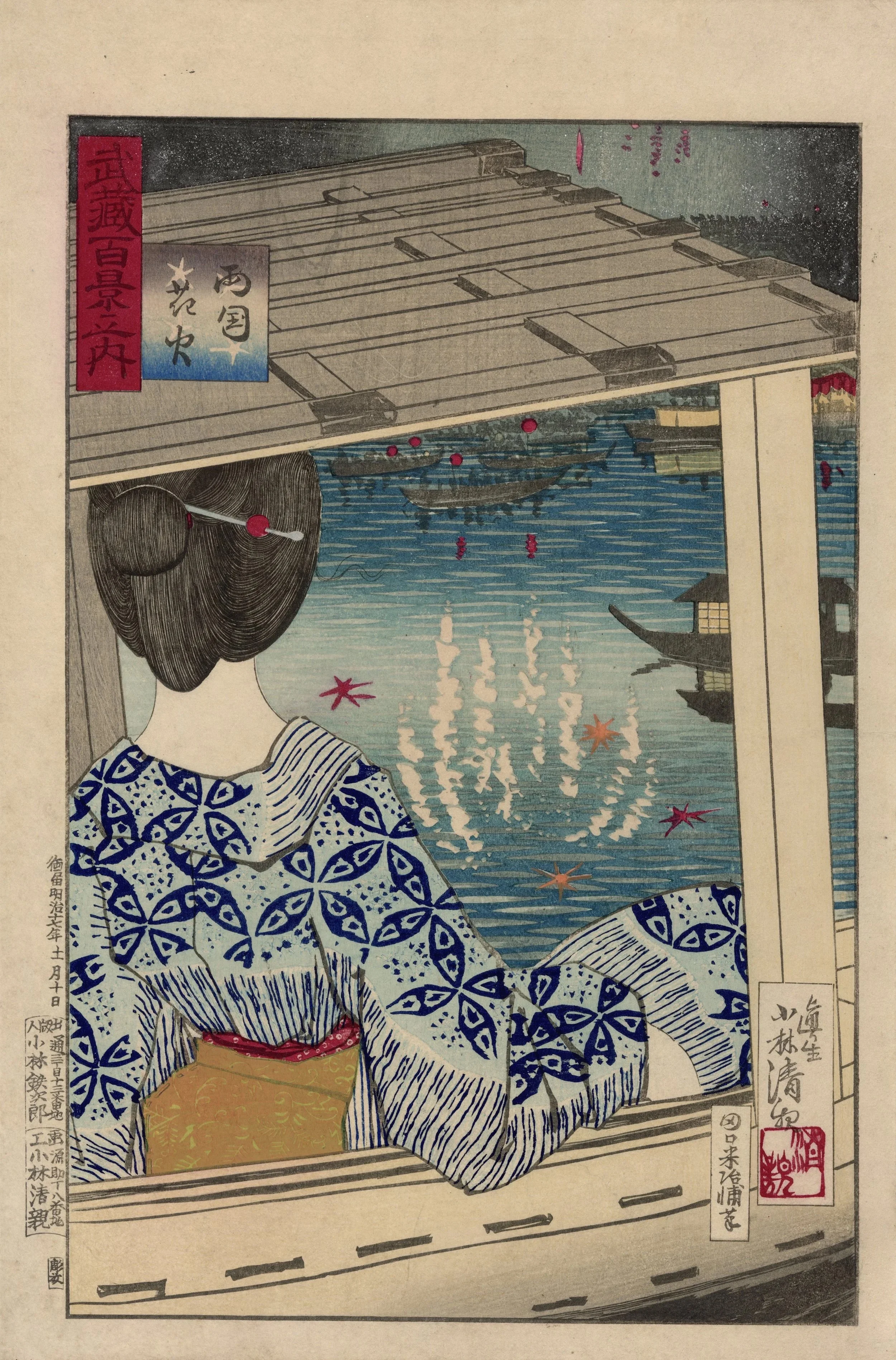 Image 1 of 2
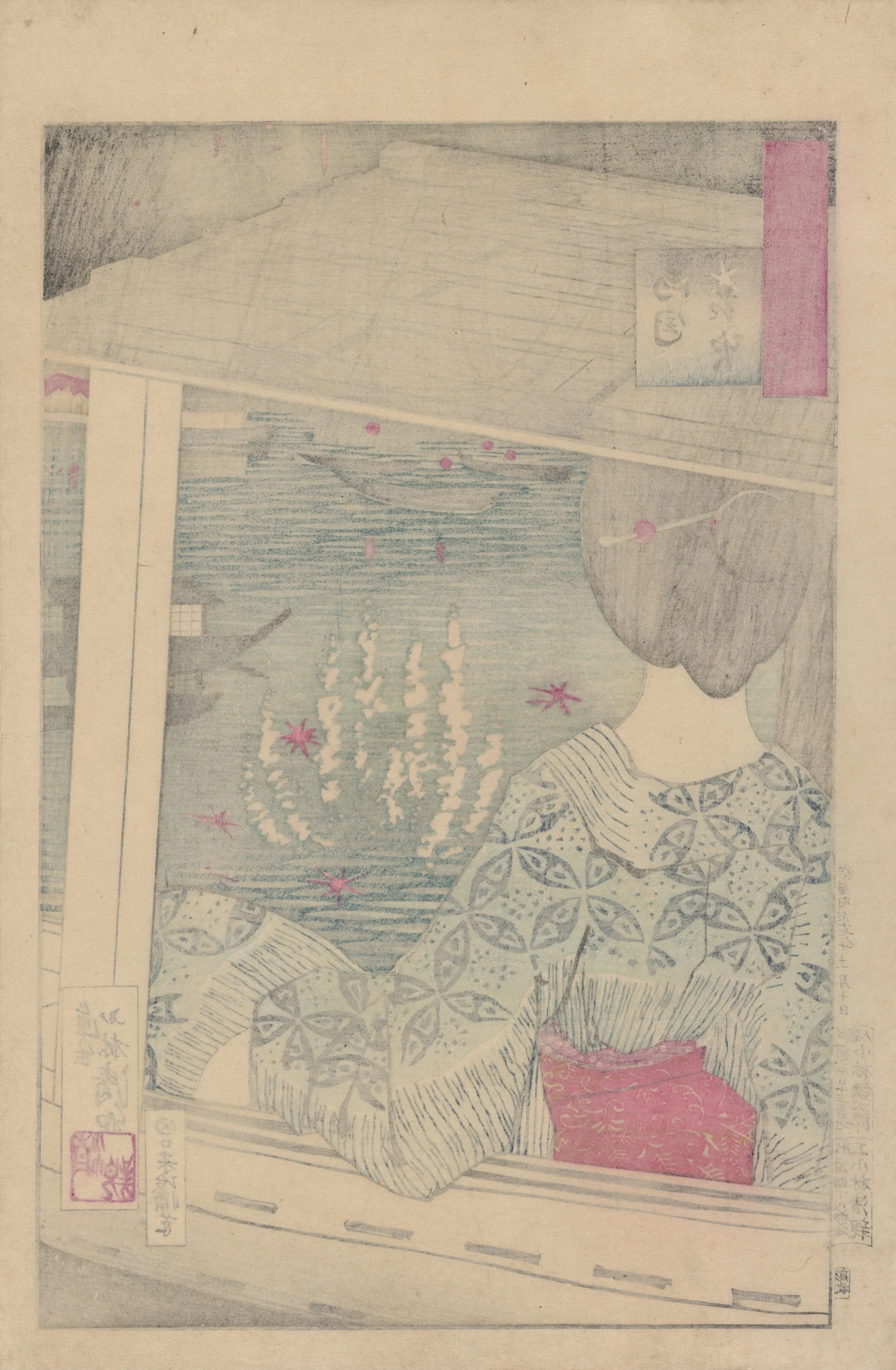 Image 2 of 2