
 Image 1 of 2
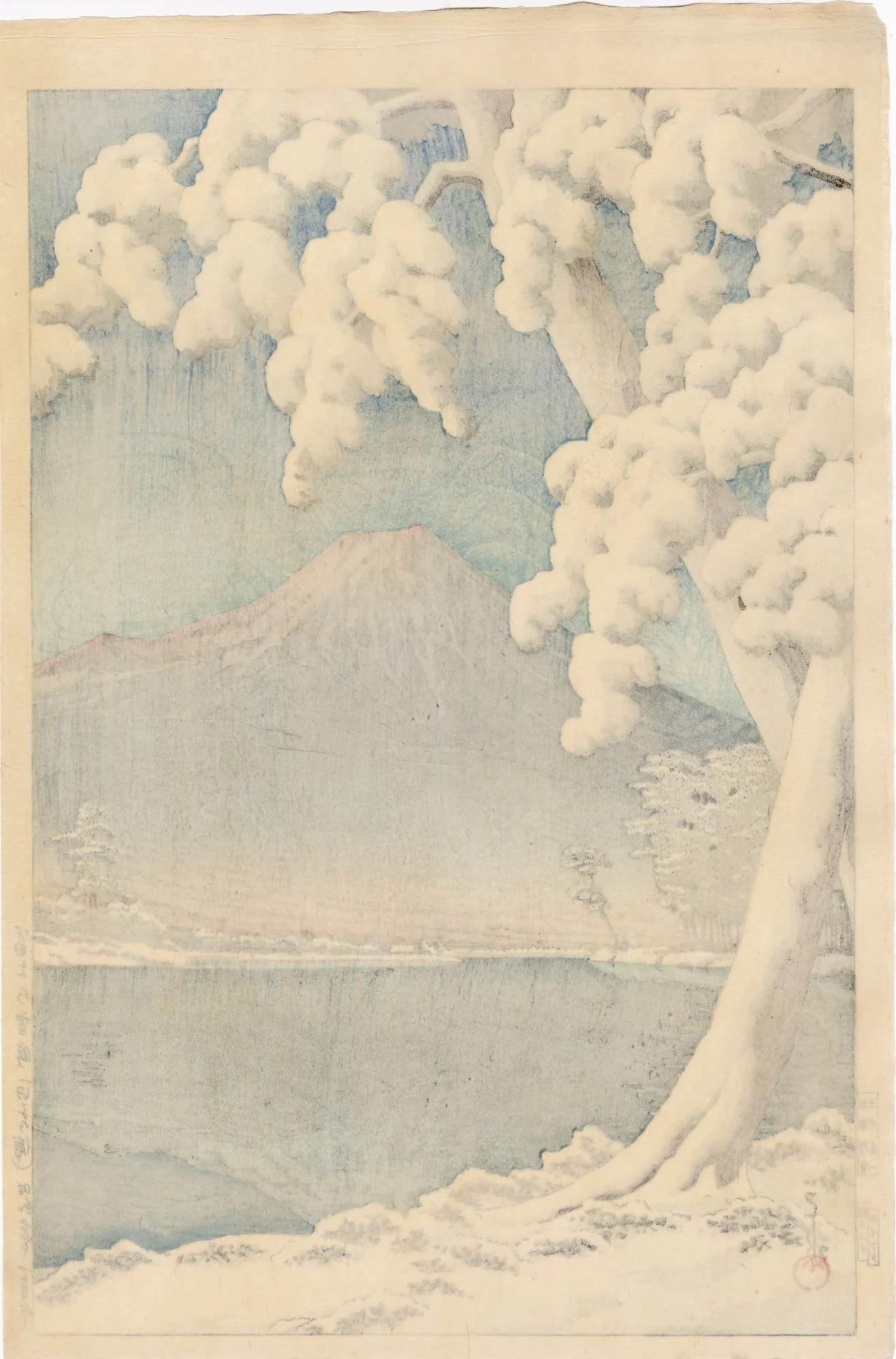 Image 2 of 2
Kawase Hasui (1883–1957)
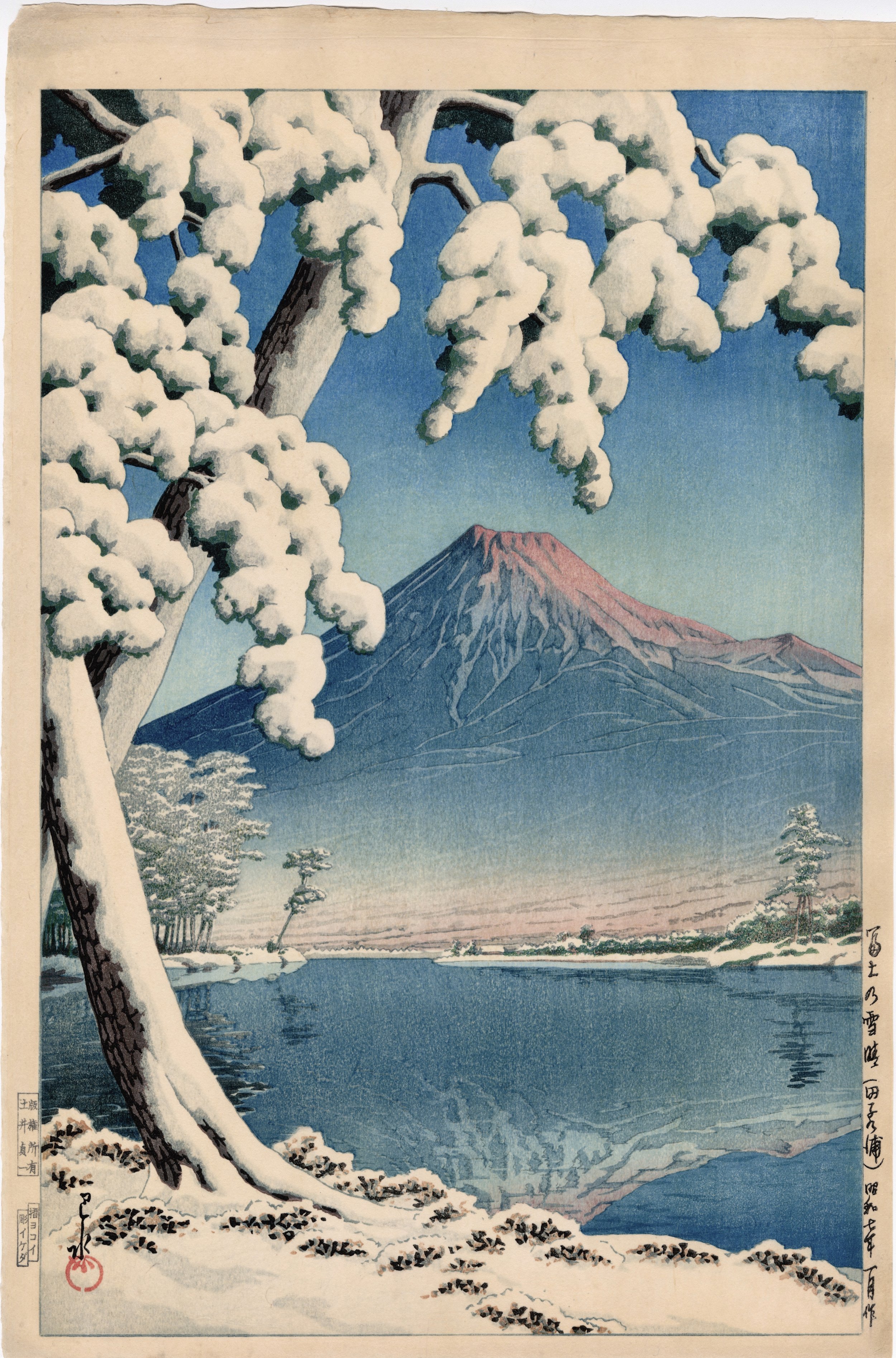
asui Kawase is perhaps the single most recognized woodblock artist of the Shin Hanga – new print – movement in the early- to mid-20th Century. Because he specialized in landscapes, many would say he was a successor to Hiroshige, noting his enveloping portrayals of nature, and his thoughtful placement of humans within them. But that would be too easy, because Hiroshige and Hasui in many ways could not be more different.
Whereas Hiroshige played with flat plains of negative space, Hasui embraced Western painting styles – if not techniques – to display water reflections, shadows and shades of light in all its combinations. You can easily discern the time of day and season from the light. Signs of the 20th Century Japan are everywhere – rickshaws, cars, telephone poles, steamships, even western-style umbrellas and rain slickers. Yes, he embraced snow and rain scenes like Hiroshige, and many famous views, but they live in a three-dimensional, modern world.
His prints are hugely sought-after today, with condition being extremely important to collectors. Many of the original woodblocks were destroyed in the Great Earthquake of 1923; finding examples of those pre-quake prints is challenging, indeed.
He was born Bunjiro Kawase in Tokyo in 1883, the son of a merchant. Hasui studied Japanese-style painting with Kiyokata and Western painting at the Hakubakai. He exhibited his first painting at 19. The publisher Shozaburo Watanabe – seeing the appeal of woodblock prints to the Western tourists then flooding Japan – took Hasui under his wing. The young man travelled widely to capture landscapes, making sketches as he went. Looking at the detail and perspective in some of his prints, one wonders: did he work from photographs as well?
Hasui’s Zojoji Temple in Snow – with a woman pushing against the furious snow with a traditional umbrella -- has been named an Intangible Cultural Treasure, the greatest artistic honor in postwar Japan. He died in 1957.
The publishers Doi, Kawaguchi, Sakai and others also produced some Hasui works. Learning to read the seals on the prints, and therefore dating them, takes time but is well worth it. If you can find this book at a reasonable price, go for it. It’s all there.