
 Image 1 of 2
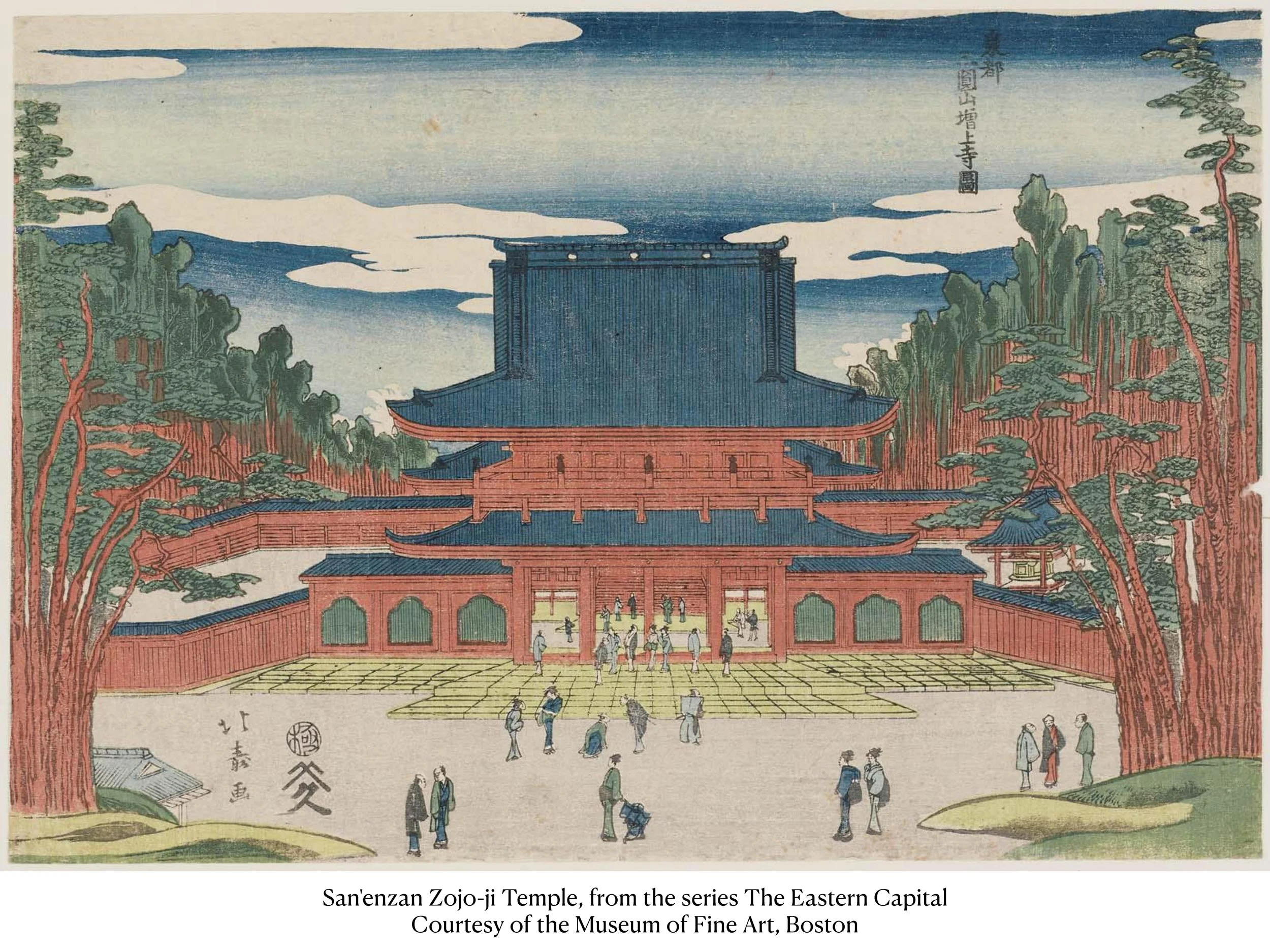 Image 2 of 2
Shotei Hokuju (1763–1824)
Was Shotei Hokuju, perhaps Hokusai’s most famous student, the stylistic father of… Pablo Picasso?
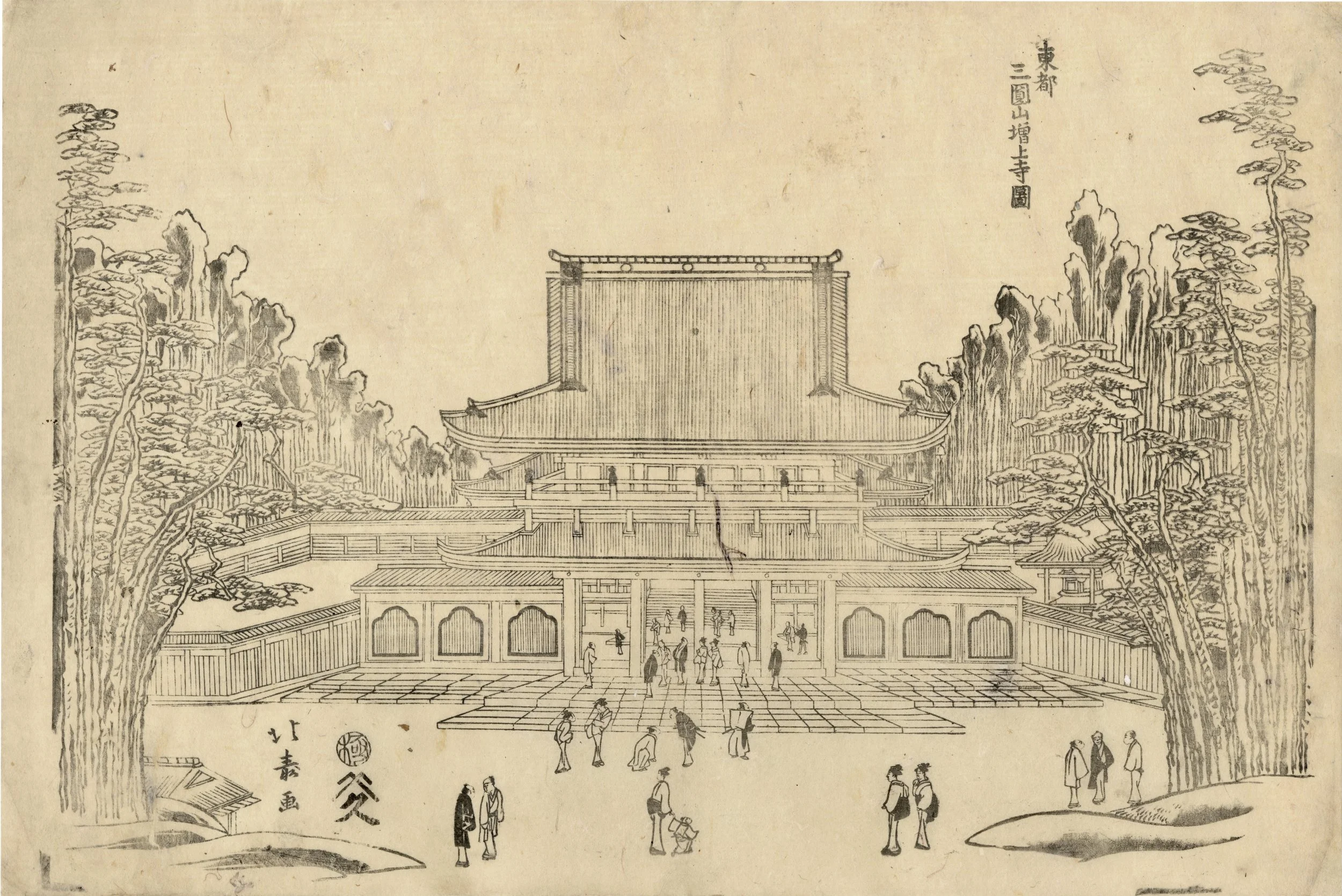
Not really, but in his uniquely conjured works, we see many hints of modern art, such as cubism and an almost abstract approach to landscapes and the humans who live within them. We also see many broader attributes of Western art, such as perspective, shadows and billowing clouds. These elements display a fertile artistic mind striving for something new. And all this is the early mid-period of Ukiyoe.
Hokuju is believed to have been born in 1763, and joined Hokusai’s studio around 1793. His most famous works – including “True Depiction of the Monkey Bridge In Kay Province” – predated the master’s most notable designs, though of course they never garnered as much fame.
This print includes Western-style clouds, and throughout his career, one example of Hokuju experimenting with Western concepts. Where he saw them is hard to determine, since they were banned in Edo-period Japan at the time, and one suspects the exposure to them was fleeting, because he didn’t quite master all the techniques, such as perspective and use of vanishing points.
But these imperfections only add to the pleasure of his work, capturing the moment when someone was happily wrestling with new ideas. He was not hugely prolific: in addition to prints, almost all of them landscapes, he designed surimono and at least one illustrated book.
Shotei Hokuju died in 1824.