小林清亲 Kobayashi Kiyochika (1847–1915)
武蔵百景之内 下総真間つぎ橋
A bridge in Shimofusa, from the series of One Hundred Views of Musashi
1884
木版画 | 纵绘大判 | 36.5cm x 24.5cm
Woodblock-print | Oban-tate-e | 36.5cm x 24.5cm
初版;早期版次;颜色鲜艳;品相非常好
First edition; fine impression, color and condition
$5,000
In the mid-1880s, Tokyo and Japan were swept up in the foment of radical social change. The Shogun was gone 20 years, the Black Ships had arrived more than 10 years before that. The nation raced towards modernity, feverishly learning from the ways of the West, and in some cases already improving upon them.
But then something happened – a new nostalgia for the old days of Edo seeped into daily life. The publisher Maraya Tetsujiro took advantage of this historical pivot by assigning the artist Koboyashi Kiyochika to create “100 Views of Musashi.”
This elaborately printed series is generally considered the artist’s greatest work and was an homage to Hiroshige’s legendary “100 Famous Views of Edo” which was then 30 years in the past. Like those prints, these are oban tate-e format, with cartouches and title boxes placed as Hiroshige’s were (although these feature synthetic pigments). But the lens was widened to include the region around newly named Tokyo.
Many of the designs – in all, less than 40 are known – show hints of the West. Here we see a classic view that could have easily been in Edo times. But it is not Edo (or Tokyo) itself. The scene is set in Mama in the old province of Shimosa, now part of Ichikawa in Chiba Prefecture, just east of Tokyo.
This is a bucolic, agricultural scene; nostalgic to the core. A farm girl carries a teapot. Her purple and green stand out in the autumn fields, while Tsugi Bridge can be seen across the water in the middle distance.The water reflects the clear blue sky, the red leaves on the shore stretch into the distance. Interestingly, the farm girl is walking right off the sheet – just like this geisha in Hiroshige’s Night View of Matsuchiyama and the San'ya Canal from “100 Famous Views of Edo.”
Another homage, perhaps?
《武藏百景之内》是小林清亲于1884年开始创作的重要风景画系列,也是他最具代表性的作品之一。系列从构图、题材到对名所的选择,都明显承继了歌川广重《名所江户百景》的传统。然而三十年过去,日本已经迅速迈入近代社会。清亲重新描绘这些曾属于江户的名所,也因此带上了一层回望旧日风景的意味。现存资料显示,《武藏百景》目前仅确认有34图。
本作描绘的是下总真间的“继桥”。真间自《万叶集》时代起便是著名的歌枕之地,与手儿奈传说及继桥等古迹紧密相连。
画面近处,一位赤脚女子提着茶壶,从高高的草垛旁走过。她身上的紫色与绿色在秋日田野间格外醒目,目光则越过水田,望向远处的继桥。水面映着清澈的蓝天,岸边的红叶一路延伸至远方,田间还有俯身劳作的人。清亲没有刻意突出这座自古闻名的继桥,而是让它静静地出现在一片寻常的乡野生活之中。古老的名所、眼前的秋色与明治时代普通人的日常,就这样自然地交叠在了一起。
Interested in purchasing?
Please contact us.
小林清亲 Kobayashi Kiyochika (1847–1915)
武蔵百景之内 下総真間つぎ橋
A bridge in Shimofusa, from the series of One Hundred Views of Musashi
1884
木版画 | 纵绘大判 | 36.5cm x 24.5cm
Woodblock-print | Oban-tate-e | 36.5cm x 24.5cm
初版;早期版次;颜色鲜艳;品相非常好
First edition; fine impression, color and condition
$5,000
In the mid-1880s, Tokyo and Japan were swept up in the foment of radical social change. The Shogun was gone 20 years, the Black Ships had arrived more than 10 years before that. The nation raced towards modernity, feverishly learning from the ways of the West, and in some cases already improving upon them.
But then something happened – a new nostalgia for the old days of Edo seeped into daily life. The publisher Maraya Tetsujiro took advantage of this historical pivot by assigning the artist Koboyashi Kiyochika to create “100 Views of Musashi.”
This elaborately printed series is generally considered the artist’s greatest work and was an homage to Hiroshige’s legendary “100 Famous Views of Edo” which was then 30 years in the past. Like those prints, these are oban tate-e format, with cartouches and title boxes placed as Hiroshige’s were (although these feature synthetic pigments). But the lens was widened to include the region around newly named Tokyo.
Many of the designs – in all, less than 40 are known – show hints of the West. Here we see a classic view that could have easily been in Edo times. But it is not Edo (or Tokyo) itself. The scene is set in Mama in the old province of Shimosa, now part of Ichikawa in Chiba Prefecture, just east of Tokyo.
This is a bucolic, agricultural scene; nostalgic to the core. A farm girl carries a teapot. Her purple and green stand out in the autumn fields, while Tsugi Bridge can be seen across the water in the middle distance.The water reflects the clear blue sky, the red leaves on the shore stretch into the distance. Interestingly, the farm girl is walking right off the sheet – just like this geisha in Hiroshige’s Night View of Matsuchiyama and the San'ya Canal from “100 Famous Views of Edo.”
Another homage, perhaps?
《武藏百景之内》是小林清亲于1884年开始创作的重要风景画系列,也是他最具代表性的作品之一。系列从构图、题材到对名所的选择,都明显承继了歌川广重《名所江户百景》的传统。然而三十年过去,日本已经迅速迈入近代社会。清亲重新描绘这些曾属于江户的名所,也因此带上了一层回望旧日风景的意味。现存资料显示,《武藏百景》目前仅确认有34图。
本作描绘的是下总真间的“继桥”。真间自《万叶集》时代起便是著名的歌枕之地,与手儿奈传说及继桥等古迹紧密相连。
画面近处,一位赤脚女子提着茶壶,从高高的草垛旁走过。她身上的紫色与绿色在秋日田野间格外醒目,目光则越过水田,望向远处的继桥。水面映着清澈的蓝天,岸边的红叶一路延伸至远方,田间还有俯身劳作的人。清亲没有刻意突出这座自古闻名的继桥,而是让它静静地出现在一片寻常的乡野生活之中。古老的名所、眼前的秋色与明治时代普通人的日常,就这样自然地交叠在了一起。
Interested in purchasing?
Please contact us.

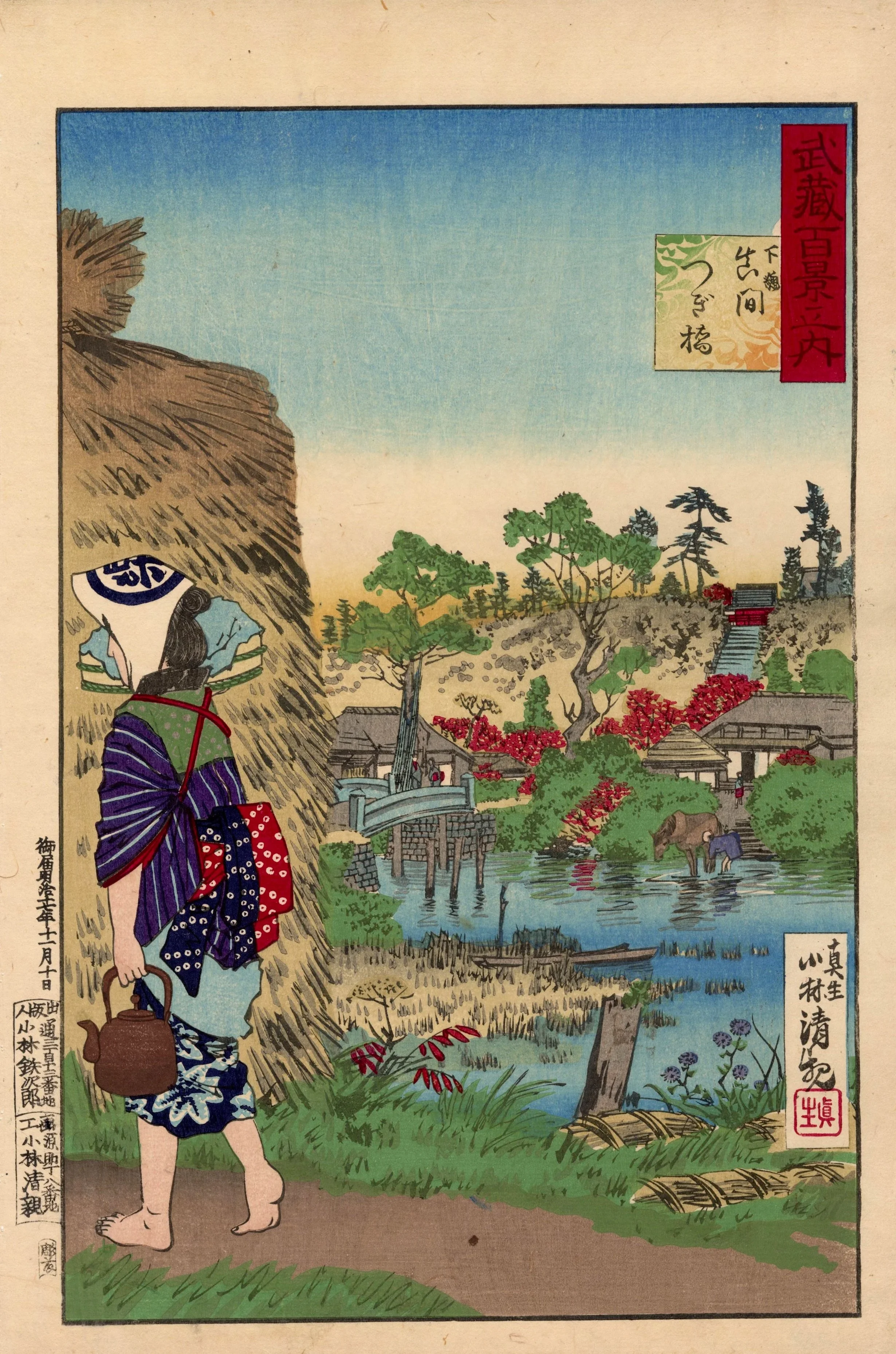 Image 1 of 2
 Image 2 of 2