坂内宏観 Bannai Kokan (1900-1962)
现代东海道五十三次之内 日本桥
Nihonbashi, from the series of 53 Stations of the Modern Tokaido
1930s
木版画 | 横绘大大判 | 26.5cm x 39cm
Woodblock-print | Large Oban yoko -e | 26.5cm x 39cm
早期版次;颜色鲜艳;品相非常好
Fine impression, color and condition
Can a Japanese woodblock print artist be a “One Hit Wonder”?
In the case of Bannai Kokan and this fantastic snowstorm view of the Nihonbashi bridge and neighborhood in the 1930s, quite possibly.
Kokan was born in Fukushima prefecture in 1900 and studied Japanese-style painting with Bannai Seiran. Not a great deal is known about him. He began but never completed a series of prints of the Fifty-Three Stations of the Tokaido in the early 1930s, of which this would have been the first. It is the only known example – but oh, what a great design.
Nihonbashi was the legendary landmark that began the Tokaido and was the spot from which all distances were measured in Edo-era Japan. Naturally, it was a favorite of print designers, especially Hiroshige, who depicted it many, many times – such as here and here.
By Kokan’s time, the old wooden span had been replaced by the stone bridge with a steel frame we see here, complete with elaborate light stanchions. It was built in 1911 and, remarkably, it survived World War II, although today, it is rather ignominiously hidden beneath a highway overpass. The surrounding neighborhood, which is bustling and filled with top-flight department stones, is also called Nihonbashi.
Kokan shows us the bridge during a blizzard, and uses the thick flakes of snow to create a dynamic, almost abstract design. The white of the flakes contrasts wonderfully with the muted browns and brick reds of the buildings. So much is hidden by the blowing snow! We can feel Tokyo’s roaring energy, almost hear the traffic, through the storm.
This example is in pristine condition. I’d love to see what else Kokan could have done with other Tokaido locations, but I’m thankful that at least he got this one done.
日本桥,狭义指东京都中央区的一座桥梁,广义指此桥周边地域,范围约为今东京都中央区北部。自江户时代起,此地就是东海道、中山道、日光街道、奥州街道与甲州街道这五条陆上干道的共同起点,人口众多,商业繁荣,堪称江户城乃至全日本的CBD。无论是清长、北斋还是广重,从江户初期开始,无数浮世绘师都以日本桥为母题接续不断地作画。直到昭和年间,依然有新版画家以全新风格进行创作,并且不乏优秀之作,例如由坂内宏观绘制的本作。
昭和初期的东京城内永远是车水马龙,即使是在大雪纷飞的日子里。彼时石造的日本桥上铸铁路灯高耸,桥畔高楼洋房林立,“长辫子”电车缓缓驶过,恍如欧美诸国风景。近景内,桥拱下,日本桥川河水面澄澈似镜,只有一位蓑笠翁撑着满载的小舟晃起了几阵涟漪。无数密集的雪片,朦胧的轮廓勾勒,低饱和度的用色,使人不禁联想到修拉的点彩画,静止与流动,融合得是如此精准自然。
Interested in purchasing?
Please contact us.
坂内宏観 Bannai Kokan (1900-1962)
现代东海道五十三次之内 日本桥
Nihonbashi, from the series of 53 Stations of the Modern Tokaido
1930s
木版画 | 横绘大大判 | 26.5cm x 39cm
Woodblock-print | Large Oban yoko -e | 26.5cm x 39cm
早期版次;颜色鲜艳;品相非常好
Fine impression, color and condition
Can a Japanese woodblock print artist be a “One Hit Wonder”?
In the case of Bannai Kokan and this fantastic snowstorm view of the Nihonbashi bridge and neighborhood in the 1930s, quite possibly.
Kokan was born in Fukushima prefecture in 1900 and studied Japanese-style painting with Bannai Seiran. Not a great deal is known about him. He began but never completed a series of prints of the Fifty-Three Stations of the Tokaido in the early 1930s, of which this would have been the first. It is the only known example – but oh, what a great design.
Nihonbashi was the legendary landmark that began the Tokaido and was the spot from which all distances were measured in Edo-era Japan. Naturally, it was a favorite of print designers, especially Hiroshige, who depicted it many, many times – such as here and here.
By Kokan’s time, the old wooden span had been replaced by the stone bridge with a steel frame we see here, complete with elaborate light stanchions. It was built in 1911 and, remarkably, it survived World War II, although today, it is rather ignominiously hidden beneath a highway overpass. The surrounding neighborhood, which is bustling and filled with top-flight department stones, is also called Nihonbashi.
Kokan shows us the bridge during a blizzard, and uses the thick flakes of snow to create a dynamic, almost abstract design. The white of the flakes contrasts wonderfully with the muted browns and brick reds of the buildings. So much is hidden by the blowing snow! We can feel Tokyo’s roaring energy, almost hear the traffic, through the storm.
This example is in pristine condition. I’d love to see what else Kokan could have done with other Tokaido locations, but I’m thankful that at least he got this one done.
日本桥,狭义指东京都中央区的一座桥梁,广义指此桥周边地域,范围约为今东京都中央区北部。自江户时代起,此地就是东海道、中山道、日光街道、奥州街道与甲州街道这五条陆上干道的共同起点,人口众多,商业繁荣,堪称江户城乃至全日本的CBD。无论是清长、北斋还是广重,从江户初期开始,无数浮世绘师都以日本桥为母题接续不断地作画。直到昭和年间,依然有新版画家以全新风格进行创作,并且不乏优秀之作,例如由坂内宏观绘制的本作。
昭和初期的东京城内永远是车水马龙,即使是在大雪纷飞的日子里。彼时石造的日本桥上铸铁路灯高耸,桥畔高楼洋房林立,“长辫子”电车缓缓驶过,恍如欧美诸国风景。近景内,桥拱下,日本桥川河水面澄澈似镜,只有一位蓑笠翁撑着满载的小舟晃起了几阵涟漪。无数密集的雪片,朦胧的轮廓勾勒,低饱和度的用色,使人不禁联想到修拉的点彩画,静止与流动,融合得是如此精准自然。
Interested in purchasing?
Please contact us.

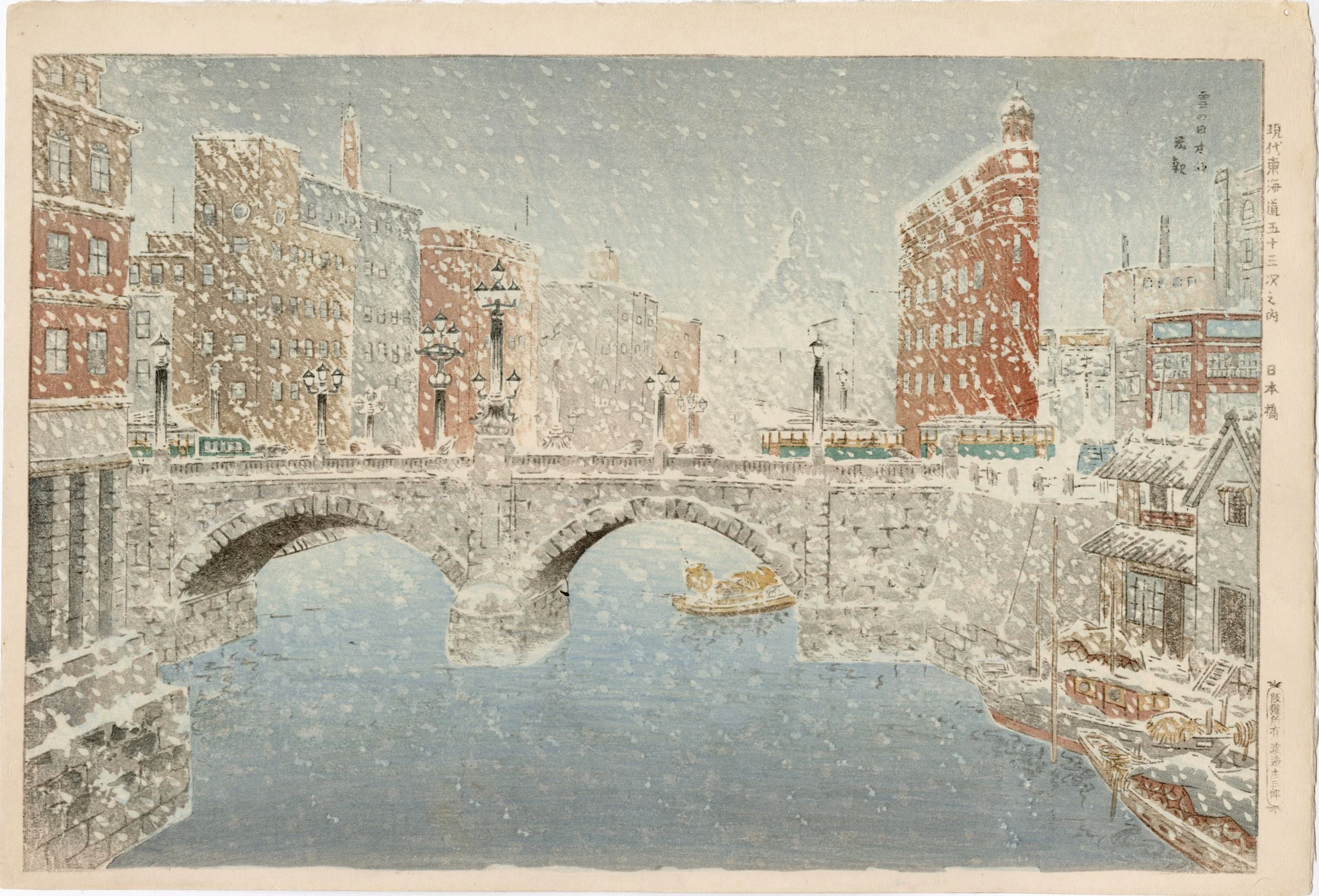 Image 1 of 2
 Image 2 of 2