
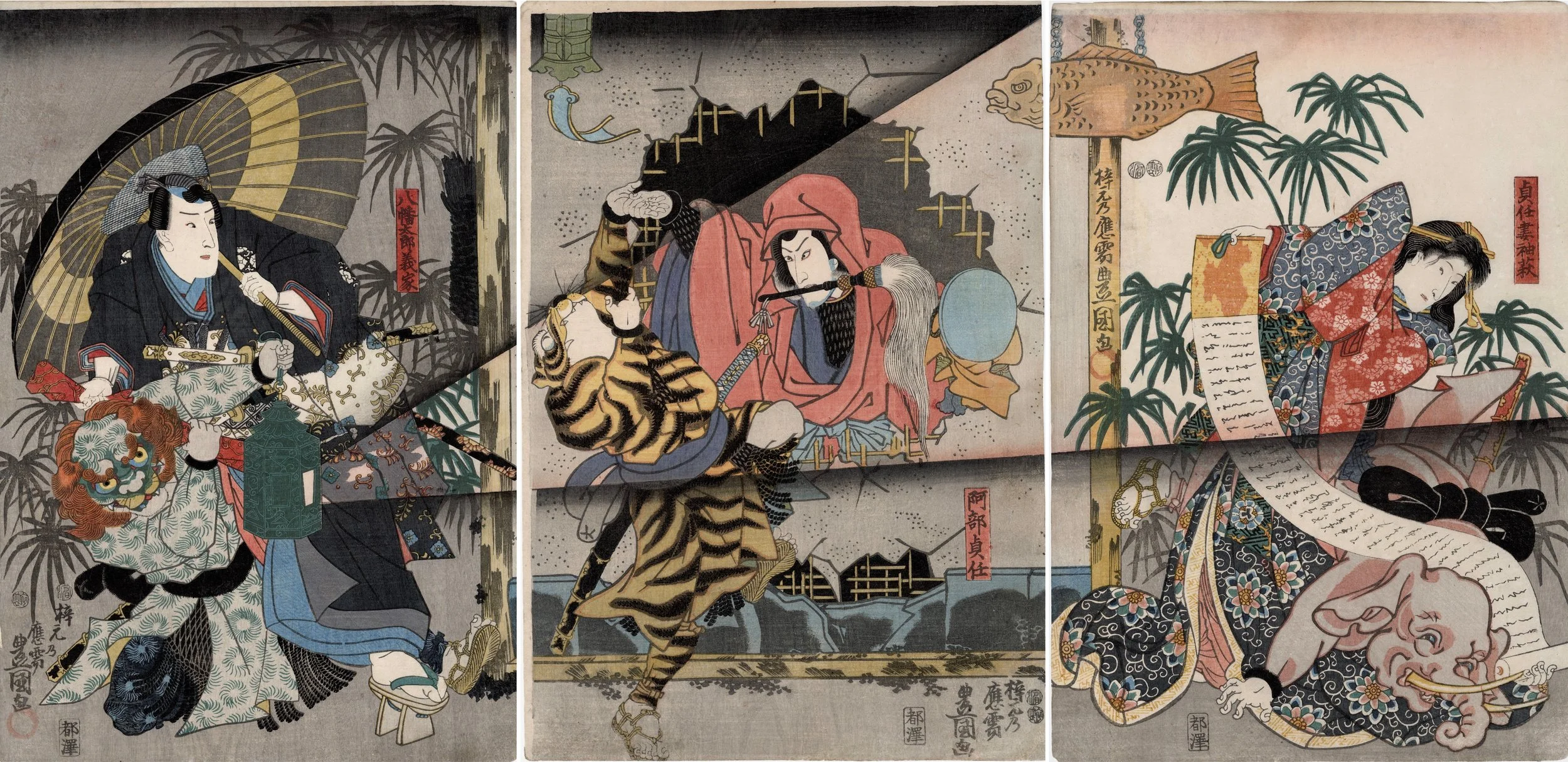
 Image 1 of 8
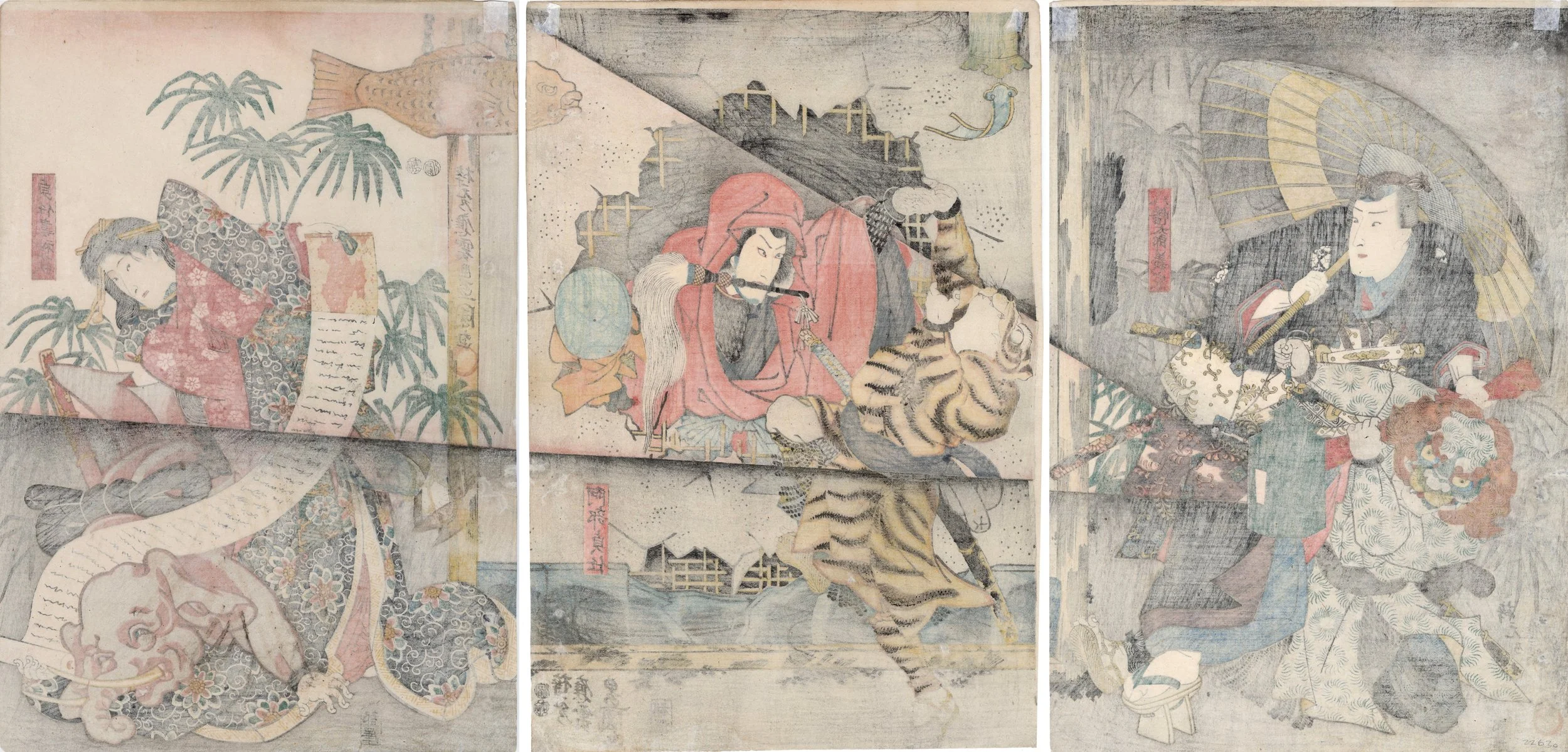 Image 2 of 8
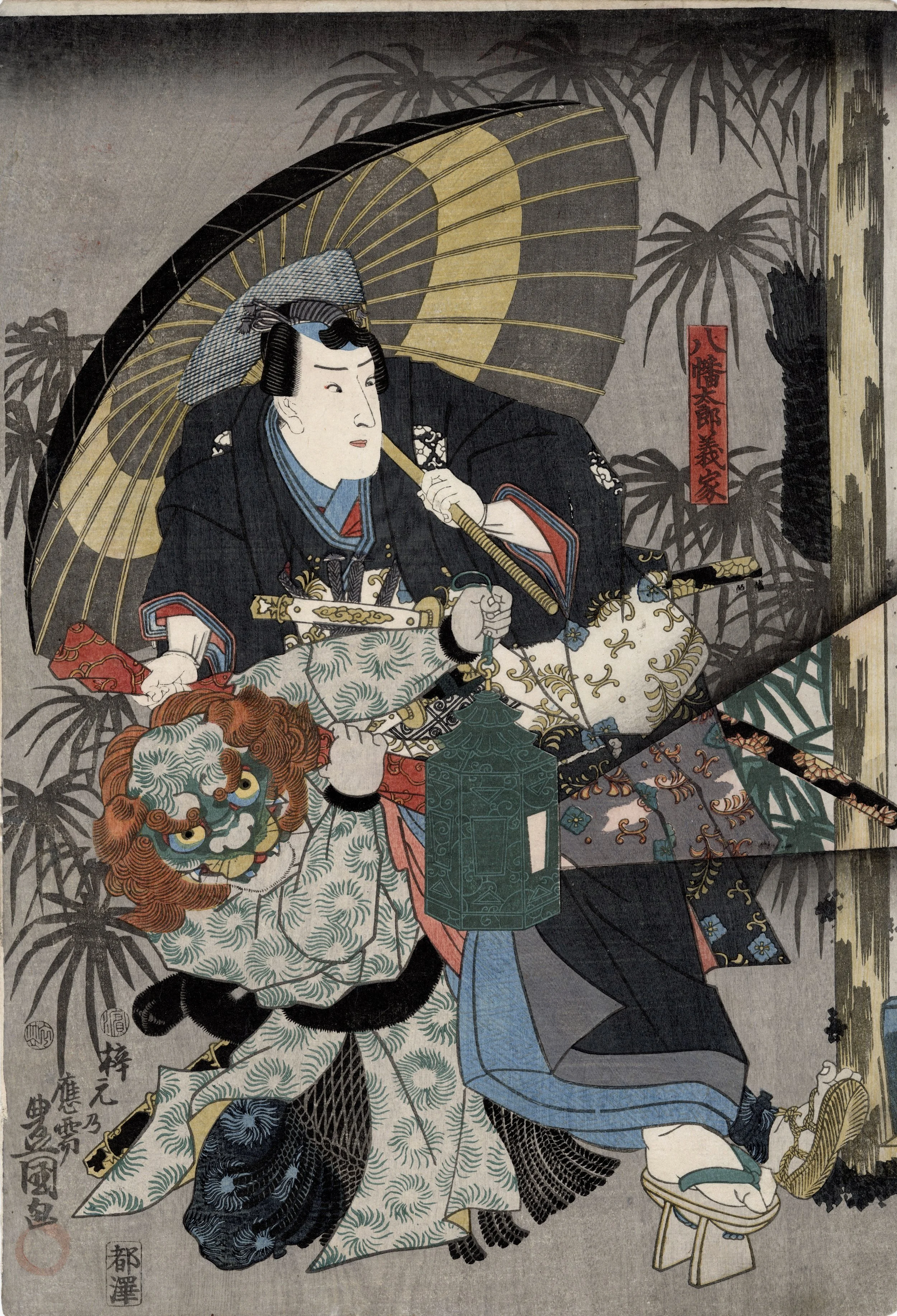 Image 3 of 8
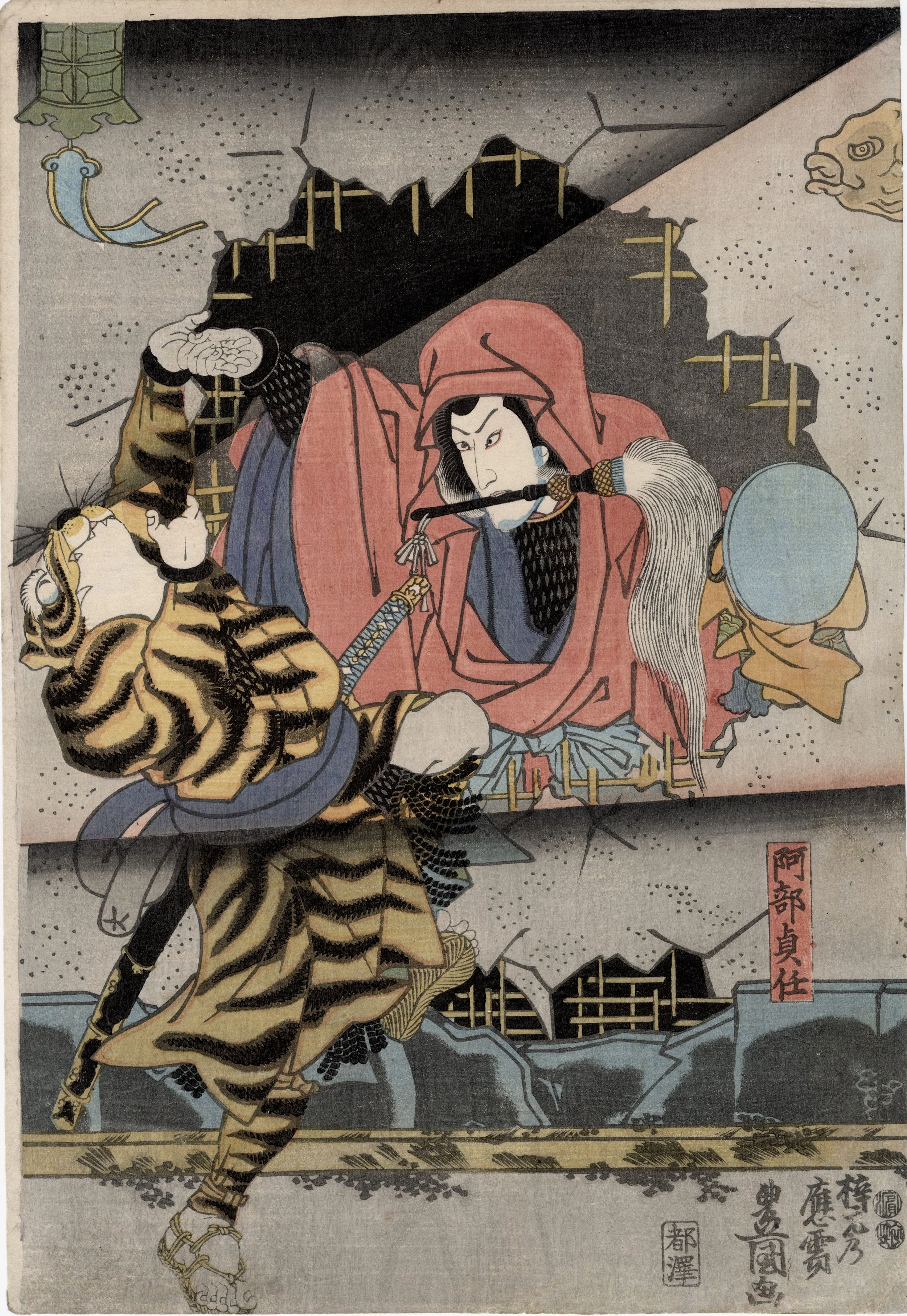 Image 4 of 8
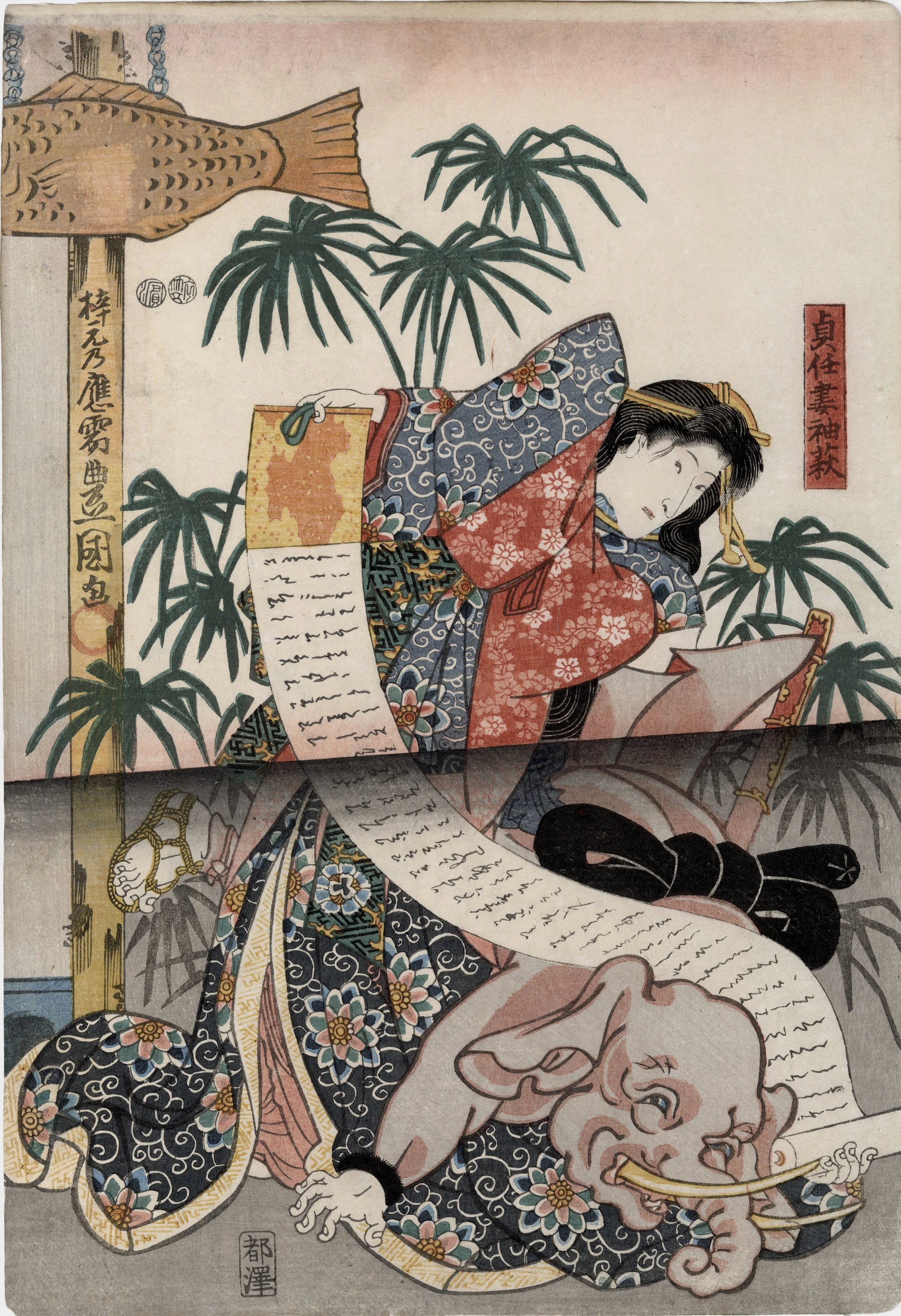 Image 5 of 8
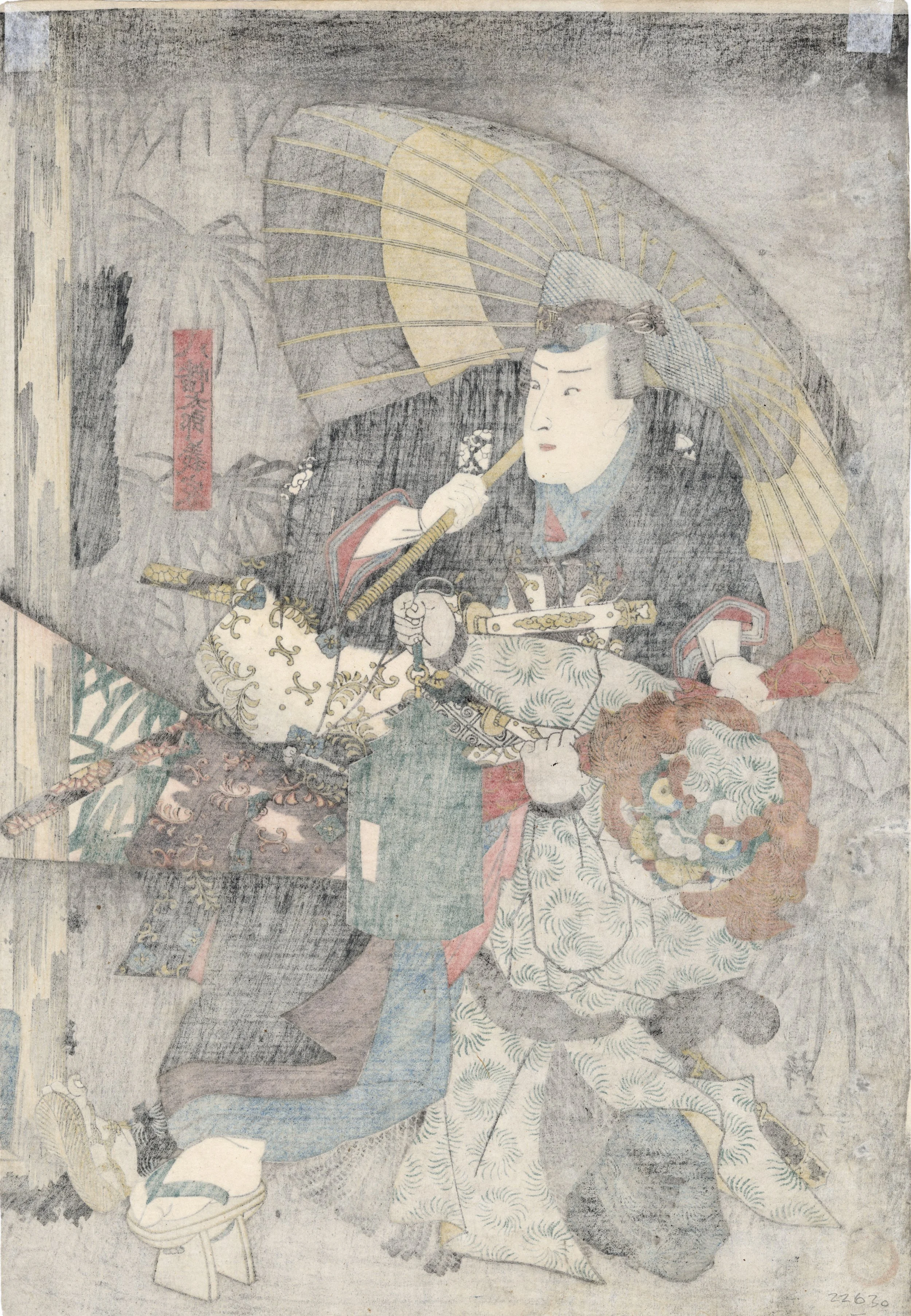 Image 6 of 8
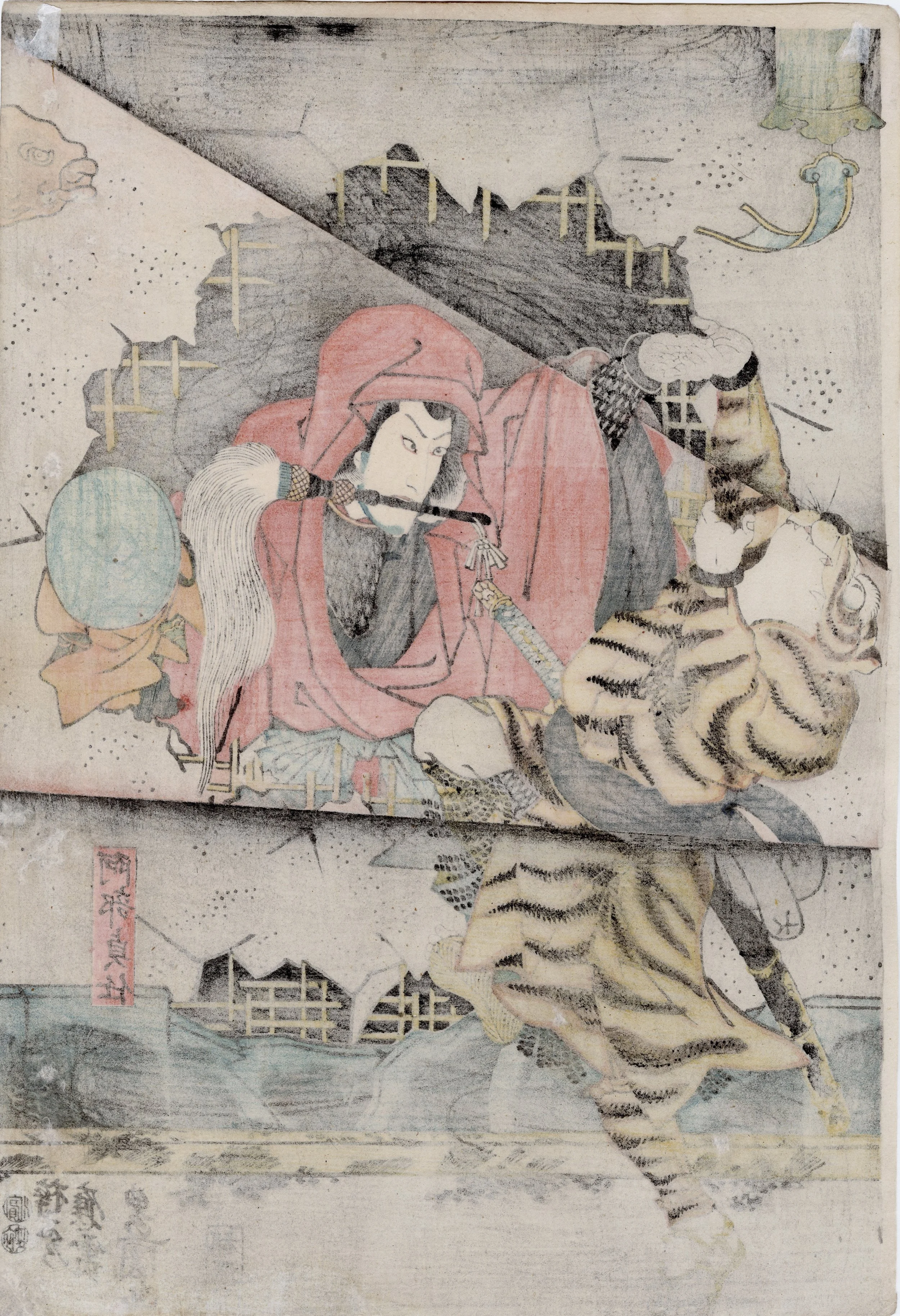 Image 7 of 8
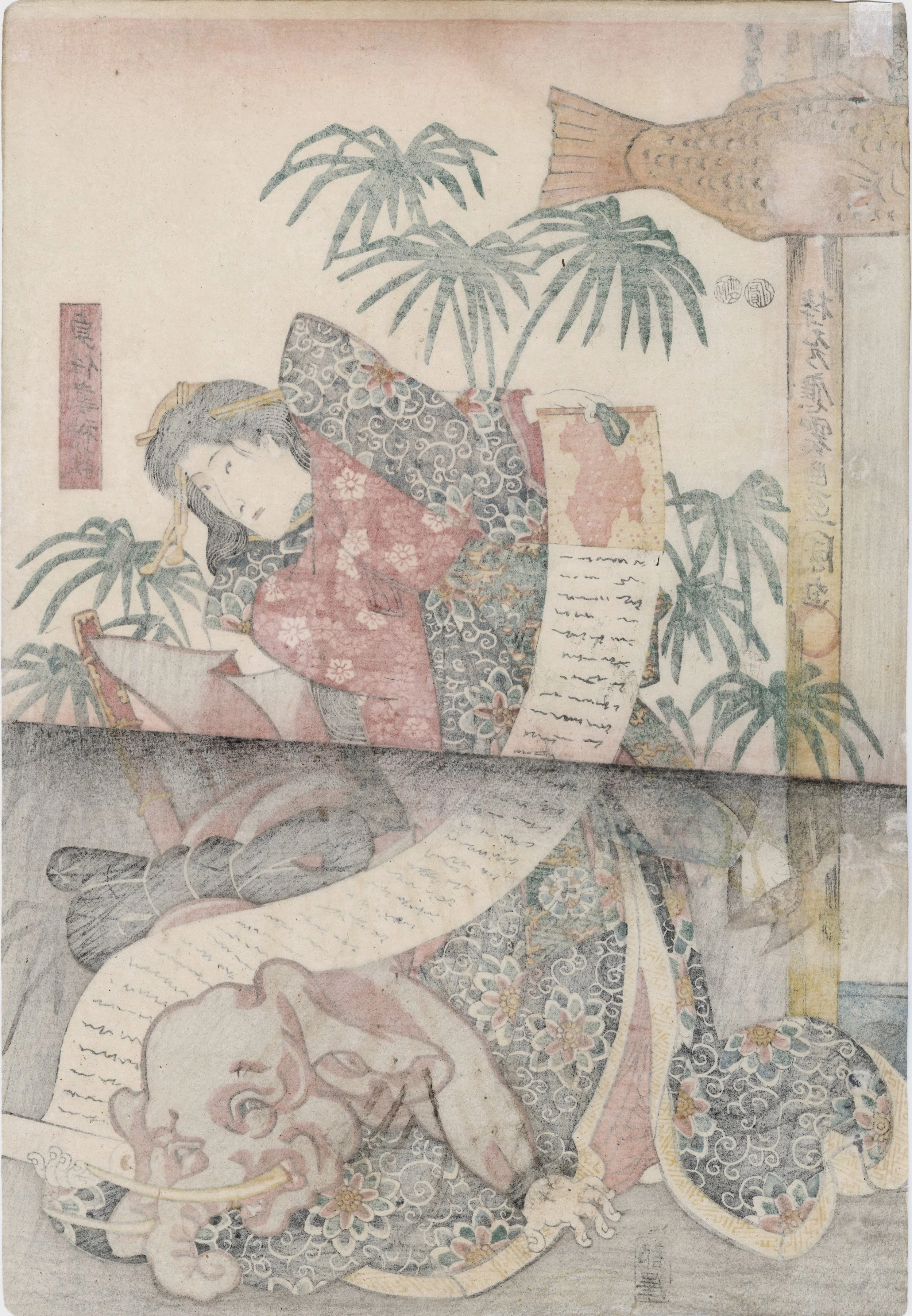 Image 8 of 8
Utagawa Kunisada (Toyokuni III) (1786–1865)
In the pantheon of Japanese woodblock prints, some names loom large and legendary – Hokusai, Hiroshige, Utamaro, to name a few. Each in his own way revolutionized his genre. But for sheer productivity and quality and longevity, no one rivals the great Utagawa Kunisada. He was without a doubt the most prolific Ukiyo-e artist of the Edo period, and the quality of his work was remarkably high throughout his lifetime.
His life caught the tail end of the early golden age of Ukiyo-e and ended during the final, halcyon days of Japanese woodblock printmaking. His legacy lived on with many famous pupils. In between, he produced countless designs of bijin (beautiful women), warriors, legends, Surimono, more bijin, the Tale of Genji, actors, landscapes, Shunga, fan prints and even more bijin. He led the Utagawa School, home to Hiroshige among others, for nearly 40 years.
His work embraced a subtle elegance and simplicity, a timelessness, when other woodblock artists often favored busy energy. Except when it didn’t. (Read on.)
He was born in 1796 and always had a steady income from his family’s ferry business – making him unusual in the world of Ukiyo-e, where so many struggled to make ends meet. He became a student of Toyokuni when he was 15. The master gave him the name Kunisada, using the tradition of a teacher starting a student’s name with the end of his own.
After getting his start doing book designs, Kunisada saw his first major successes in the 1820s. His initial specialties were bijin and warriors, as well as erotic books. He often put his subjects in well-drawn landscapes but rarely produced pure landscapes themselves.
One example of this occurred in the early 1830s when, reacting to the runaway success of Hiroshige’s Great Tokaido series, he began his own series that copied Hiroshige’s designs but placed a beautiful woman in the foreground. While Hiroshige’s prints were oban yoko-e (horizontal oban prints), Kunisada’s “copies” were smaller chuban-size prints, meaning two could be cut from a single oban-sized sheet. These little prints were phenomenally successful – as successful at least as Hiroshige’s – and eventually Kunisada was publishing his little Tokaido prints ahead of Hiroshige’s, and thus designing his own background landscapes.
Kunisada would later produce the “two-brush” Tokaido series with Hiroshige in the 1850s, in which he drew figures in the foreground while Hiroshige supplied beautiful little landscapes behind them. This was one of several notable woodblock print collaborations during his lifetime.
By then, Kunisada had taken the name Toyokuni III, to honor his master. (Toyokuni II had already been taken by Toyoshige, though Kunisada didn’t acknowledge the legitimacy. But that’s another story for another day.)
He kept going and going. In fact, in his long life, 1852 was his most productive year. His design skills were later matched by new technologies in woodblock prints, and some of his final series feature spectacular and intricate production, such as “Lasting Impressions of a Later Genji Collection” in 1859-61 and “A Contest of Magic Scenes by Toyokuni” in 1861-4. Okay – this series was not subtle: It featured over-the-top designs of Kabuki actors with fabled and ghostly beasts. Double-printing, mica, burnishing, raised printing, heavy paper, complex bokashi – no expense was spared for these deluxe editions.
Kunisada was generous with his students, many of whom went on to great success, including Kunichika, Kunisada II, Sadahide, and Kunihisa II. This last pupil, who among other projects designed the in-set landscapes in Kunisada’s wonderful “100 Famous Sights in Edo Matched with Beautiful Women” in 1857-1858, was a rarity among Ukiyo-e artists – a woman.
Kunisada died in 1865, just three years before the end of the Tokugawa epoch, leaving behind a body of work unmatched in his time.
Don’t believe me? Checkout The Kunisada Project. It’s all there. Just make sure you have some time.
Citation: Research for this brief biography included “Japanese Woodblock Prints” by Andreas Marks (Tuttle; 2010), among other sources.