Kuniyoshi | A Comical Ken Game: Tiger, Toad and Fox

$0.00

歌川国芳 Utagawa Kuniyoshi (1798–1861)

道化拳合 二代目市川九蔵之虎、四代目中村歌右卫门之蛙、六代目松本幸四郎之狐
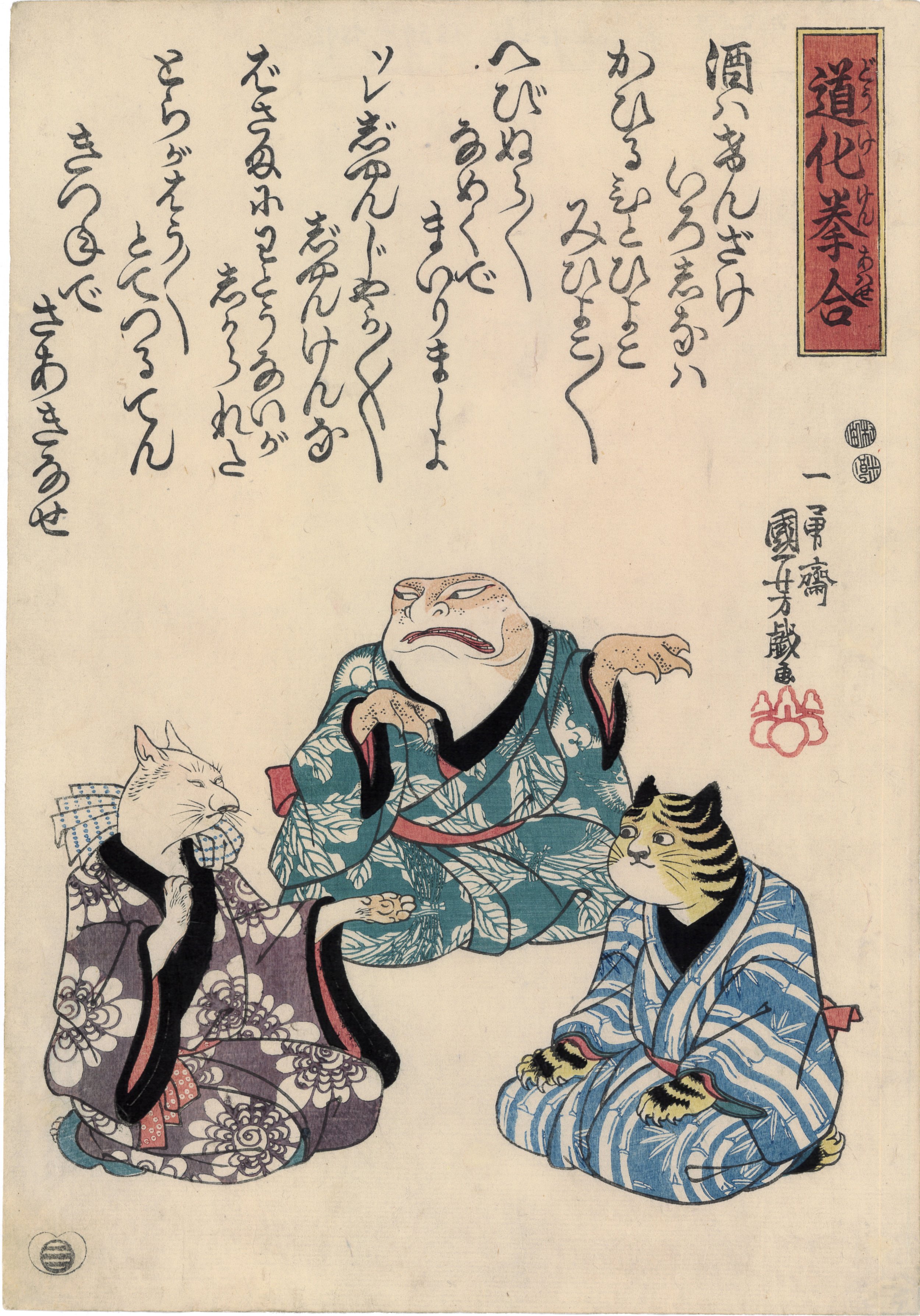
A Comical Ken Game: Actors Ichikawa Kuzo II as a Tiger, Nakamura Utaemon IV as a Toad, and Matsumoto Koshiro VI as a Fox

1847

木版画 | 纵绘大判 | 36cm x 25cm
Woodblock | Oban tate-e|36cm x 25cm

早期版次;颜色鲜艳;品相非常好
Fine impression, color and condition

$3,800

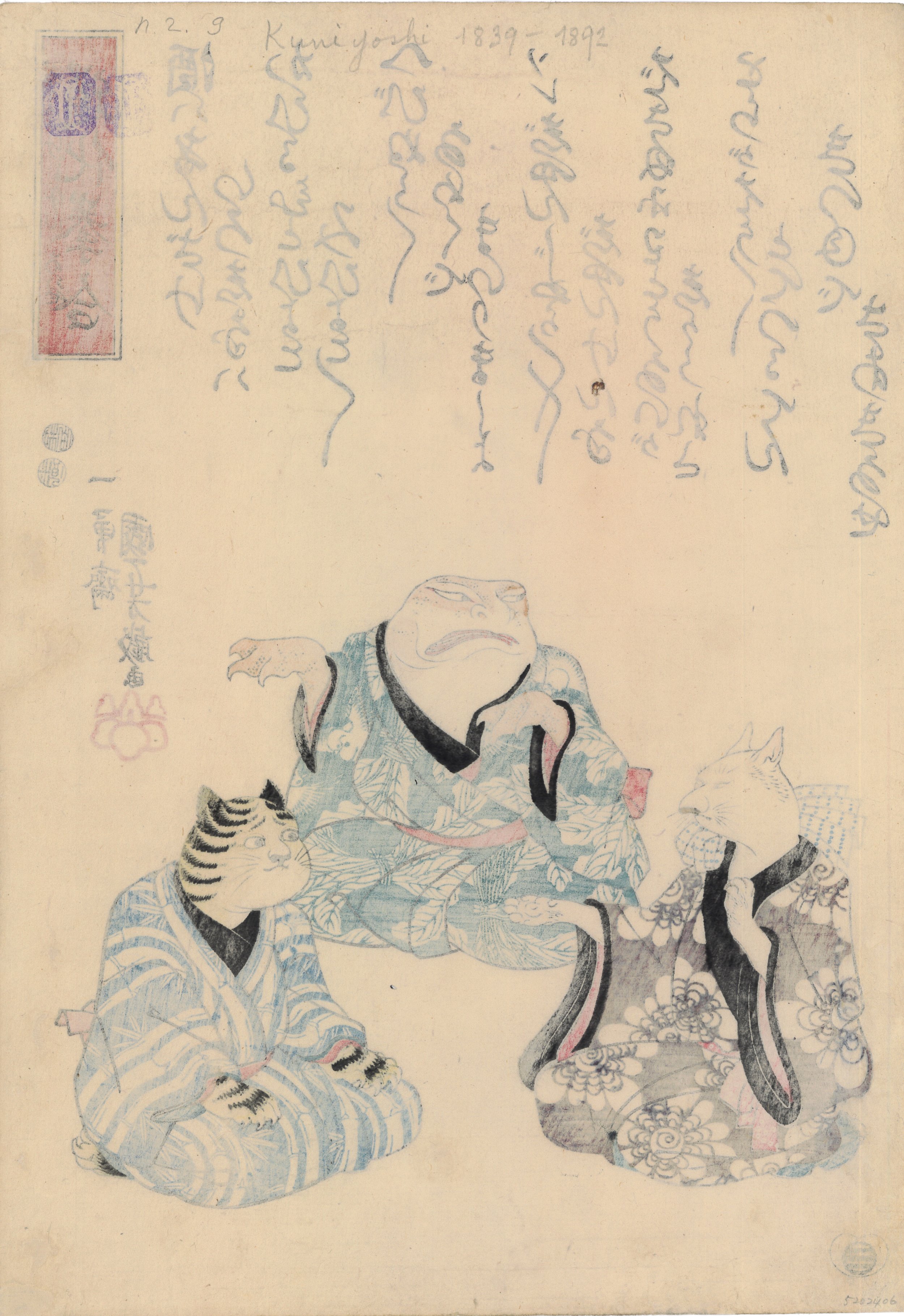
Here we see animals dressed as humans playing some kind of game. A comic conceit, no?

Actually it is deadly serious, but in classic Kuniyoshi form, a serious topic is portrayed with humor.

Sophisticated Edoites – and sophisticated they were – would immediately recognize that the tiger represented Ichikawa Kuzo II; the frog Nakamura Utaemon IV; and the fox Matsumoto Koshiro VI, all great Kabuki actors of the day. But why were they magically transformed into animals? Because of the Shogonate’s Tenpo reforms, which had banned the portrayal of Kabuki actors, who were thought to corrupt society.

So Kuniyoshi got around this rule cleverly with these anthropomorphic creatures.

But there’s more. The three actor-animals are playing a popular hand-gesture game called Dōke ken awase. The gestures are based on those three animals -- a frog hops, the tiger crawled and the fox, what will he do?

在歌川国芳的作品中,动物从来不只是用来取悦观者的角色。它们经常被赋予明确的替代意义,用来承载舞台、人物与社会语境中更复杂的内容。

这张作品描绘的,是当时极为流行的一种手势游戏——「拳合(けんあわせ)」。江户后期,「拳」不仅是民间游戏,更发展成舞台表演的重要元素。1840年代前后,与不同“拳”相关的舞段在剧场中大受欢迎,一度成为观众争相模仿的风潮,也迅速被画师们吸收进浮世绘的题材之中。

画面中出现的三只动物,并非随意选择。老虎、蛤蟆与狐狸,分别对应当时舞台上广为人知的三种“拳”及其表演套路,同时也清楚地影射了三位当红歌舞伎演员:二代目市川九藏(虎)、四代目中村歌右卫门(蛙)、六代目松本幸四郎(狐)。对当时的观众而言,这种对应关系几乎不言自明。

国芳选择以动物替代真人演员,并非只是为了增加趣味。天保改革之后,直接描绘演员的图像在流通上变得愈发敏感,而动物拟人正好提供了一种安全而高明的“绕行方式”。动物既能完整保留演员的体态特征与舞台气质,又避免了正面描绘真人所带来的风险。

因此,这幅作品表面上是一场轻松诙谐的动物游戏,实际上却高度浓缩了当时的舞台热潮、表演类型与观众的集体记忆。所谓「拳合」,看似是比手势的消遣,实则暗含胜负、试探与表演张力——而这些,正是歌舞伎最迷人的部分。

在这张画中,国芳再次展现了他最擅长的能力:将时代的流行、舞台的机巧与图像的策略,巧妙地包裹在一层看似无害的幽默之中。这也使得《道化拳合》不仅是一幅耐看的拟人绘,更是一件精准捕捉当时文化脉动的代表作。

Interested in purchasing?
Please contact us.

歌川国芳 Utagawa Kuniyoshi (1798–1861)

道化拳合 二代目市川九蔵之虎、四代目中村歌右卫门之蛙、六代目松本幸四郎之狐
A Comical Ken Game: Actors Ichikawa Kuzo II as a Tiger, Nakamura Utaemon IV as a Toad, and Matsumoto Koshiro VI as a Fox

1847

木版画 | 纵绘大判 | 36cm x 25cm
Woodblock | Oban tate-e|36cm x 25cm

早期版次;颜色鲜艳;品相非常好
Fine impression, color and condition

$3,800

Here we see animals dressed as humans playing some kind of game. A comic conceit, no?

Actually it is deadly serious, but in classic Kuniyoshi form, a serious topic is portrayed with humor.

Sophisticated Edoites – and sophisticated they were – would immediately recognize that the tiger represented Ichikawa Kuzo II; the frog Nakamura Utaemon IV; and the fox Matsumoto Koshiro VI, all great Kabuki actors of the day. But why were they magically transformed into animals? Because of the Shogonate’s Tenpo reforms, which had banned the portrayal of Kabuki actors, who were thought to corrupt society.

So Kuniyoshi got around this rule cleverly with these anthropomorphic creatures.

But there’s more. The three actor-animals are playing a popular hand-gesture game called Dōke ken awase. The gestures are based on those three animals -- a frog hops, the tiger crawled and the fox, what will he do?

在歌川国芳的作品中,动物从来不只是用来取悦观者的角色。它们经常被赋予明确的替代意义,用来承载舞台、人物与社会语境中更复杂的内容。

这张作品描绘的,是当时极为流行的一种手势游戏——「拳合(けんあわせ)」。江户后期,「拳」不仅是民间游戏,更发展成舞台表演的重要元素。1840年代前后,与不同“拳”相关的舞段在剧场中大受欢迎,一度成为观众争相模仿的风潮,也迅速被画师们吸收进浮世绘的题材之中。

画面中出现的三只动物,并非随意选择。老虎、蛤蟆与狐狸,分别对应当时舞台上广为人知的三种“拳”及其表演套路,同时也清楚地影射了三位当红歌舞伎演员:二代目市川九藏(虎)、四代目中村歌右卫门(蛙)、六代目松本幸四郎(狐)。对当时的观众而言,这种对应关系几乎不言自明。

国芳选择以动物替代真人演员,并非只是为了增加趣味。天保改革之后,直接描绘演员的图像在流通上变得愈发敏感,而动物拟人正好提供了一种安全而高明的“绕行方式”。动物既能完整保留演员的体态特征与舞台气质,又避免了正面描绘真人所带来的风险。

因此,这幅作品表面上是一场轻松诙谐的动物游戏,实际上却高度浓缩了当时的舞台热潮、表演类型与观众的集体记忆。所谓「拳合」,看似是比手势的消遣,实则暗含胜负、试探与表演张力——而这些,正是歌舞伎最迷人的部分。

在这张画中,国芳再次展现了他最擅长的能力:将时代的流行、舞台的机巧与图像的策略,巧妙地包裹在一层看似无害的幽默之中。这也使得《道化拳合》不仅是一幅耐看的拟人绘,更是一件精准捕捉当时文化脉动的代表作。

Interested in purchasing?
Please contact us.

Utagawa Kuniyoshi (1798–1861)

Warriors, ghosts, crabs and cats.

The woodblock print designs of Utagawa Kuniyoshi, one of Ukiyo-e’s most vibrant and creative 19th Century masters, encompass more than that – he depicted landscapes and beautiful women, too – but those are the first genres that come to mind when contemplating this wonderful and eccentric genius and his sprawling, timeless body of work.

From an early age, the young Kuniyoshi was fascinated by drama and history – with a big helping of the supernatural. He loved nature and animals, too – especially cats: again and again they pop up in designs throughout his career (adding a premium to the prices those woodblock prints fetch today). Starting out as a relatively traditional student of the Utagawa school, he soon developed his hugely energetic style, full of dynamic action, and eventually passed it on to his many students – Yoshitoshi being the most famous. Along with Kunisada and Hiroshige, he was among the most prolific of all Ukiyo-e artists.

He was born Yoshisaburō on January 1, 1798 to a silk dyer. Some say his father’s rich patterns influenced his bold, colorful designs. He always loved legends and history. By age 12 he had shown a talent for drawing and become a student of the great Toyokuni, who gave him the name Kuniyoshi. He also studied the Tosa, Kano and Maruyama painting styles.

It took awhile for him to find his place in the thriving Ukiyo-e world. Then in the 1820s he produced his first epic warrior triptychs, and his career success was assured. He often gave legendary heroes fanciful and intricate tattoos of his own design, starting a style craze in Edo.

He eventually expanded genres to include animal studies and landscapes. His wonderful oban yoko-e series of “Famous Views of the Eastern Capital” is especially interesting for its use of Western motifs, such as shadows, billowing clouds and a low vantage point to create atmospheric perspective. While these efforts weren’t always entirely successful, they still resulted in wonderfully lively Ukiyo-e designs.

In all, he produced nearly 250 series for 150 publishers.

During the Tempo reforms of the 1840s, which dramatically censured woodblock prints, he boldly skirted rules barring depictions of actors by putting their faces on various animals, such as turtles.

He died at the age of 63 in April 1861 in his home in Genyadana.

Partial citation: Marks, Andreas, Japanese Woodblock Prints, Artists, Publishers and Masterworks: 1680-1900 (Tuttle; 2010)