Kuniyoshi | Popular Plays Acted by Cats

$0.00

歌川国芳 Utagawa Kuniyoshi (1798–1861)

流行猫の狂言づくし
Popular Plays Acted by Cats

1839-42

木版画 | 纵绘大判 | 38.5cm x 26cm
Woodblock | Oban tate-e|37.5cm x 26cm

早期版次;颜色保存完好;整体品相完好;有轻度修补和小瑕疵
Fine impression and color; generally well preserved, with slight restoration and minor discoloration.

$11,000

We know Utagawa Kuniyoshi loved cats; his oeuvre is filled with them. They appear often with beautiful women, making mischief, frolicking, purring or just relaxing with a piece of fish.

But we also know that Kuniyoshi was something of a radical subversive. And all of that comes out in this wonderful and energetic design.

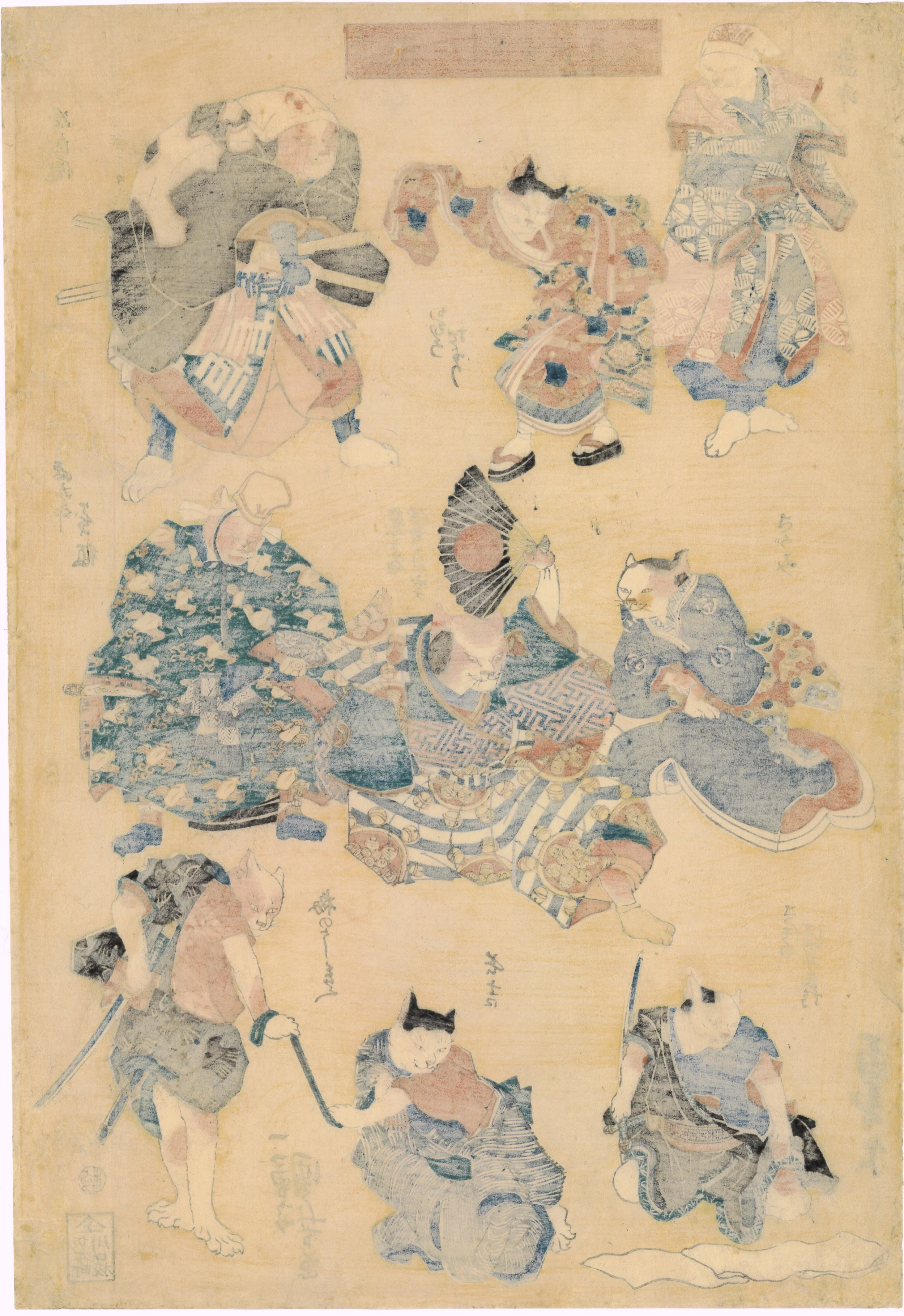
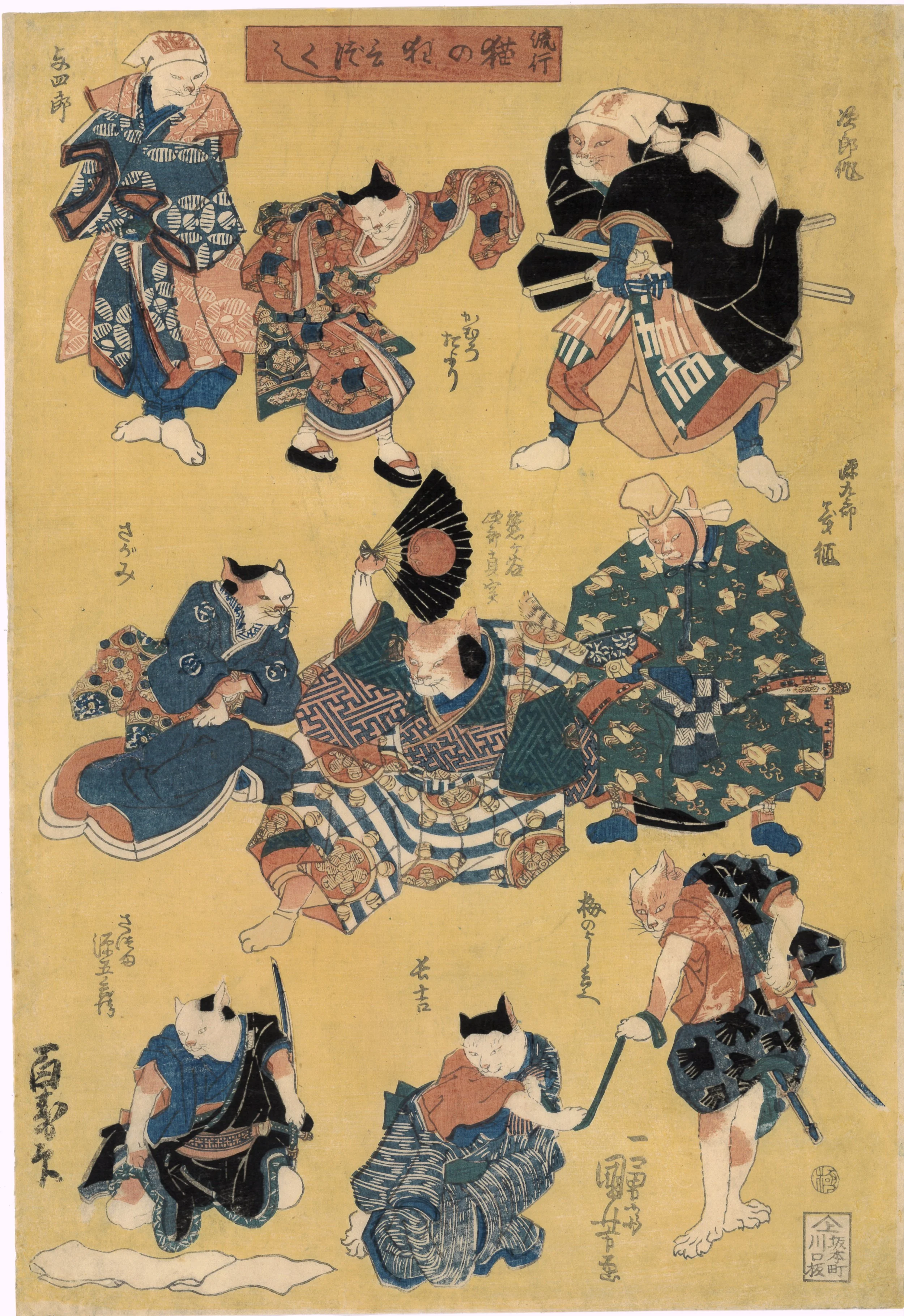
We see nine cats dressed as Kabuki characters of the day. Funny, right? They dance and perform in an irresistibly engaging fashion. Surely this is a print for children.

But the thought behind the print is deadly serious, and very adult. It was made during the era of the Tenpō reforms, during which the Shogunate clamped down on entertainment in Japanese society, closing theaters and censoring woodblock prints. Images of actors were banned.

So – why not get around the rules by replacing the actors with cats? That’s what Kuniyoshi and his publisher Fukusendō did and, amazingly, the censors approved the print – as witnessed by the Kiwame seal in the lower right.

Of course, maybe the censor was in on the joke, too.

Interested in purchasing?
Please contact us.

歌川国芳 Utagawa Kuniyoshi (1798–1861)

流行猫の狂言づくし
Popular Plays Acted by Cats

1839-42

木版画 | 纵绘大判 | 38.5cm x 26cm
Woodblock | Oban tate-e|37.5cm x 26cm

早期版次;颜色保存完好;整体品相完好;有轻度修补和小瑕疵
Fine impression and color; generally well preserved, with slight restoration and minor discoloration.

$11,000

We know Utagawa Kuniyoshi loved cats; his oeuvre is filled with them. They appear often with beautiful women, making mischief, frolicking, purring or just relaxing with a piece of fish.

But we also know that Kuniyoshi was something of a radical subversive. And all of that comes out in this wonderful and energetic design.

We see nine cats dressed as Kabuki characters of the day. Funny, right? They dance and perform in an irresistibly engaging fashion. Surely this is a print for children.

But the thought behind the print is deadly serious, and very adult. It was made during the era of the Tenpō reforms, during which the Shogunate clamped down on entertainment in Japanese society, closing theaters and censoring woodblock prints. Images of actors were banned.

So – why not get around the rules by replacing the actors with cats? That’s what Kuniyoshi and his publisher Fukusendō did and, amazingly, the censors approved the print – as witnessed by the Kiwame seal in the lower right.

Of course, maybe the censor was in on the joke, too.

Interested in purchasing?
Please contact us.

Utagawa Kuniyoshi (1798–1861)

Warriors, ghosts, crabs and cats.

The woodblock print designs of Utagawa Kuniyoshi, one of Ukiyo-e’s most vibrant and creative 19th Century masters, encompass more than that – he depicted landscapes and beautiful women, too – but those are the first genres that come to mind when contemplating this wonderful and eccentric genius and his sprawling, timeless body of work.

From an early age, the young Kuniyoshi was fascinated by drama and history – with a big helping of the supernatural. He loved nature and animals, too – especially cats: again and again they pop up in designs throughout his career (adding a premium to the prices those woodblock prints fetch today). Starting out as a relatively traditional student of the Utagawa school, he soon developed his hugely energetic style, full of dynamic action, and eventually passed it on to his many students – Yoshitoshi being the most famous. Along with Kunisada and Hiroshige, he was among the most prolific of all Ukiyo-e artists.

He was born Yoshisaburō on January 1, 1798 to a silk dyer. Some say his father’s rich patterns influenced his bold, colorful designs. He always loved legends and history. By age 12 he had shown a talent for drawing and become a student of the great Toyokuni, who gave him the name Kuniyoshi. He also studied the Tosa, Kano and Maruyama painting styles.

It took awhile for him to find his place in the thriving Ukiyo-e world. Then in the 1820s he produced his first epic warrior triptychs, and his career success was assured. He often gave legendary heroes fanciful and intricate tattoos of his own design, starting a style craze in Edo.

He eventually expanded genres to include animal studies and landscapes. His wonderful oban yoko-e series of “Famous Views of the Eastern Capital” is especially interesting for its use of Western motifs, such as shadows, billowing clouds and a low vantage point to create atmospheric perspective. While these efforts weren’t always entirely successful, they still resulted in wonderfully lively Ukiyo-e designs.

In all, he produced nearly 250 series for 150 publishers.

During the Tempo reforms of the 1840s, which dramatically censured woodblock prints, he boldly skirted rules barring depictions of actors by putting their faces on various animals, such as turtles.

He died at the age of 63 in April 1861 in his home in Genyadana.

Partial citation: Marks, Andreas, Japanese Woodblock Prints, Artists, Publishers and Masterworks: 1680-1900 (Tuttle; 2010)