
 Image 1 of 2
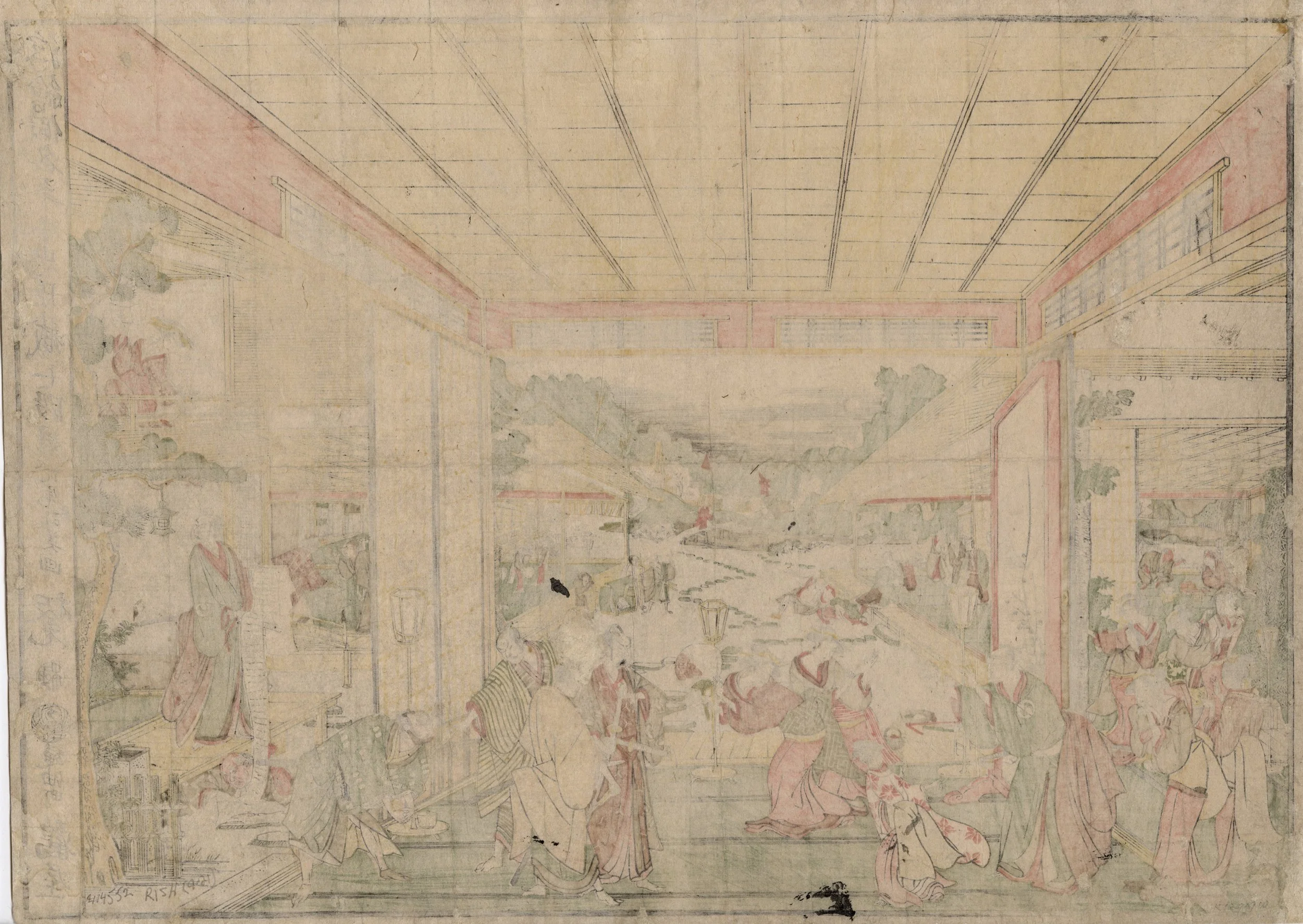 Image 2 of 2
北尾政美 Kitao Masayoshi (1764 - 1824)
浮绘:浮绘假名手本忠臣藏 七段目
Uki-e: Act VII of the Kanadehon Chushingura
1791-94
木版画 | 横绘特大判 | 31.5cm x 44cm
Woodblock-print | Toku Oban yoke -e | 31.5cm x 44cm
早期版次;整体品相完好;轻微污渍;轻微褪色
Fine impression; slight soiling; fading; otherwise in good condition
$4,500
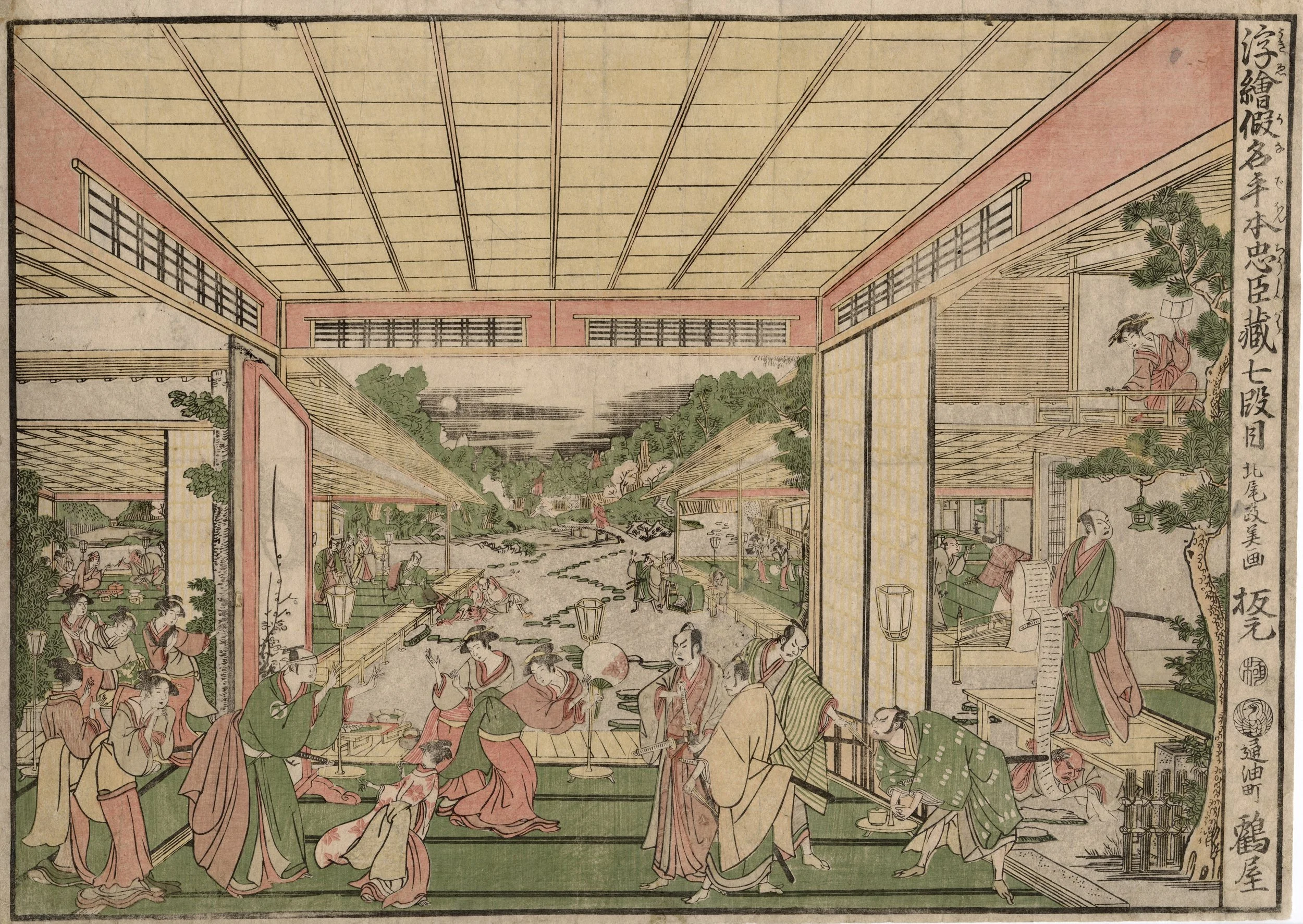
Kanadehon Chushingura, or the “47 Loyal Retainers,” is one of the most beloved stories in Japanese history, telling the famous tale of the masterless samurai who plotted to avenge the death of their lord. This print depicts Act VII, set at a Kyoto teahouse, where their leader, Oboshi Yuranosuke, sought to convince the authorities that he’d given up his plans for revenge by engaging in night after night of drunken revelry. That’s what we see here.
Created in 1790 by Kitao Masayoshi, this wonderful uki-e – or “perspective print” – makes full use of a genre influenced by western art. Using converging lines and diminishing perspective, uki-e created a striking sense of depth. Architectural interiors were particularly well suited to it, and Masayoshi was especially skilled at exploiting their geometric possibilities.
The perspective here is especially striking. The teahouse seems to open up before our eyes, revealing its rooms, corridors, and garden all at once. Roof beams, pillars, and sliding screens recede into the distance, drawing our eyes through the crowded foreground toward the garden beyond. The teahouse is alive with activity: some figures carry food and sake, others sit drinking and talking, while people upstairs look down on the scene below. Figures are scattered through the rooms, corridors, and garden, as though countless small scenes were unfolding at once. The precise geometry of the perspective and the bustle of the crowd come together beautifully, giving the scene an extraordinary sense of depth and life. And behind all this lively activity lies the secret plan for revenge.
《假名手本忠臣藏》取材自江户时代著名的赤穗事件,后来被改编为净琉璃与歌舞伎,成为当时最受欢迎的题材之一。本作描绘的是其中第七段“一力茶屋”:复仇行动之前,大星由良之助流连京都祇园的茶屋,以饮酒作乐掩人耳目,暗中等待时机。
作品创作于1790年,出自北尾政美之手。政美尤其擅长浮绘,这类版画受到西方透视画法影响,利用近大远小与向远处汇聚的线条,在平面上营造出强烈的纵深感。剧场、室内建筑与街道,也因此成为非常适合浮绘表现的题材。
这幅作品最引人注目的,正是政美对空间大胆的处理。画面仿佛将一力茶屋的一面墙整个拆去,室内、回廊与庭院同时展现在眼前。屋顶的梁木、两侧的柱子与拉门不断向深处延伸,视线穿过近处密集的人群,最终落向远处的庭院。茶屋里的人形形色色,有人端送酒菜,有人席地而坐,有人举杯交谈,也有人倚在楼上张望。不同房间、回廊和庭院中的人物彼此错落,仿佛同一时间有许多事情正在发生。严整的透视与热闹的人群交织在一起,让整座茶屋仿佛在眼前展开。
这种热闹也恰好呼应了第七段本身的戏剧性。眼前看似只是饮酒宴乐、宾客往来的寻常景象,真正的复仇计划却隐藏在这一切之后。政美没有选择刀剑相向的高潮,而是将故事中这段看似寻常的宴饮场景,变成了一幅热闹而暗藏戏剧张力的浮绘。
北尾政美 Kitao Masayoshi (1764 - 1824)
浮绘:浮绘假名手本忠臣藏 七段目
Uki-e: Act VII of the Kanadehon Chushingura
1791-94
木版画 | 横绘特大判 | 31.5cm x 44cm
Woodblock-print | Toku Oban yoke -e | 31.5cm x 44cm
早期版次;整体品相完好;轻微污渍;轻微褪色
Fine impression; slight soiling; fading; otherwise in good condition
$4,500
Kanadehon Chushingura, or the “47 Loyal Retainers,” is one of the most beloved stories in Japanese history, telling the famous tale of the masterless samurai who plotted to avenge the death of their lord. This print depicts Act VII, set at a Kyoto teahouse, where their leader, Oboshi Yuranosuke, sought to convince the authorities that he’d given up his plans for revenge by engaging in night after night of drunken revelry. That’s what we see here.
Created in 1790 by Kitao Masayoshi, this wonderful uki-e – or “perspective print” – makes full use of a genre influenced by western art. Using converging lines and diminishing perspective, uki-e created a striking sense of depth. Architectural interiors were particularly well suited to it, and Masayoshi was especially skilled at exploiting their geometric possibilities.
The perspective here is especially striking. The teahouse seems to open up before our eyes, revealing its rooms, corridors, and garden all at once. Roof beams, pillars, and sliding screens recede into the distance, drawing our eyes through the crowded foreground toward the garden beyond. The teahouse is alive with activity: some figures carry food and sake, others sit drinking and talking, while people upstairs look down on the scene below. Figures are scattered through the rooms, corridors, and garden, as though countless small scenes were unfolding at once. The precise geometry of the perspective and the bustle of the crowd come together beautifully, giving the scene an extraordinary sense of depth and life. And behind all this lively activity lies the secret plan for revenge.
《假名手本忠臣藏》取材自江户时代著名的赤穗事件,后来被改编为净琉璃与歌舞伎,成为当时最受欢迎的题材之一。本作描绘的是其中第七段“一力茶屋”:复仇行动之前,大星由良之助流连京都祇园的茶屋,以饮酒作乐掩人耳目,暗中等待时机。
作品创作于1790年,出自北尾政美之手。政美尤其擅长浮绘,这类版画受到西方透视画法影响,利用近大远小与向远处汇聚的线条,在平面上营造出强烈的纵深感。剧场、室内建筑与街道,也因此成为非常适合浮绘表现的题材。
这幅作品最引人注目的,正是政美对空间大胆的处理。画面仿佛将一力茶屋的一面墙整个拆去,室内、回廊与庭院同时展现在眼前。屋顶的梁木、两侧的柱子与拉门不断向深处延伸,视线穿过近处密集的人群,最终落向远处的庭院。茶屋里的人形形色色,有人端送酒菜,有人席地而坐,有人举杯交谈,也有人倚在楼上张望。不同房间、回廊和庭院中的人物彼此错落,仿佛同一时间有许多事情正在发生。严整的透视与热闹的人群交织在一起,让整座茶屋仿佛在眼前展开。
这种热闹也恰好呼应了第七段本身的戏剧性。眼前看似只是饮酒宴乐、宾客往来的寻常景象,真正的复仇计划却隐藏在这一切之后。政美没有选择刀剑相向的高潮,而是将故事中这段看似寻常的宴饮场景,变成了一幅热闹而暗藏戏剧张力的浮绘。