歌川貞秀 Utagawa Sadahide (1807-1873)
浅草金龙山境内巨型机关人形之图
Operating the Giant Puppet in the Grounds of Asakusa Kinryuzan
1847
木版画 | 三联续绘-纵绘大判 | 37cm x 26cm x 3
Woodblock-print | Triptych-Oban-tate-e | 37cm x 26cm x 3
早期版次;颜色鲜艳;整体品相完好;局部有轻微折痕及微小撕裂,经少量修复
Fine impression and color; minor creases and tears; slight restoration; otherwise in good condition.
$15,000
Sometimes, Edo times were fun times.
While we might think of a shrine as a place for quiet contemplation, in those days it was that and something else – grounds for entertainment and excitement. In this wonderful triptych, Utagawa Sadahide gives us an expansive and energetic view of an Edo-era spectacle.
"Operating the Giant Puppet in the Grounds of Asakusa Kinryuzan" depicts a massive, string-operated puppet of the warrior Asahina Yoshihide. He’s so big the artist needed three oban tate-e sheets to portray him. We see the giant figure contrasted with his Lilliputian handlers, who struggle to control him but seem to enjoy the struggle. And below we see vignettes of other entertainments – a traditional dance performance; a Sumo wrestling match; a man enjoying the viewing wonders of a telescope; and, on the giant warrior’s pipe, a royal procession.
Sadahide spared nothing here. In addition to portraying this event, he gives Edoites a view into what must have been considered a technical wonder, and how that wonder was operated. But he did make one big change. The Asakusa Kinryuzan was within Edo, then the most populous city in the world, and not on the seashore, as shown here.
But there might be a reason for that. Asahina Yoshihide was a renowned strongman of the Kamakura period (13th Century) who was often portrayed in Kabuki plays, and who was legendarily adept at fighting evil sea creatures. And to fight evil sea creatures, you need to be near the sea.
He was fierce, for sure, but here the great side-burned warrior looks mildly amused by all the tiny Edoites around him.
This print is in wonderful condition, with colors are rich and strong as the day the blocks were inked.
江户岁月,有时充满了奇想与欢乐。
我们习惯于将寺庙神社视为静修之地,但在那个时代,它们不仅承载信仰,更是娱乐与激动的策源地。在这幅气象万千的三联画中,歌川贞秀为我们呈现了一场活力四射的江户盛景。
这幅名为《浅草金龙山境内巨型机关人形之图》的作品,描绘了一个由绳索操控的巨型机关人偶——其形象是传说中的勇士朝比奈义秀。由于体型过于庞大,艺术家不得不动用三张“大判竖绘”接合,才足以容纳他的雄姿。画面中,这位巨人与下方如“小人国”般的操控者形成了鲜明对比,那些操控人员虽然费力地摆弄着绳索,却似乎沉浸在一种掌控巨物的快感中。在巨人脚下,江户生活的百态纷呈:这里有传统的舞蹈表演,那里有激烈的相扑博弈;有人正好奇地通过望远镜观测奇观,甚至在巨人手中的烟斗上,还行走着一支欢快的游行队伍。
贞秀在这幅画上倾注了极致的心血。他不仅记录了这场盛事,还向当时的江户人展示了某种在当时堪称“黑科技”的机械奇迹及其运作原理。不过,他做了一个大胆的改动:浅草金龙山(即浅草寺)本处于当时全球人口最稠密的都市——江户腹地,而非画中所绘的滨海之滨。
这种改动或许事出有因。朝比奈义秀是 13 世纪镰仓时代的著名大力士,也是歌舞伎中的常客,传说他极擅长格斗海中妖兽。而要与海怪搏斗,自然得移师海边。
画中的他固然威风凛凛,但垂首看向身边那些忙碌微小的江户百姓时,眼神里竟透出一丝温柔的戏谑。
此套画保存状况极佳。其颜色之浓郁强劲,仿佛依然停留在木版刚刚上墨的那一天。
Interested in purchasing?
Please contact us.
歌川貞秀 Utagawa Sadahide (1807-1873)
浅草金龙山境内巨型机关人形之图
Operating the Giant Puppet in the Grounds of Asakusa Kinryuzan
1847
木版画 | 三联续绘-纵绘大判 | 37cm x 26cm x 3
Woodblock-print | Triptych-Oban-tate-e | 37cm x 26cm x 3
早期版次;颜色鲜艳;整体品相完好;局部有轻微折痕及微小撕裂,经少量修复
Fine impression and color; minor creases and tears; slight restoration; otherwise in good condition.
$15,000
Sometimes, Edo times were fun times.
While we might think of a shrine as a place for quiet contemplation, in those days it was that and something else – grounds for entertainment and excitement. In this wonderful triptych, Utagawa Sadahide gives us an expansive and energetic view of an Edo-era spectacle.
"Operating the Giant Puppet in the Grounds of Asakusa Kinryuzan" depicts a massive, string-operated puppet of the warrior Asahina Yoshihide. He’s so big the artist needed three oban tate-e sheets to portray him. We see the giant figure contrasted with his Lilliputian handlers, who struggle to control him but seem to enjoy the struggle. And below we see vignettes of other entertainments – a traditional dance performance; a Sumo wrestling match; a man enjoying the viewing wonders of a telescope; and, on the giant warrior’s pipe, a royal procession.
Sadahide spared nothing here. In addition to portraying this event, he gives Edoites a view into what must have been considered a technical wonder, and how that wonder was operated. But he did make one big change. The Asakusa Kinryuzan was within Edo, then the most populous city in the world, and not on the seashore, as shown here.
But there might be a reason for that. Asahina Yoshihide was a renowned strongman of the Kamakura period (13th Century) who was often portrayed in Kabuki plays, and who was legendarily adept at fighting evil sea creatures. And to fight evil sea creatures, you need to be near the sea.
He was fierce, for sure, but here the great side-burned warrior looks mildly amused by all the tiny Edoites around him.
This print is in wonderful condition, with colors are rich and strong as the day the blocks were inked.
江户岁月,有时充满了奇想与欢乐。
我们习惯于将寺庙神社视为静修之地,但在那个时代,它们不仅承载信仰,更是娱乐与激动的策源地。在这幅气象万千的三联画中,歌川贞秀为我们呈现了一场活力四射的江户盛景。
这幅名为《浅草金龙山境内巨型机关人形之图》的作品,描绘了一个由绳索操控的巨型机关人偶——其形象是传说中的勇士朝比奈义秀。由于体型过于庞大,艺术家不得不动用三张“大判竖绘”接合,才足以容纳他的雄姿。画面中,这位巨人与下方如“小人国”般的操控者形成了鲜明对比,那些操控人员虽然费力地摆弄着绳索,却似乎沉浸在一种掌控巨物的快感中。在巨人脚下,江户生活的百态纷呈:这里有传统的舞蹈表演,那里有激烈的相扑博弈;有人正好奇地通过望远镜观测奇观,甚至在巨人手中的烟斗上,还行走着一支欢快的游行队伍。
贞秀在这幅画上倾注了极致的心血。他不仅记录了这场盛事,还向当时的江户人展示了某种在当时堪称“黑科技”的机械奇迹及其运作原理。不过,他做了一个大胆的改动:浅草金龙山(即浅草寺)本处于当时全球人口最稠密的都市——江户腹地,而非画中所绘的滨海之滨。
这种改动或许事出有因。朝比奈义秀是 13 世纪镰仓时代的著名大力士,也是歌舞伎中的常客,传说他极擅长格斗海中妖兽。而要与海怪搏斗,自然得移师海边。
画中的他固然威风凛凛,但垂首看向身边那些忙碌微小的江户百姓时,眼神里竟透出一丝温柔的戏谑。
此套画保存状况极佳。其颜色之浓郁强劲,仿佛依然停留在木版刚刚上墨的那一天。
Interested in purchasing?
Please contact us.

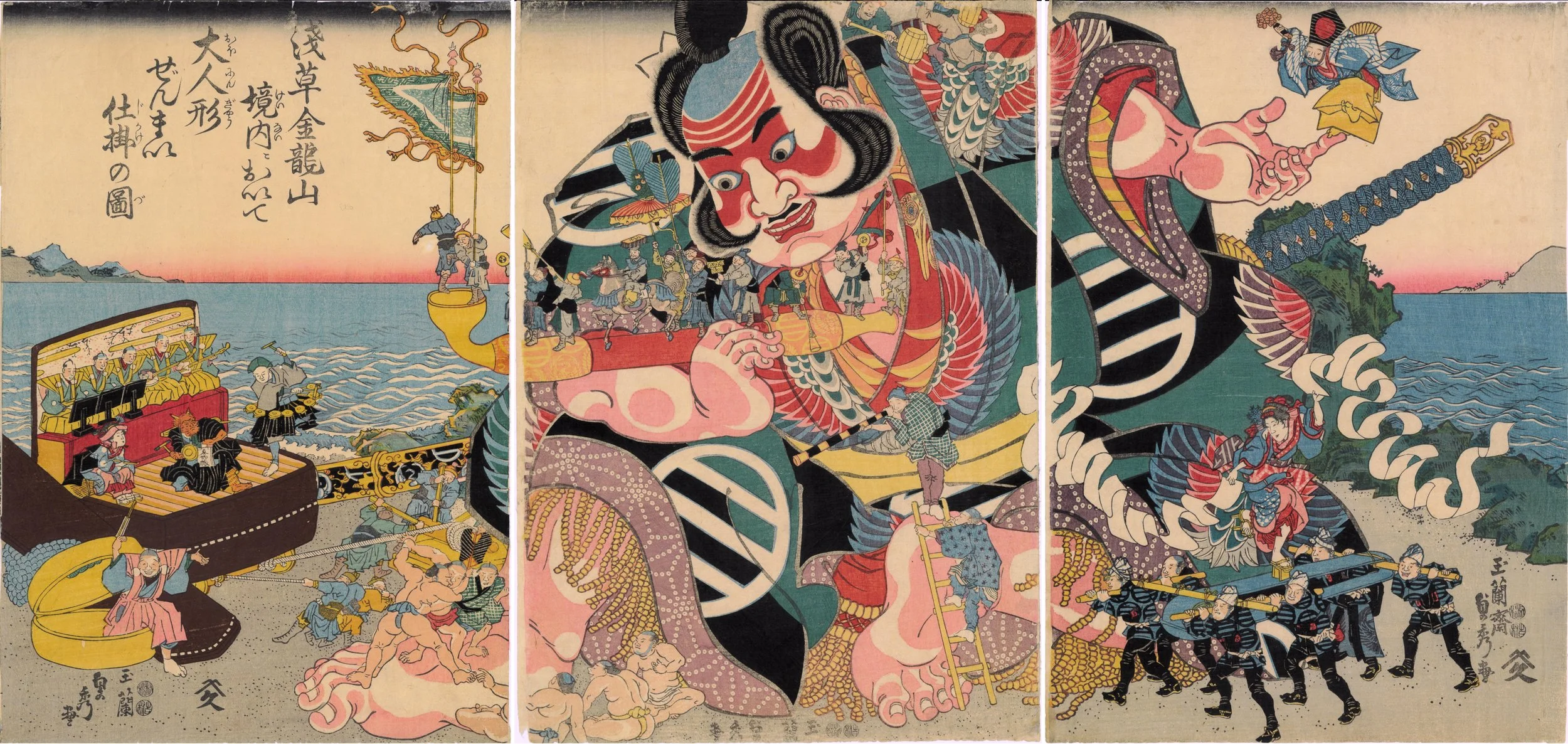 Image 1 of 8
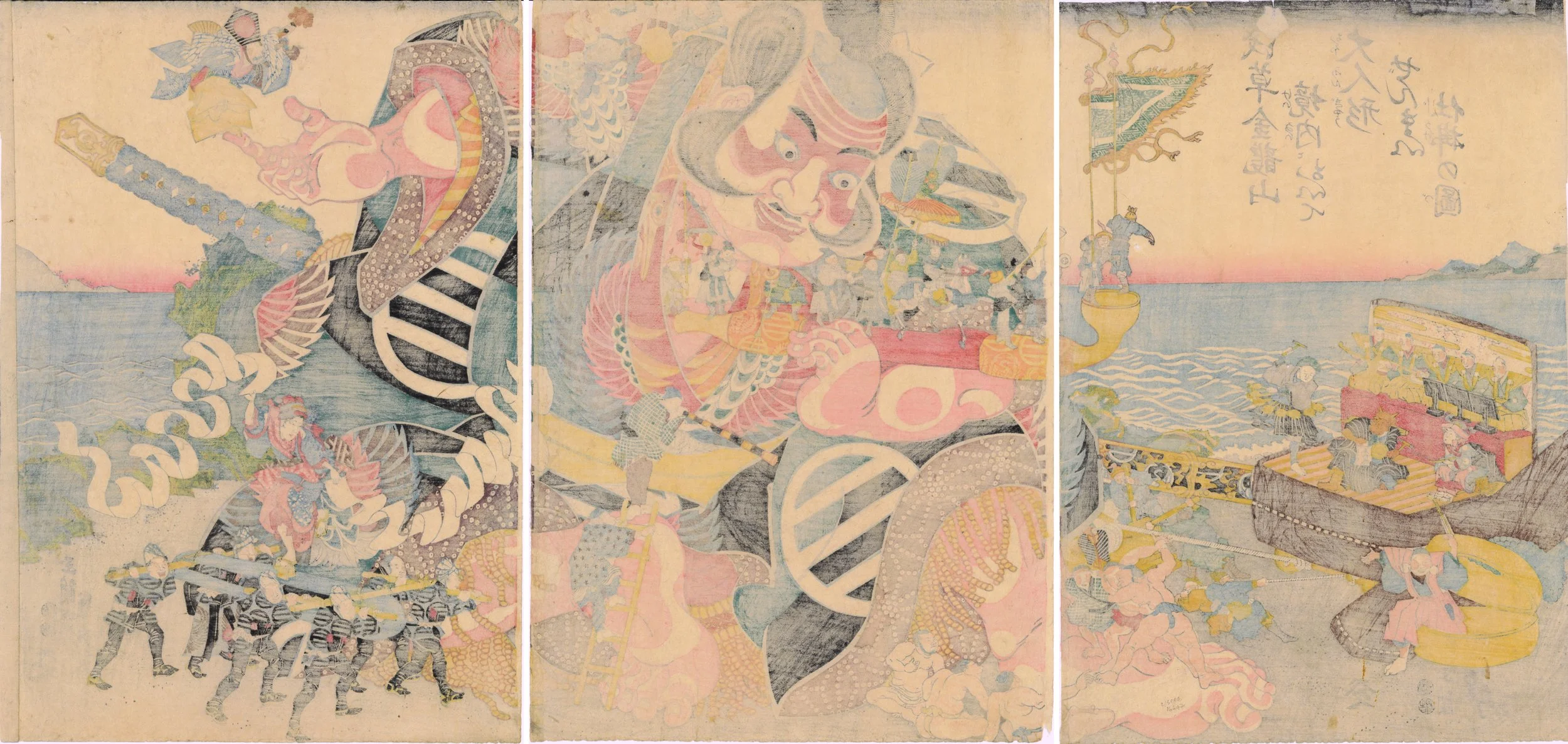 Image 2 of 8
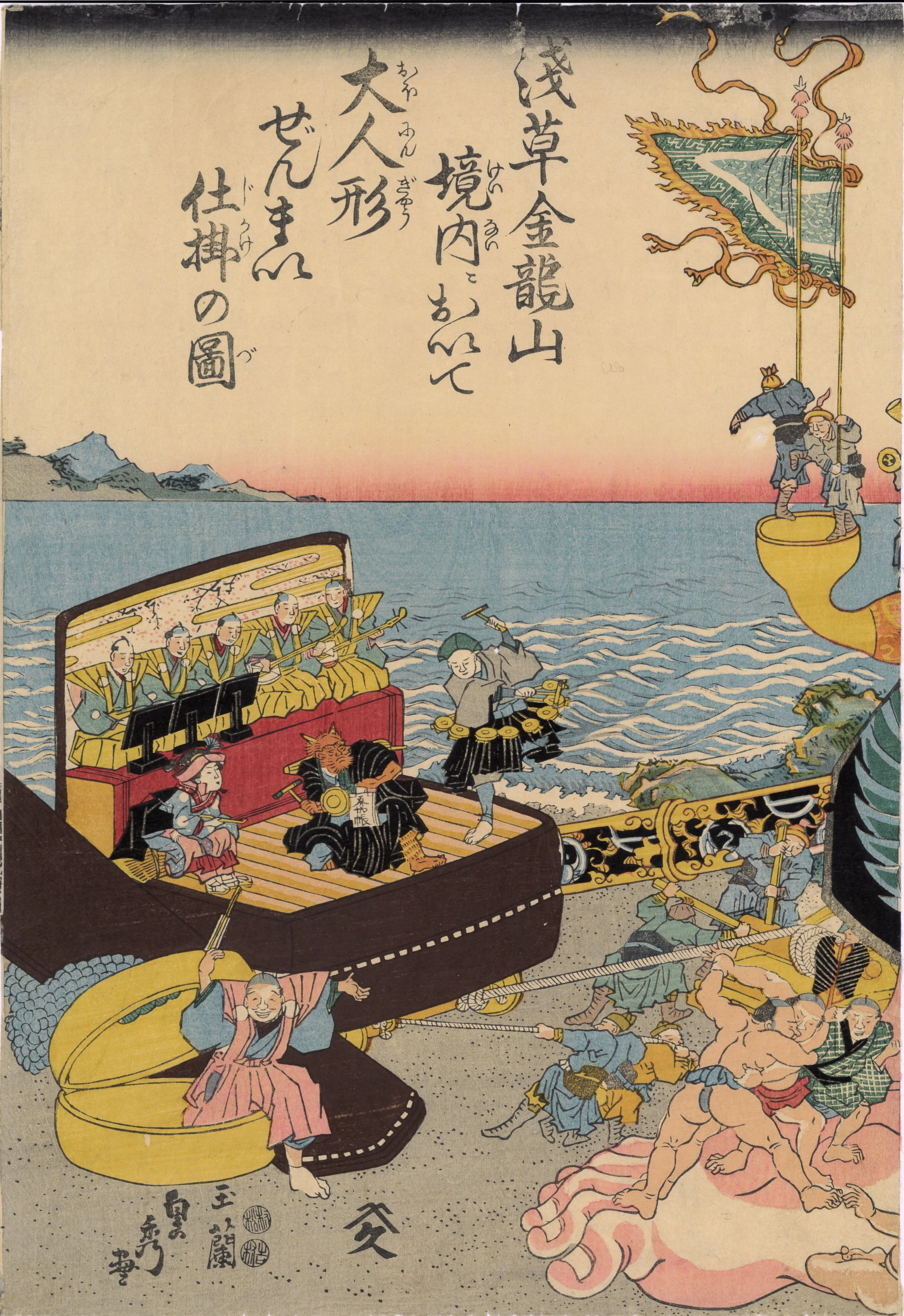 Image 3 of 8
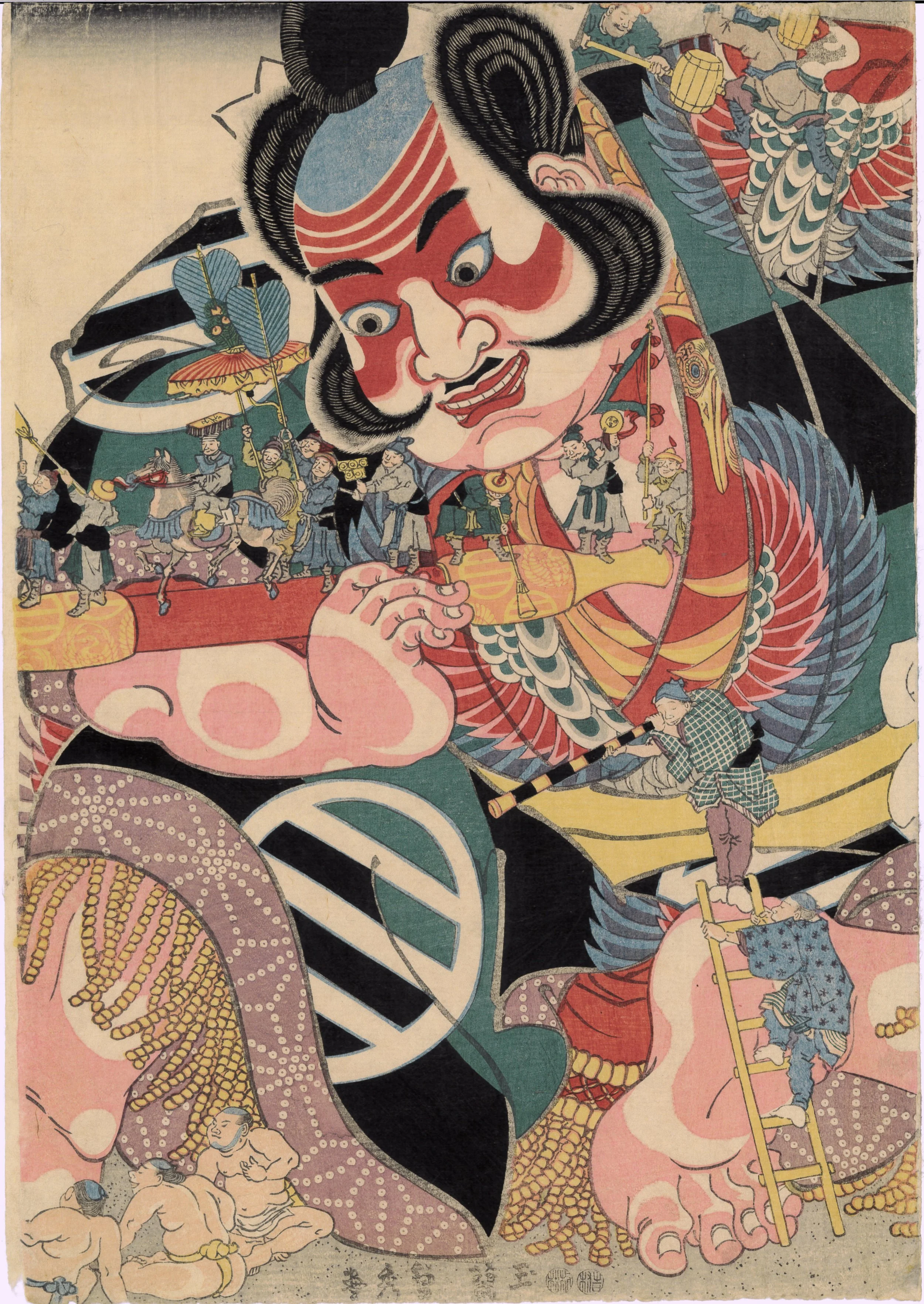 Image 4 of 8
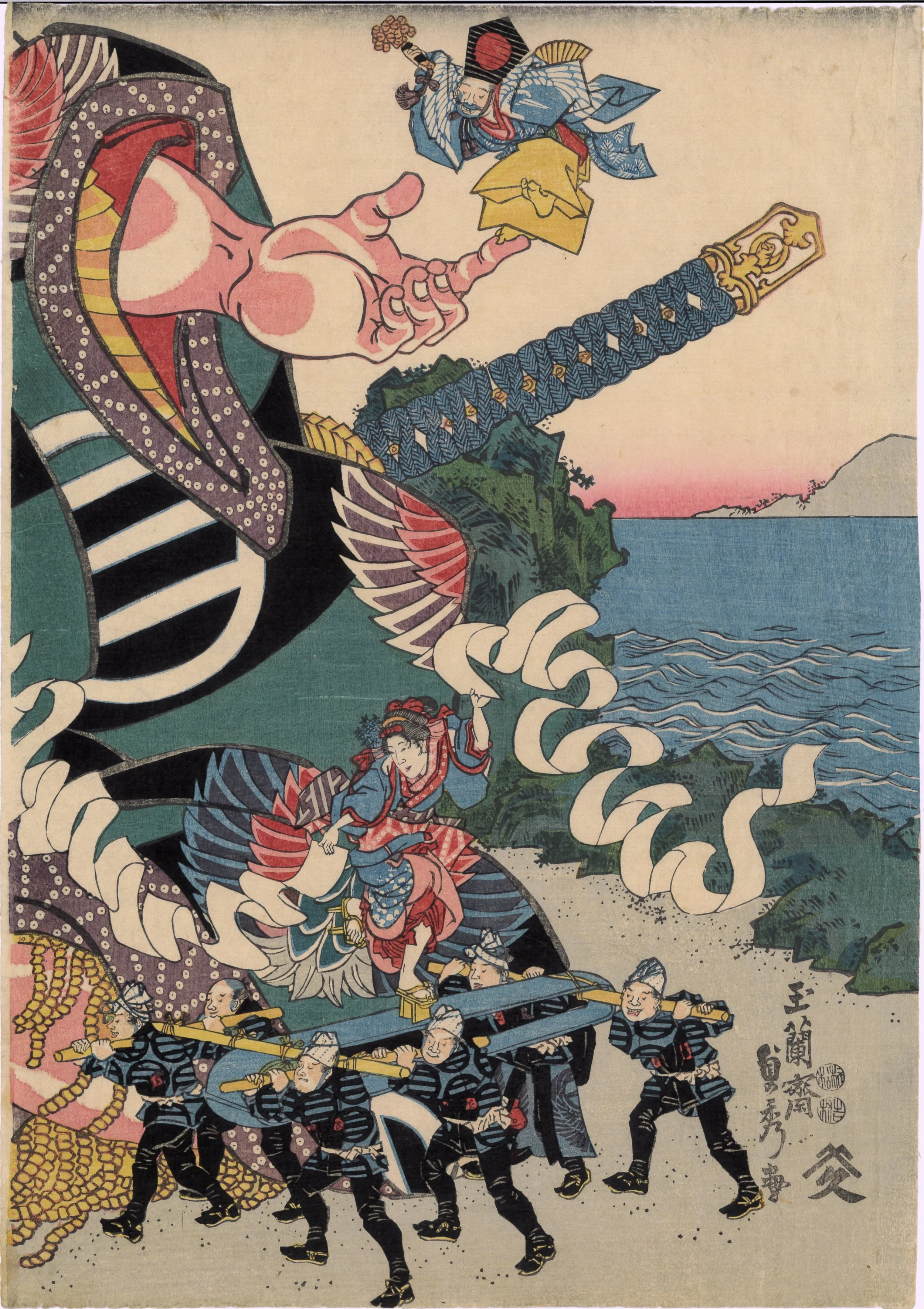 Image 5 of 8
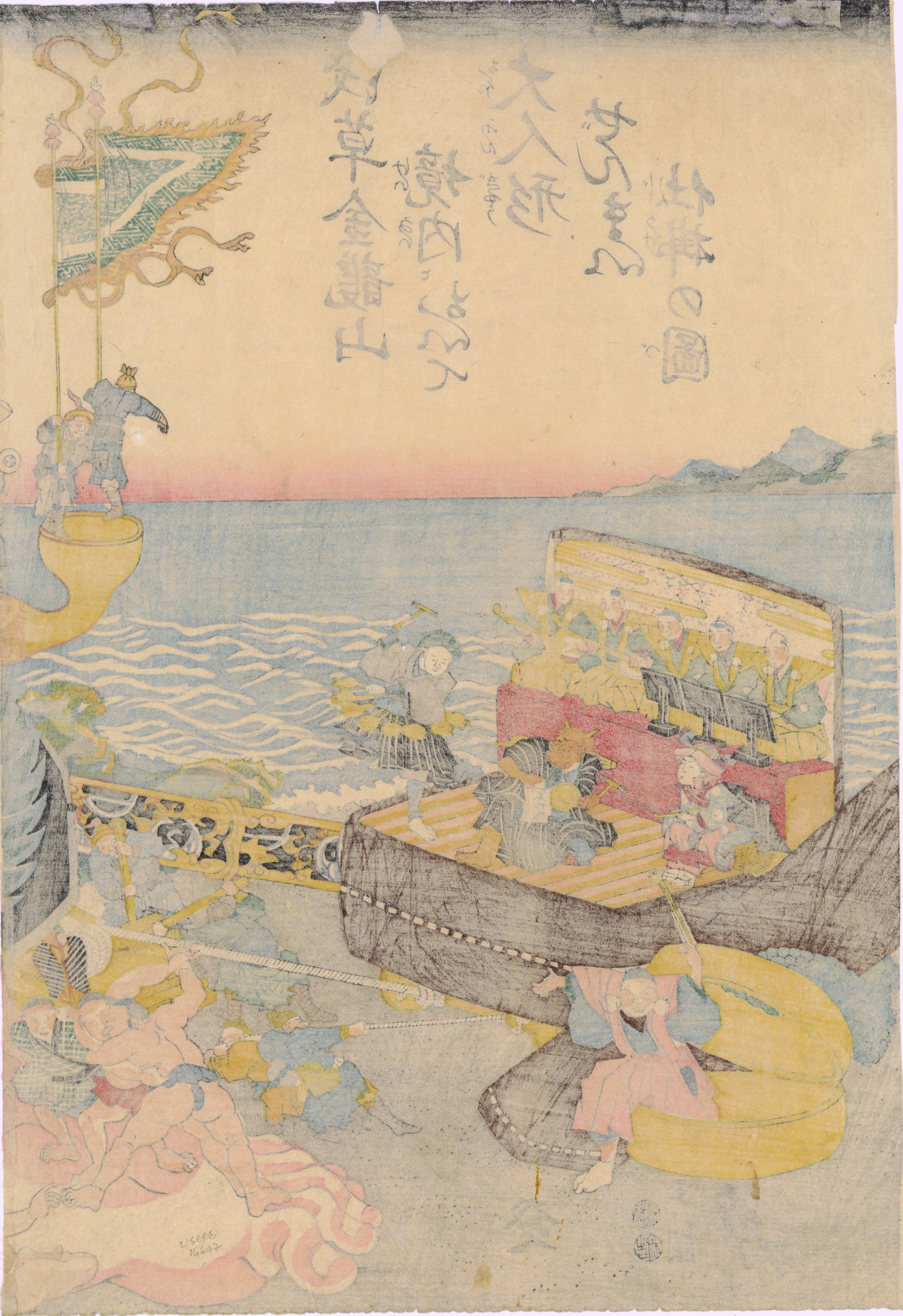 Image 6 of 8
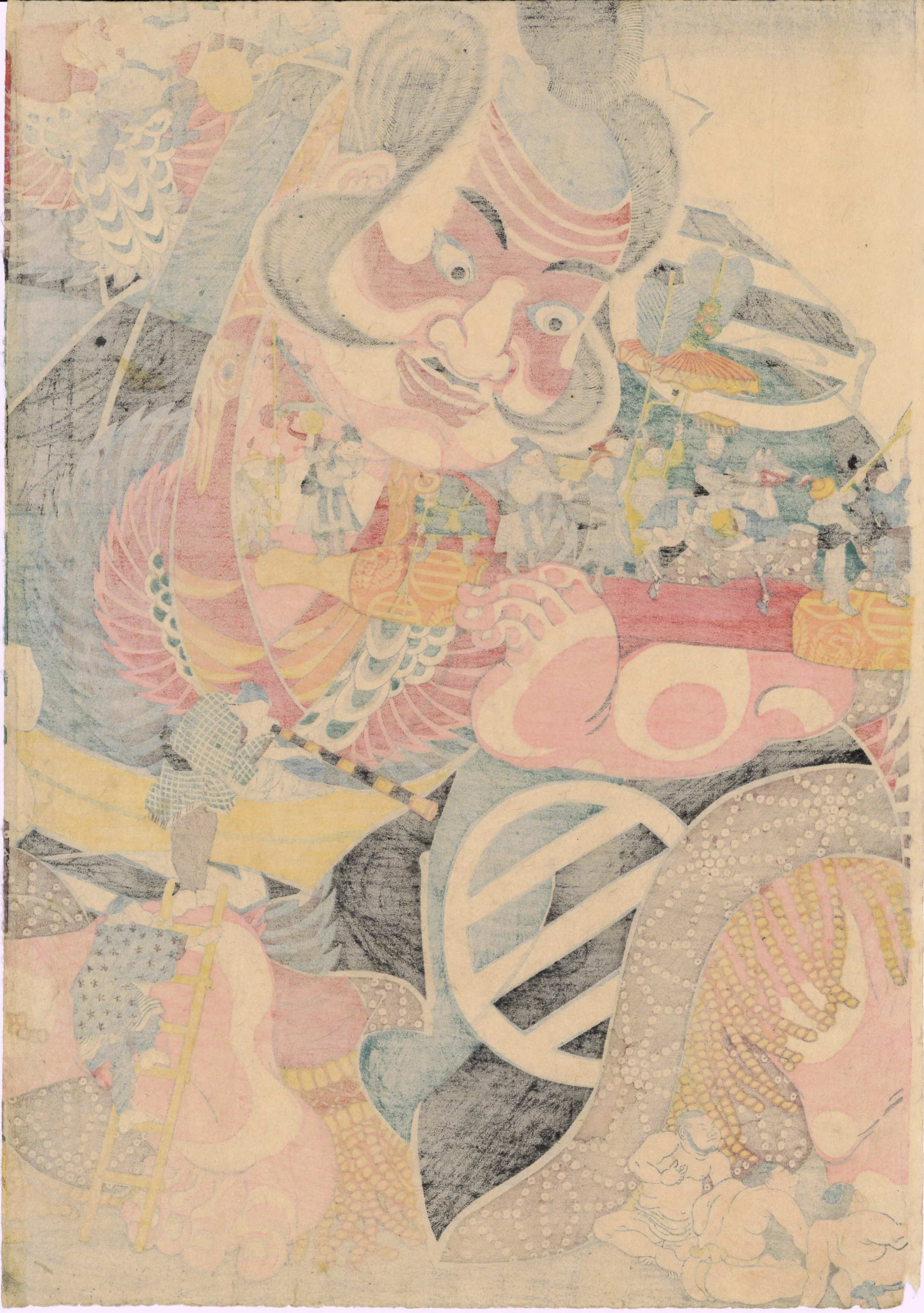 Image 7 of 8
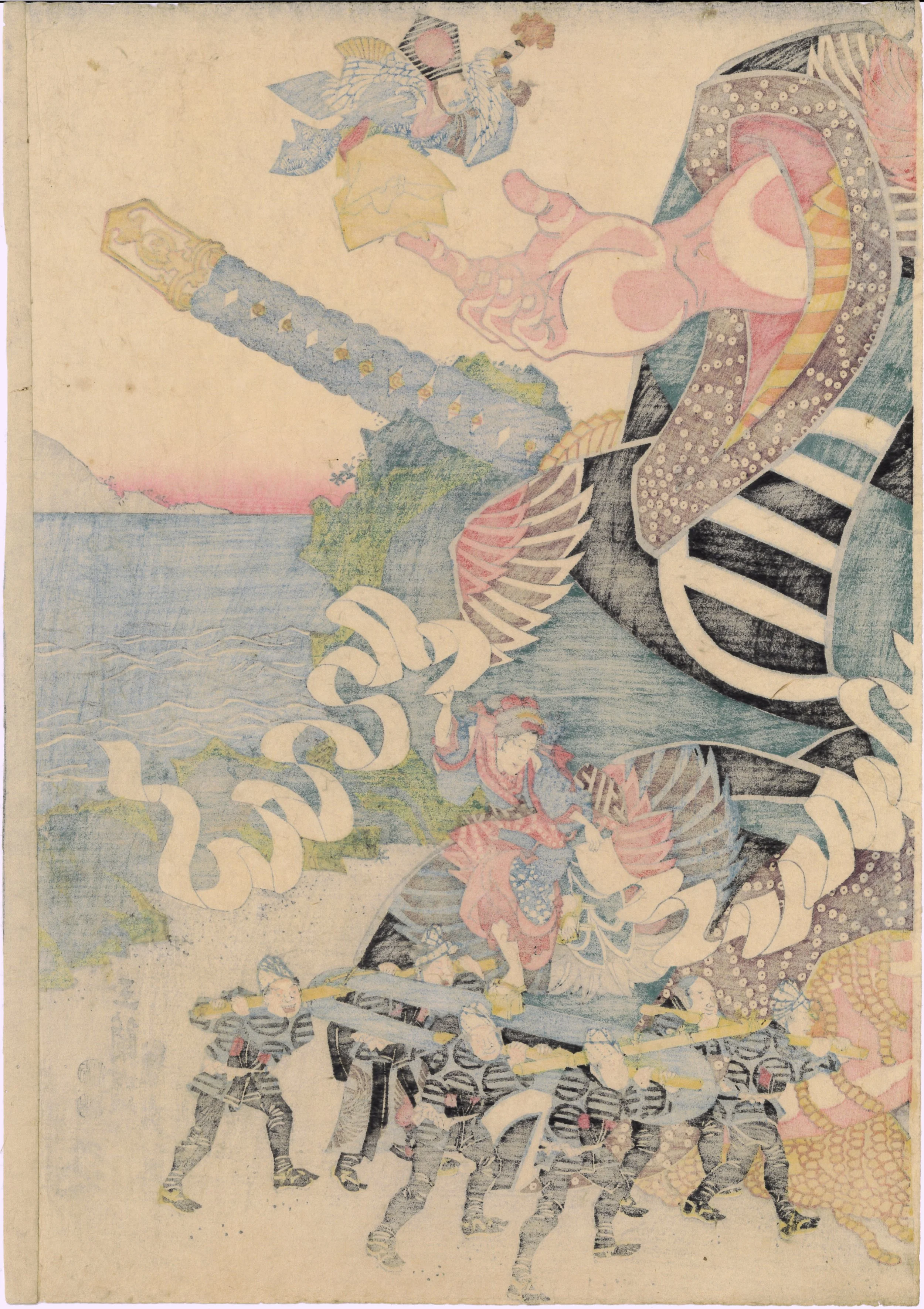 Image 8 of 8