
 Image 1 of 8
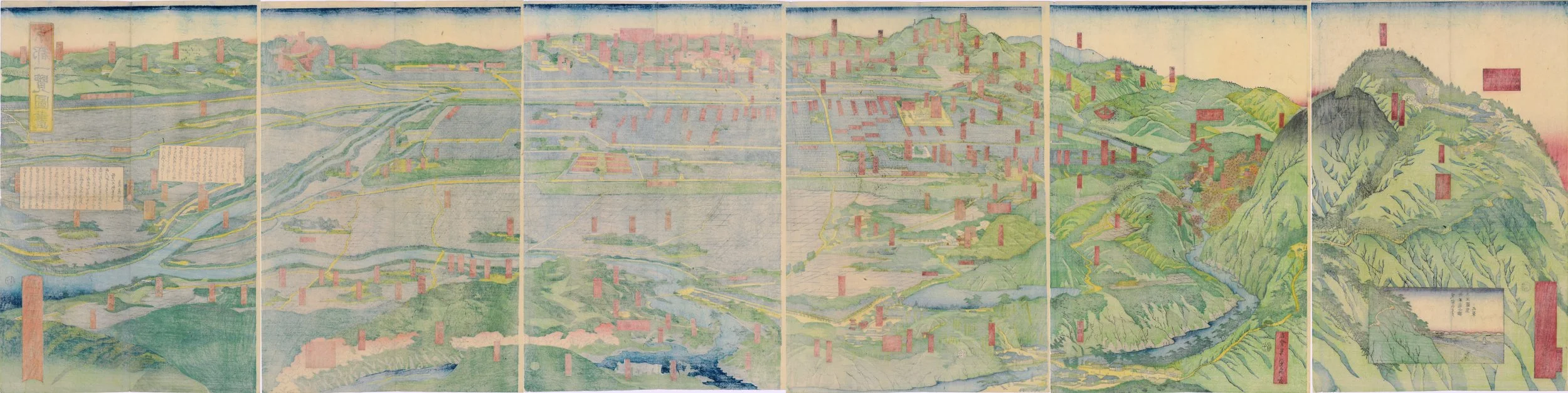 Image 2 of 8
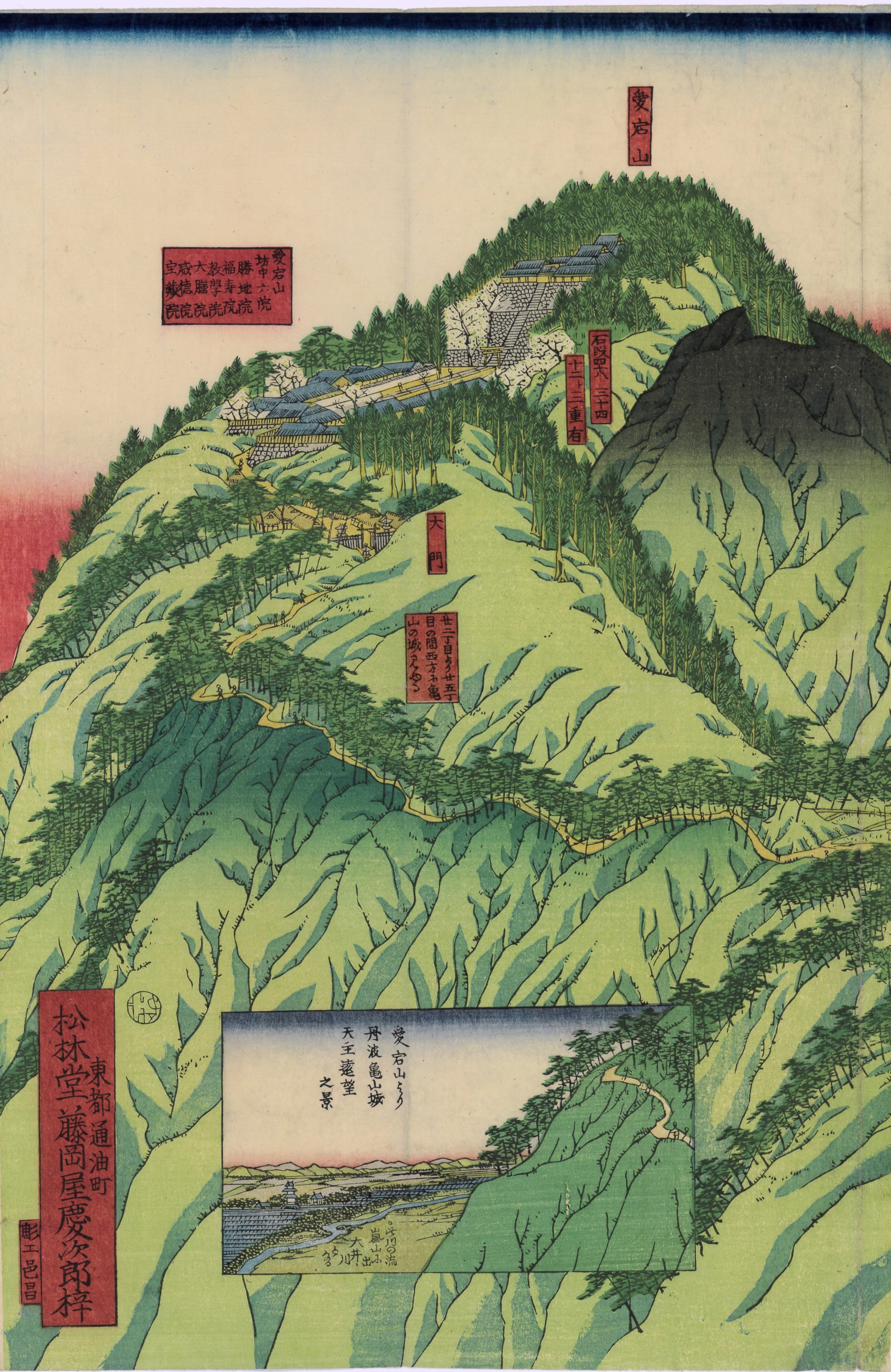 Image 3 of 8
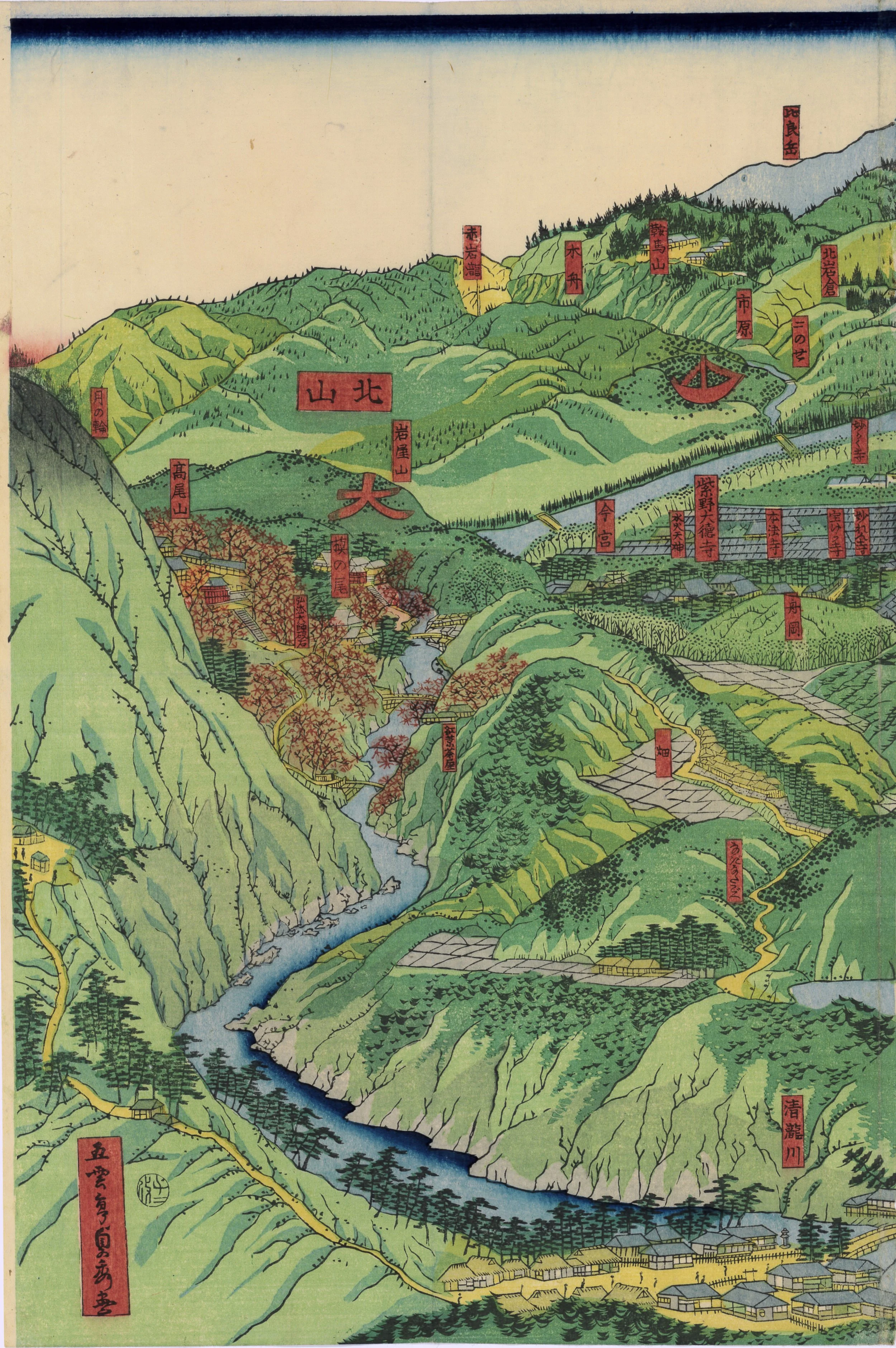 Image 4 of 8
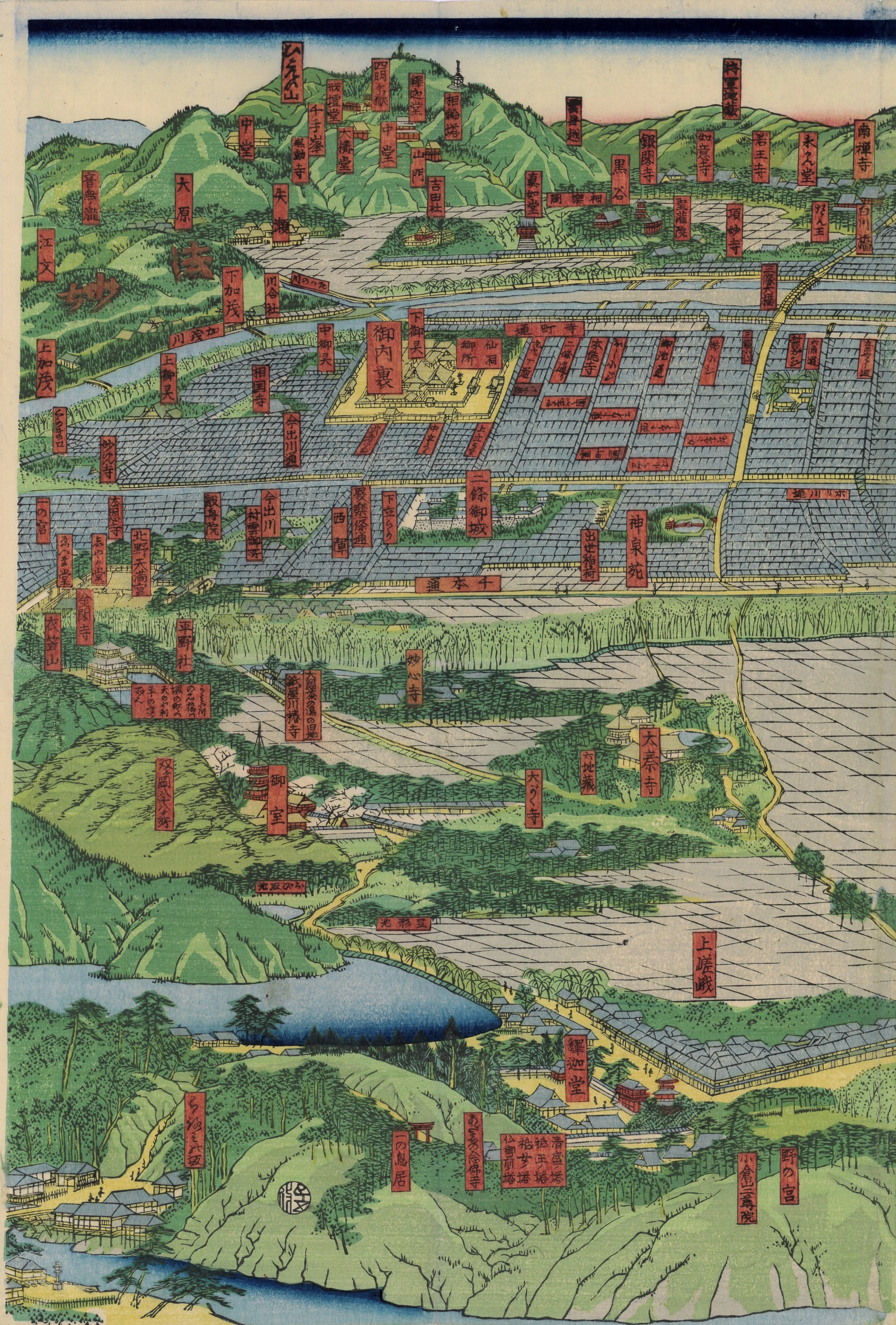 Image 5 of 8
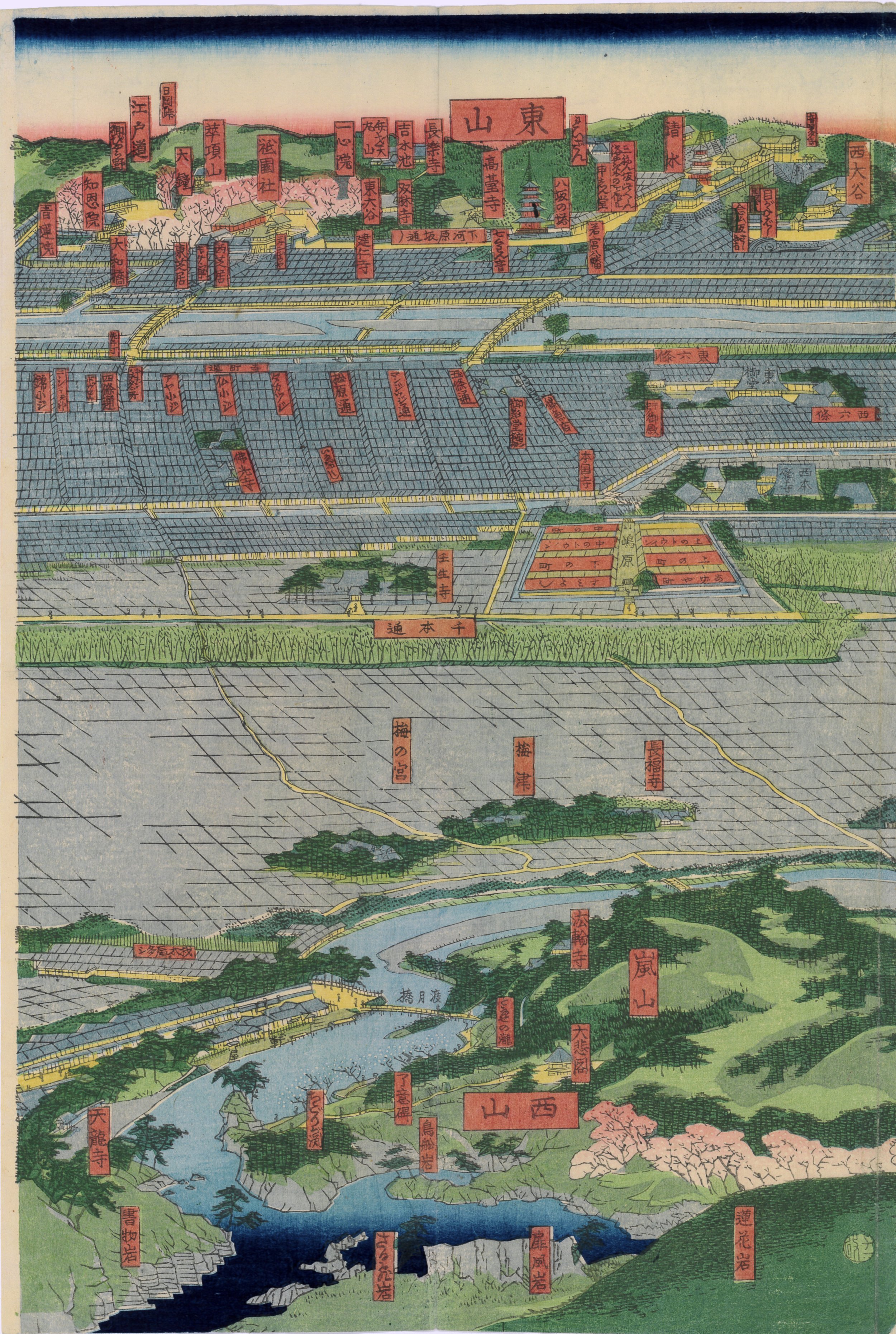 Image 6 of 8
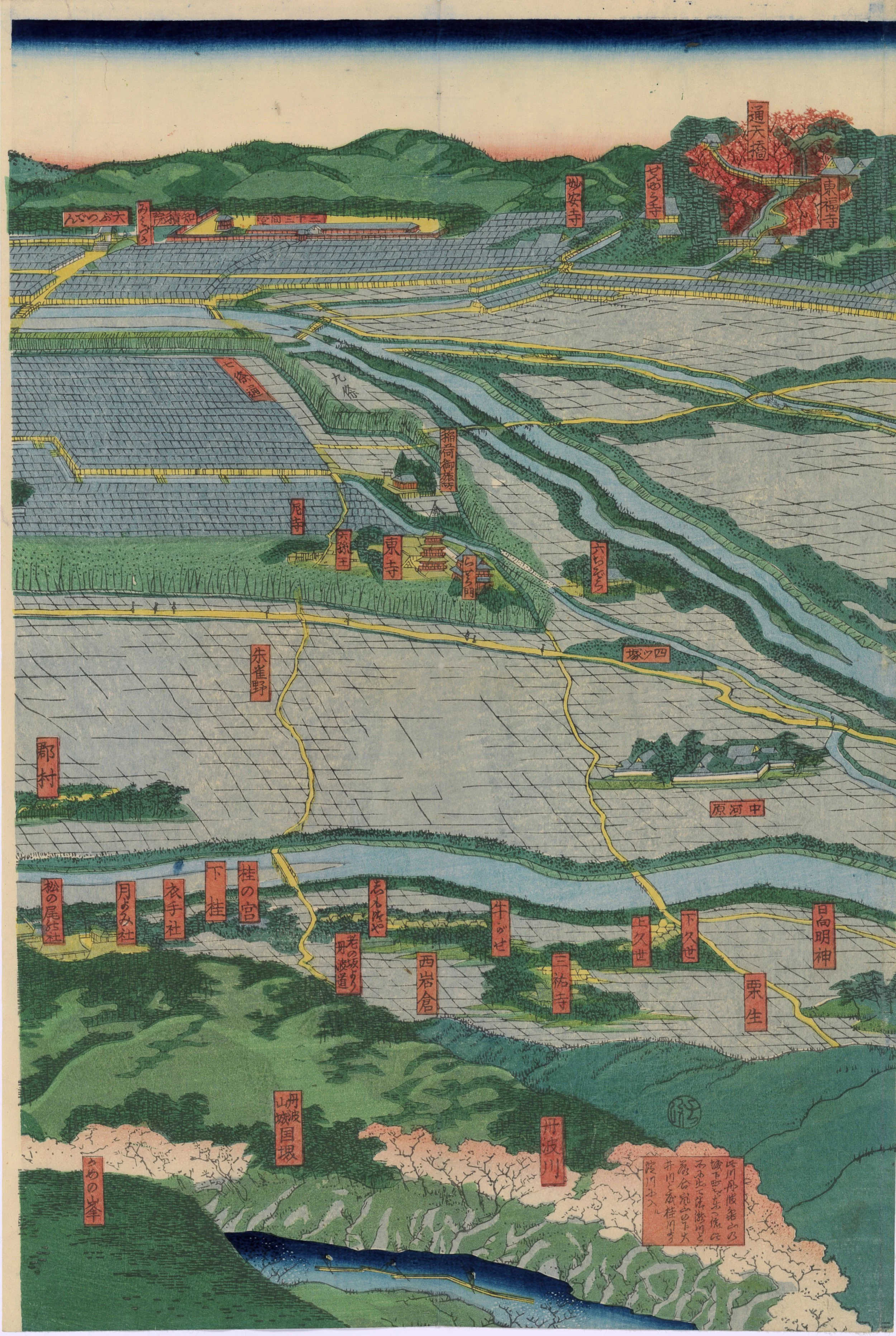 Image 7 of 8
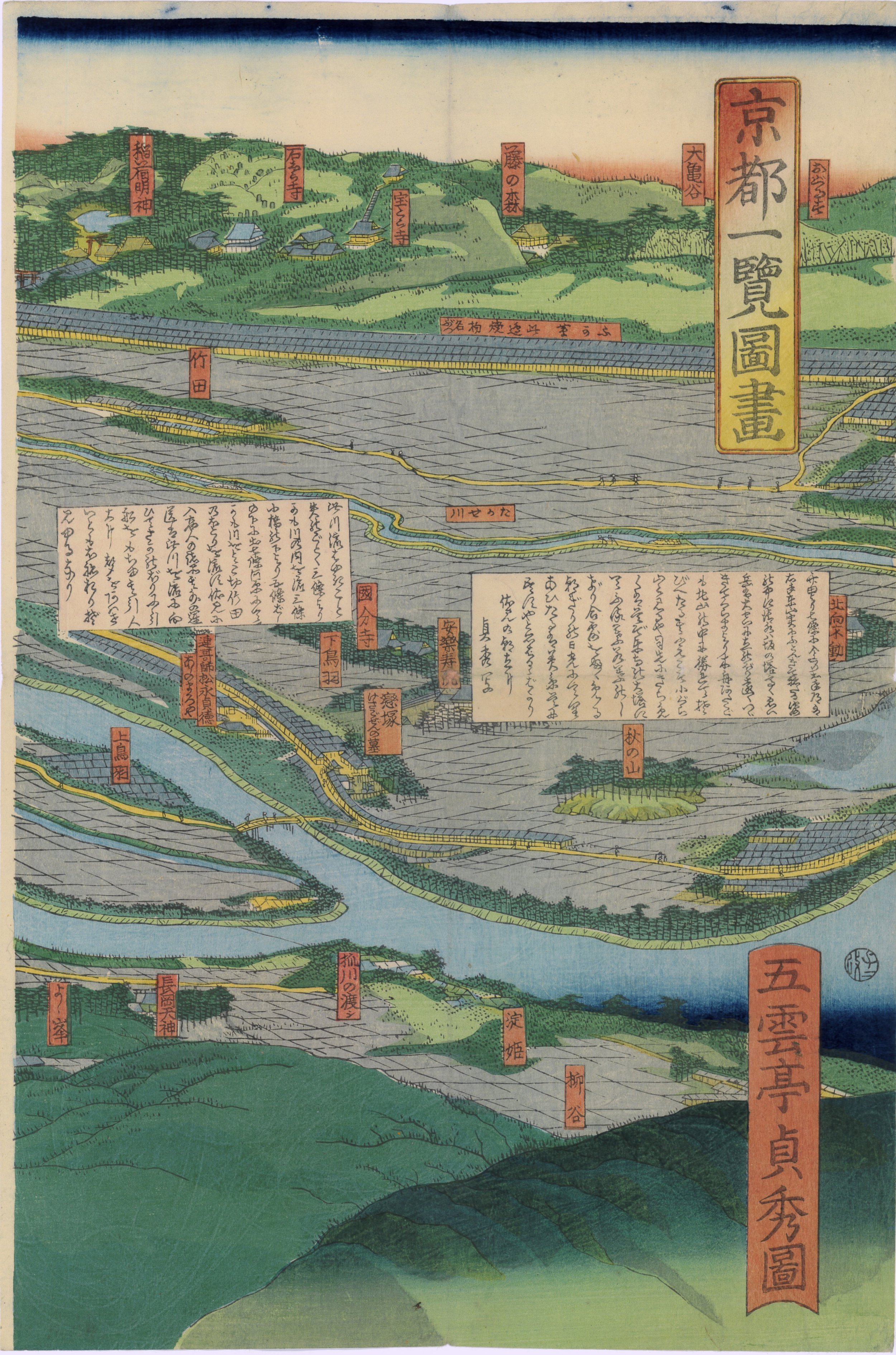 Image 8 of 8
Utagawa Sadahide (1807-1873)
In his 70 years, Utagawa Sadahide – born Hashimoto Kenjiro – saw it all.
His first designs date from the late 1820s, when he joined the Utagawa school and became a top pupil of Kunisada. These were book illustrations, and portraits of actors and beautiful women (bijin).It was a classic beginning for a Japanese woodblock print artist of that era, with his early designs hewing closely to the Ukiyoe styles and traditions of those days.
But then things got interesting.
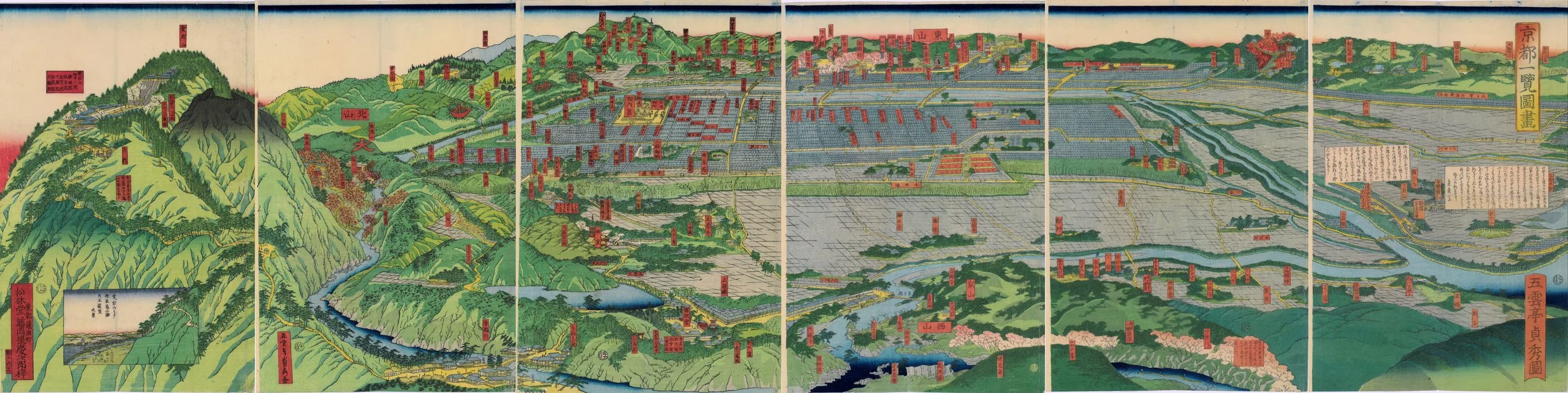
After branching out into landscapes, Sadahide found himself hugely popular in the turbulent era after Commodore Perry’s black ships arrived uninvited off Yokohama. Now he went his own way with two distinct artistic paths: he produced numerous portraits of the newly arrived Westerners (so-called Yokohama-e prints), and just as notably, became known for ambitious panoramic views of Japan’s cities. He’d often used multiple oban tate-e sheets, such as in this stunning six-sheet hexaptych view of Kyoto, to capture the entirety of these thriving urban centers.
Some involved even more sheets, possibly in a bid to compete with photography, which became a craze in Japan and would, eventually, eclipse woodblock prints. Thus, in the waning days of Ukiyoe, he helped push the form to creative new heights. These multi-sheet designs stand on their own artistic merit, but also act as remarkable, map-like records of a vanished world.
Sadahide moved to Nagasaki before becoming one of the first Ukiyoe artists to visit a foreign city, none other than Paris: He was one of eleven artists selected by the Shogunate to represent Japan at the the World’s Fair of 1868 (ironically, the last year of the Shogunate).
At the time he was the bestselling print artist in Japan. One can only imagine his thoughts as he first glimpsed the City of Light. He died in 1878. What an amazing journey he had.