Shotei | Fireworks at Ryogoku

$0.00

高橋松亭 Takahashi Shotei (1871–1945)

两国花火
Fireworks at Ryogoku

1930s

木版画 | 大短册纵绘 | 38.5cm x 17.6cm
Woodblock-print | Nagaban Tate-e | 38.5cm x 17.6cm

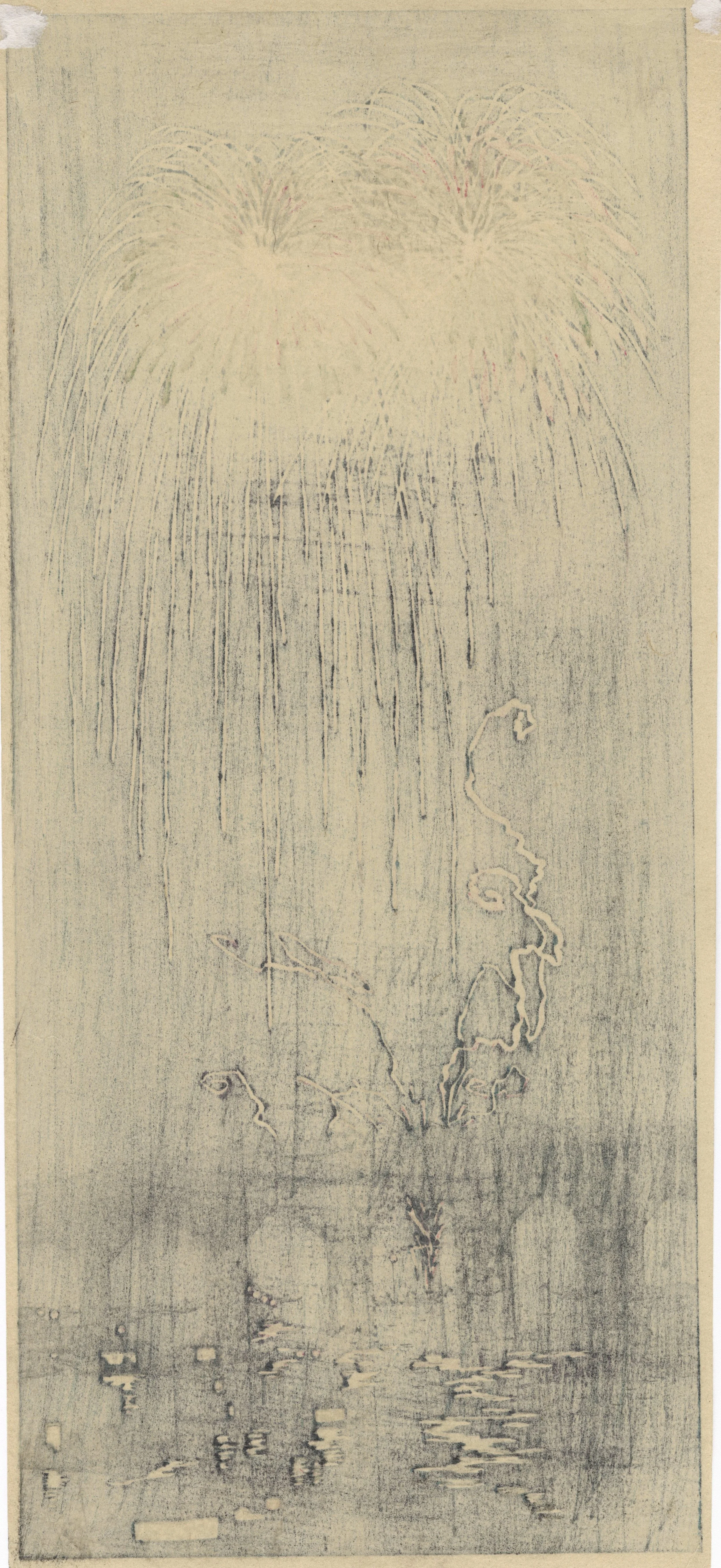
早期版次;颜色鲜艳;品相非常好;背面有两处先前残留的胶纸痕迹
Fine impression and color; two old tape residues on the verso; otherwise in good condition.

$3,500

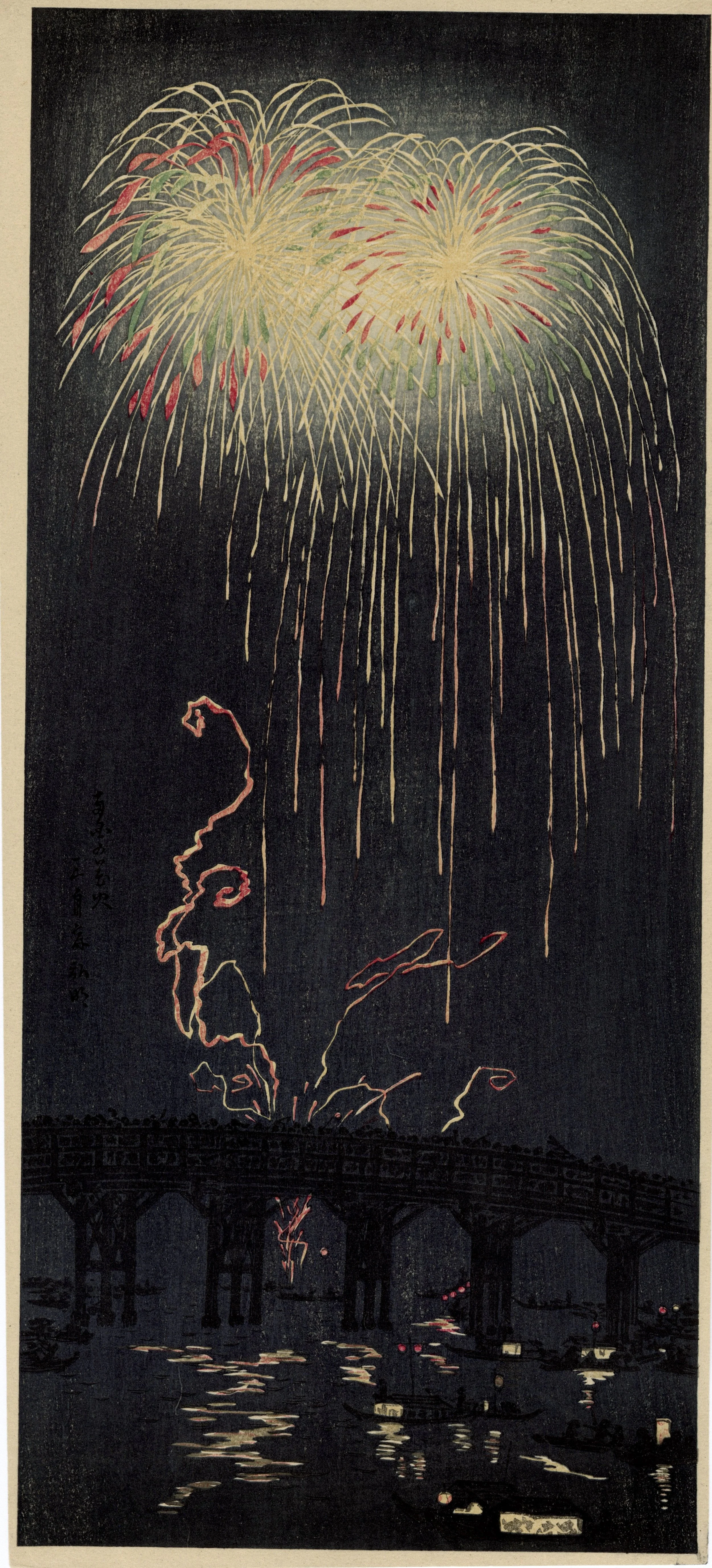
夜空仿佛在这一刻被点亮。两朵巨大的花火几乎同时绽放,金色火光层层舒展,向四周不断延伸,又随着重力缓缓垂落。点缀其间的红、绿色火星依然在夜空中飞旋、跃动,时而交织于金色光芒之间,时而划破沉静的夜色,使整片天空仿佛始终处于流动之中。

画面几乎只用了黑、黄、红几种主要色彩,却营造出远比想象中更丰富的层次。深邃的夜空并非均匀的一片黑色,而是在细微的深浅变化中衬托出烟花的璀璨;河面上点点船灯与烟火的倒影轻轻摇曳,与夜空中的火光彼此呼应。有限的色彩在松亭大胆的搭配之下,反而迸发出令人惊叹的视觉张力。

创作于1930年的《两国花火》,正是高桥松亭夜景作品中最令人难忘的一幅。

Interested in purchasing?
Please contact us.

高橋松亭 Takahashi Shotei (1871–1945)

两国花火
Fireworks at Ryogoku

1930s

木版画 | 大短册纵绘 | 38.5cm x 17.6cm
Woodblock-print | Nagaban Tate-e | 38.5cm x 17.6cm

早期版次;颜色鲜艳;品相非常好;背面有两处先前残留的胶纸痕迹
Fine impression and color; two old tape residues on the verso; otherwise in good condition.

$3,500

夜空仿佛在这一刻被点亮。两朵巨大的花火几乎同时绽放,金色火光层层舒展,向四周不断延伸,又随着重力缓缓垂落。点缀其间的红、绿色火星依然在夜空中飞旋、跃动,时而交织于金色光芒之间,时而划破沉静的夜色,使整片天空仿佛始终处于流动之中。

画面几乎只用了黑、黄、红几种主要色彩,却营造出远比想象中更丰富的层次。深邃的夜空并非均匀的一片黑色,而是在细微的深浅变化中衬托出烟花的璀璨;河面上点点船灯与烟火的倒影轻轻摇曳,与夜空中的火光彼此呼应。有限的色彩在松亭大胆的搭配之下,反而迸发出令人惊叹的视觉张力。

创作于1930年的《两国花火》,正是高桥松亭夜景作品中最令人难忘的一幅。

Interested in purchasing?
Please contact us.

Takahashi Shotei (1871–1945)

Takahashi Shotei may have once been the most well-known Japanese woodblock print artist in the world, even if the Westerners who flooded Japan in the early part of the 20th Century didn’t know his name.

Watanabe Shozaburo hired him to design shinsaku-hanga (souvenir prints) to fulfill tourists’ demand for Ukiyoe-style woodblock landscape prints similar to those created in the past by masters of that genre, especially Hiroshige. These prints sold extremely well to this new audience, and were often in unusual sizes, to striking effect. (We wonder what Hiroshige would have thought of them.)

Shotei eventually took the name Hiroaki and produced hundreds of designs, but the blocks were destroyed in the Great Kanto earthquake of 1923. This is when Watanabe assigned him the unusual task of recreating his own works. He lived until 1945.