窪俊満 Kubo Shunman (1757-1820)
摺物绘: 望远镜和江之岛远景
Surimono: Telescope and View of Enoshima
Ca. 1800s
木版画 | 四切判 | 13.5cm x 25cm
Woodblock-print | Koban | 13.5cm x 25cm
早期版次;颜色鲜艳;品相非常好
Fine impression, color and condition
This beautiful surimono by Kubo Shunman is filled with modest joys.
Exquisitely printed in the diminutive koban size, on thick, luxurious paper, it was privately produced, like all surimono. These austere designs were given as gifts to members of poetry groups at which participants, wealthy elite, would share their own humorous poems, known as “kyōka.”
It is also partly a still life. Shunman was especially adept at this sub-genre of surimono, over time depicting flutes, tea ceremony implements, temple bells, pheasants, fans and numerous other objects from daily Edo life – always with an elegantly balanced sense of pictorial space.
But here his subject is newsworthy in itself – a telescope.
This was a rare item indeed in Edo times, but not unknown. The first telescope came to Japan from Holland in 1613 and, subsequently, additional examples arrived via both Europe and China, usually coming through the treaty port of Nagasaki. Eventually, some were manufactured in Japan using examples brought into the country from elsewhere. They were very expensive items, and thus the perview of the very rich. An ordinary merchent or farmer would never have come in contact with one.
Its appearance in this print gives the design an exotic feel which must have seemed quite unique to the lucky recipients. But there is another wonderful element to this design. Behind the telescope is… another print, a picture within a picture. The coastal scene it portrays – glimpsed, perhaps, through a telescope – is Enoshima, the pilgrimage island near Tokyo to which one could walk at low tide, and which provided an excellent view of Mount Fuji. It is home to shrines dedicated to Benzaiten, the goddess of fortune, music, and knowledge. Here we see crashing waves and two fishermen packing their baskets up for the day.
Kubo Shunman was a renowned master of folding screen painting and one of the leading figures in the kyōka movement. His woodblock prints were almost exclusively surimono. As they were not sold publicly, the number produced was very small, and few have survived to this day. Therefore, each print is highly valuable, due to its inherent rarity and high level of craftsmanship. These were, after all, gifts given by the elite for the elite.
摺物绘是浮世绘中最优雅、最奢华的一个特殊品类。江户时代,富有的商人和文化人群体有组建诗社的社交习惯,他们定期聚会并分享创作的“狂歌”。主办者会收集会员的作品,邀请画师按文字内容作画,这种带有诗歌的单幅“定制”画作就是“摺物绘”,通常会在事后分发给会员,会员又再分赠友人,作为自己财力、文化素养、品味与社会阶层的象征。
摺物绘与普通浮世绘不同,通常为正方形。画中文字部分为狂歌,画面主体多为“静物小品”,通过各种物件的组合来暗示或呼应文字内容,显得含蓄而内敛。摺物绘并不公开销售,制作数量本就有限,流传至今的数量更为稀少。它代表着会员的经济实力与社会地位,往往会聘请第一流的画师,在制作上不惜代价,因此整体完成度极高,也构成了其稳定而明确的收藏价值基础。
这张作品出自摺物绘名家、同时也是狂歌活动领军人物之一的——窪俊满。画面左侧出现的一副单筒望远镜,是理解本作价值的关键元素之一。在江户时代相当长的一段时间内,日本对外贸易与西洋器物的输入受到严格限制,望远镜这类精密光学器具主要经由极少数渠道传入日本社会,流通圈层狭窄、价格高昂,更多与幕府、大名阶层及少数通晓兰学、天文观测的知识人网络相关。对于普通町人而言,望远镜不仅难以拥有,甚至未必有机会亲眼见到实物,因此它在当时并非日常器物,而是一种带有鲜明“西洋新知”与身份象征意味的舶来奇器。
当望远镜这一高度“非日常”的器物被明确地置入画面时,它所指向的已不仅是远眺这一行为本身,而是一种经由器物中介而获得的、带有时代前沿意味的观看方式。
画面主体同样耐人寻味:一张描绘海滨风光的画卷正徐徐展开,形成新颖的“画中画”结构。画卷中所绘,正是标题所指的镰仓名胜——江之岛:左下方两名渔民正在收拾鱼篓,海浪拍打沙滩,远处富士山巍然耸立,成为画中画的视觉焦点。结合望远镜与画卷的并置关系,不难理解画中画所呈现的,正是通过望远镜远眺江之岛海滨时所见的实景。
正是这种对“观看方式”的自觉呈现,使本作显得格外出众。望远镜不再只是静物陈列,而成为连接现实风景与图像再现的关键媒介。纵观摺物绘题材,望远镜、画中画结构与富士山三者同时出现的例子极为罕见,也正因这一高度自觉的图像构成,使本作在同类作品中具有极高的辨识度与研究价值。
Interested in purchasing?
Please contact us.
窪俊満 Kubo Shunman (1757-1820)
摺物绘: 望远镜和江之岛远景
Surimono: Telescope and View of Enoshima
Ca. 1800s
木版画 | 四切判 | 13.5cm x 25cm
Woodblock-print | Koban | 13.5cm x 25cm
早期版次;颜色鲜艳;品相非常好
Fine impression, color and condition
This beautiful surimono by Kubo Shunman is filled with modest joys.
Exquisitely printed in the diminutive koban size, on thick, luxurious paper, it was privately produced, like all surimono. These austere designs were given as gifts to members of poetry groups at which participants, wealthy elite, would share their own humorous poems, known as “kyōka.”
It is also partly a still life. Shunman was especially adept at this sub-genre of surimono, over time depicting flutes, tea ceremony implements, temple bells, pheasants, fans and numerous other objects from daily Edo life – always with an elegantly balanced sense of pictorial space.
But here his subject is newsworthy in itself – a telescope.
This was a rare item indeed in Edo times, but not unknown. The first telescope came to Japan from Holland in 1613 and, subsequently, additional examples arrived via both Europe and China, usually coming through the treaty port of Nagasaki. Eventually, some were manufactured in Japan using examples brought into the country from elsewhere. They were very expensive items, and thus the perview of the very rich. An ordinary merchent or farmer would never have come in contact with one.
Its appearance in this print gives the design an exotic feel which must have seemed quite unique to the lucky recipients. But there is another wonderful element to this design. Behind the telescope is… another print, a picture within a picture. The coastal scene it portrays – glimpsed, perhaps, through a telescope – is Enoshima, the pilgrimage island near Tokyo to which one could walk at low tide, and which provided an excellent view of Mount Fuji. It is home to shrines dedicated to Benzaiten, the goddess of fortune, music, and knowledge. Here we see crashing waves and two fishermen packing their baskets up for the day.
Kubo Shunman was a renowned master of folding screen painting and one of the leading figures in the kyōka movement. His woodblock prints were almost exclusively surimono. As they were not sold publicly, the number produced was very small, and few have survived to this day. Therefore, each print is highly valuable, due to its inherent rarity and high level of craftsmanship. These were, after all, gifts given by the elite for the elite.
摺物绘是浮世绘中最优雅、最奢华的一个特殊品类。江户时代,富有的商人和文化人群体有组建诗社的社交习惯,他们定期聚会并分享创作的“狂歌”。主办者会收集会员的作品,邀请画师按文字内容作画,这种带有诗歌的单幅“定制”画作就是“摺物绘”,通常会在事后分发给会员,会员又再分赠友人,作为自己财力、文化素养、品味与社会阶层的象征。
摺物绘与普通浮世绘不同,通常为正方形。画中文字部分为狂歌,画面主体多为“静物小品”,通过各种物件的组合来暗示或呼应文字内容,显得含蓄而内敛。摺物绘并不公开销售,制作数量本就有限,流传至今的数量更为稀少。它代表着会员的经济实力与社会地位,往往会聘请第一流的画师,在制作上不惜代价,因此整体完成度极高,也构成了其稳定而明确的收藏价值基础。
这张作品出自摺物绘名家、同时也是狂歌活动领军人物之一的——窪俊满。画面左侧出现的一副单筒望远镜,是理解本作价值的关键元素之一。在江户时代相当长的一段时间内,日本对外贸易与西洋器物的输入受到严格限制,望远镜这类精密光学器具主要经由极少数渠道传入日本社会,流通圈层狭窄、价格高昂,更多与幕府、大名阶层及少数通晓兰学、天文观测的知识人网络相关。对于普通町人而言,望远镜不仅难以拥有,甚至未必有机会亲眼见到实物,因此它在当时并非日常器物,而是一种带有鲜明“西洋新知”与身份象征意味的舶来奇器。
当望远镜这一高度“非日常”的器物被明确地置入画面时,它所指向的已不仅是远眺这一行为本身,而是一种经由器物中介而获得的、带有时代前沿意味的观看方式。
画面主体同样耐人寻味:一张描绘海滨风光的画卷正徐徐展开,形成新颖的“画中画”结构。画卷中所绘,正是标题所指的镰仓名胜——江之岛:左下方两名渔民正在收拾鱼篓,海浪拍打沙滩,远处富士山巍然耸立,成为画中画的视觉焦点。结合望远镜与画卷的并置关系,不难理解画中画所呈现的,正是通过望远镜远眺江之岛海滨时所见的实景。
正是这种对“观看方式”的自觉呈现,使本作显得格外出众。望远镜不再只是静物陈列,而成为连接现实风景与图像再现的关键媒介。纵观摺物绘题材,望远镜、画中画结构与富士山三者同时出现的例子极为罕见,也正因这一高度自觉的图像构成,使本作在同类作品中具有极高的辨识度与研究价值。
Interested in purchasing?
Please contact us.

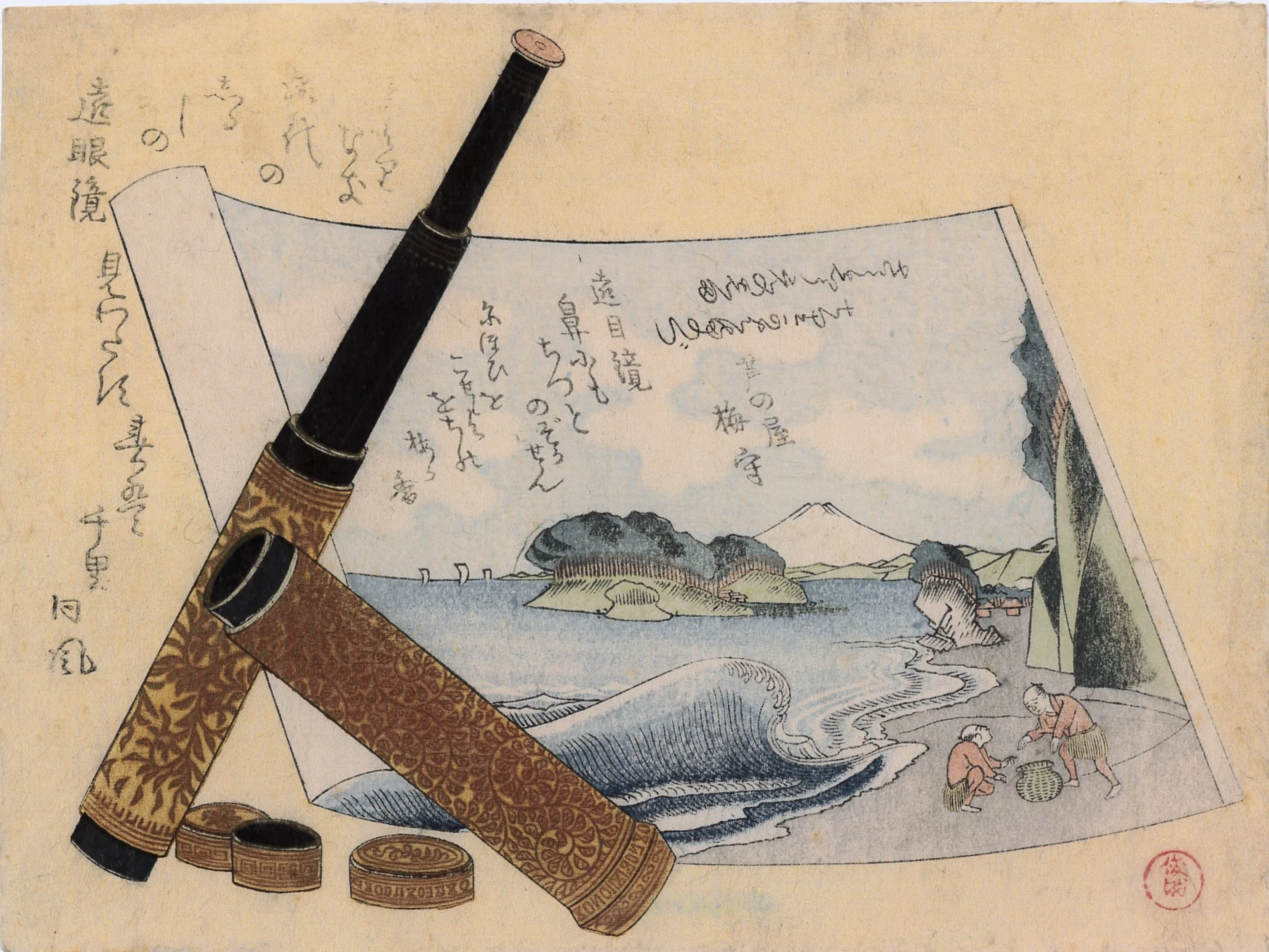 Image 1 of 2
 Image 2 of 2