
 Image 1 of 2
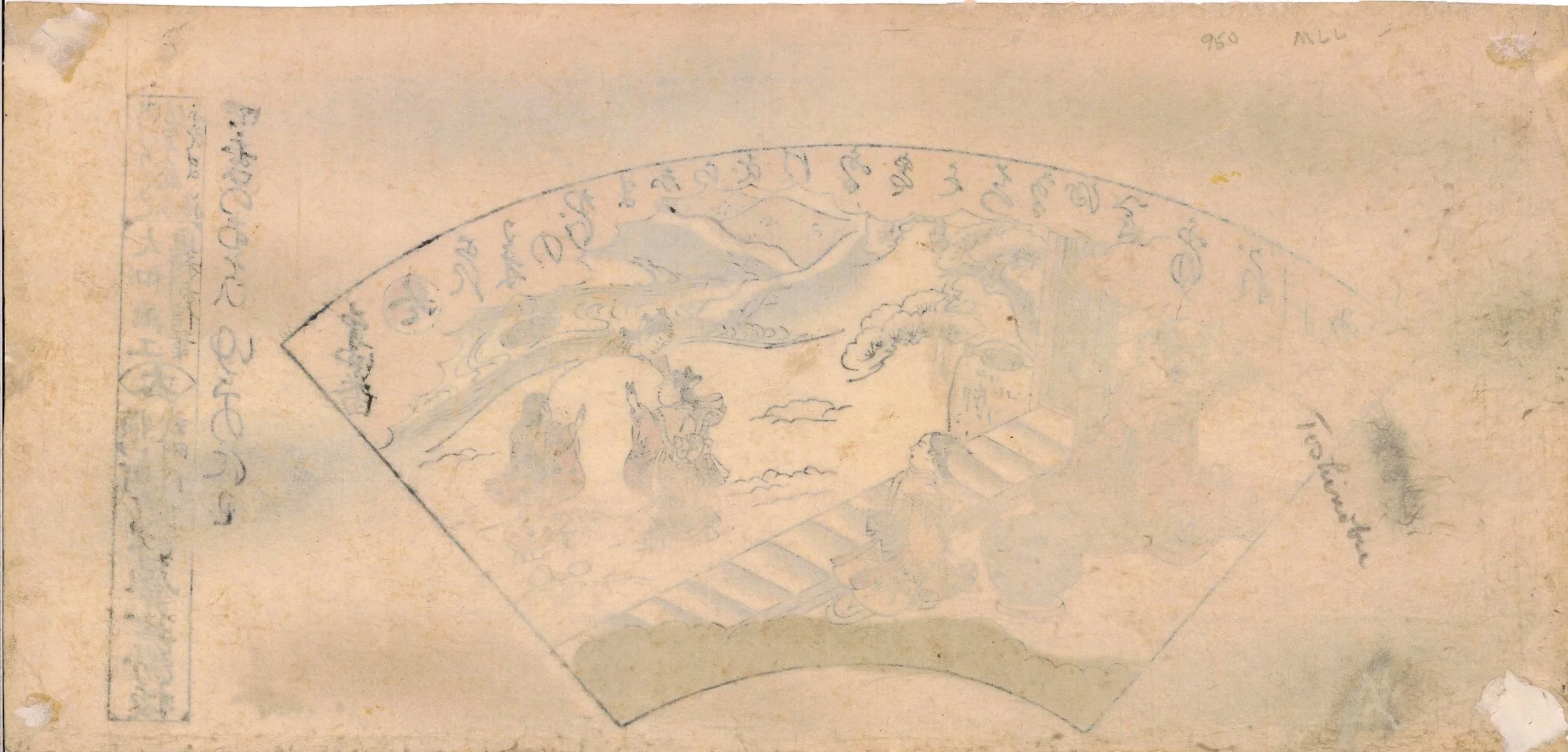 Image 2 of 2
奥村利信 Okumura Toshinobu (active about 1717–1750)
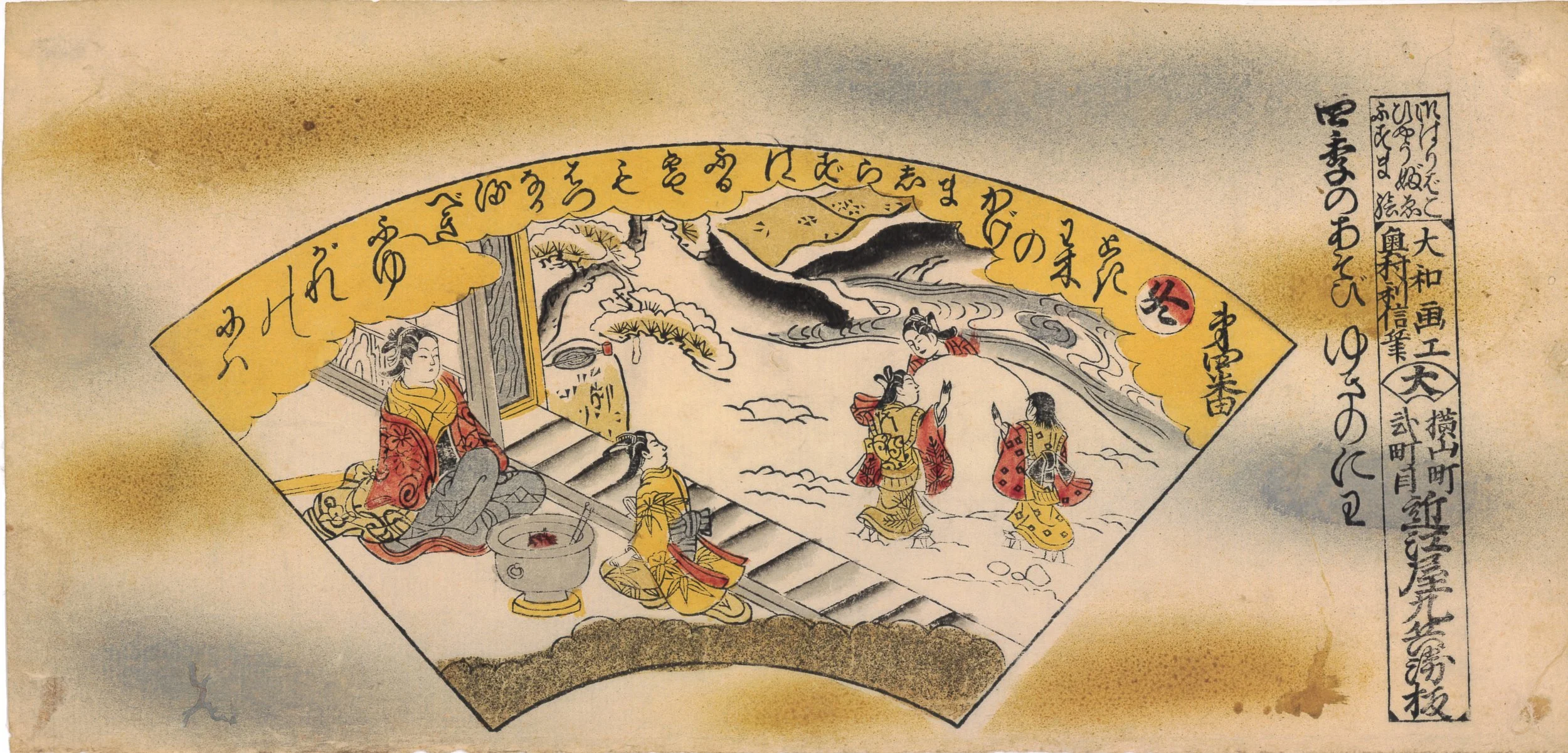
红绘: 四季之乐 雪之庭 冬
Beni-e: Winter: The Snowy Garden, from the series of Pleasures of the Four Seasons
1725-35
木版画 | 16.5cm x 34.3cm
Woodblock-print | 16.5cm x 34.3cm
非常罕见的红绘;早期版次;颜色保存非常好;有轻微虫洞修补
Very rare Beni-e; fine impression; strong color; slight wormholes repairs, otherwise in good condition
This early Ukiyo-e represents a crucial and fascinating link between paintings and the full-color Niskiki-e woodblock prints that flourished in the late 18th and 19th centuries in Japan. It is both a print and a painting, with the printed black key-block lines filled in with colors by hand. Such early examples are known asBeni-e, or “Red Prints,” due to their warm pigmentation and limited palette of red, yellow and green. The artist, Toshinobu Okumura, a student of Okumura Masonobu, was actually better known as a painter of the Yamato style than as a print designer.
Single-sheet prints were a relatively recent development at the time; previously, printing was relegated to books, always with a single block inked with black, and focused more on written characters than images. The first standalone prints also used single blocks. Later, hand-coloring was adapted. Soon, however, color blocks were added to the mix, as many as 10 per design, a process developed and championed by the great Suzuki Haranobu. Thus, the prints-with-painting epoch was very brief.
But setting aside for a moment its considerable historical significance, this fan-shaped design is simply charming. Titled “Four Seasons Amusement Snow Garden," with smaller characters reading "Fourth Winter," it is one of a series of four, each depicting pastimes of the different seasons contained within fans of different shapes. (The autumn scene is in the collection of the Art Institute of Chicago.)
To the left, a woman in aristocratic winter clothes sits quietly under the eaves, with a charcoal basin placed in front of her to keep warm. The charcoal is hand-embellished with red paint, suggesting comfort and warmth. But the real action is on the right, where, in a snow-covered courtyard, three girls are rolling a huge snowball that is considerably bigger — not to mention rounder — than they are.
Not only is this Beni-e a fascinating glimpse into high society at play during the Edo period, but it is also a remarkable moment in a fast-evolving popular art form.
这幅作品是18世纪早期浮世绘的经典范例之一,出自奥村利信之手。画中作者在落款中自称“大和画工”,而非浮世绘师,这一选择与作品本身的气质高度一致:无论是扇形构图,还是画面中点缀的金银粉装饰,都令人联想到更早时期金碧辉煌的大和绘屏风与装饰画传统。
作品题为《四季游乐 雪之庭》,小字注明为“第四番·冬”。原系列应为四幅一组,分别以团扇、折扇等不同扇形为边框,描绘四季中的庭院游乐场景。目前可确认存世的作品中,除本幅“冬”景外,尚有一幅“秋”景(芝加哥艺术博物馆馆藏)。这种以扇形画面构成完整系列的做法,在当时颇具雅玩意味,也更接近贵族与上层阶层的审美趣味。
画面左侧,一位身着冬装的贵族女性静坐于檐下,炭盆置于身前取暖。炭火部分以手工点染红色颜料完成,细微却醒目,为寒冷的画面增添了一处温度感。右侧占据画面约三分之二的是覆满积雪的庭院,三名女童正合力滚动一个几乎与身高相仿的巨大雪球,动作自然生动。她们与炭盆另一侧陪侍的女童,皆为女主人身边的侍女,使整个场景在静与动之间形成平衡。
本作属于“红绘”阶段的典型作品。红绘是浮世绘从手工上色向多色套印过渡的重要阶段,以墨线轮廓配合红、黄、绿等少数颜色完成画面。所用红色多为植物性红花颜料,色泽半透明,常与含胶质的颜料混合,使画面呈现出柔和而温润的光感。这种技法不仅赋予作品独特的视觉层次,也为后来的多色浮世绘奠定了技术基础。
奥村利信 Okumura Toshinobu (active about 1717–1750)
红绘: 四季之乐 雪之庭 冬
Beni-e: Winter: The Snowy Garden, from the series of Pleasures of the Four Seasons
1725-35
木版画 | 16.5cm x 34.3cm
Woodblock-print | 16.5cm x 34.3cm
非常罕见的红绘;早期版次;颜色保存非常好;有轻微虫洞修补
Very rare Beni-e; fine impression; strong color; slight wormholes repairs, otherwise in good condition
This early Ukiyo-e represents a crucial and fascinating link between paintings and the full-color Niskiki-e woodblock prints that flourished in the late 18th and 19th centuries in Japan. It is both a print and a painting, with the printed black key-block lines filled in with colors by hand. Such early examples are known asBeni-e, or “Red Prints,” due to their warm pigmentation and limited palette of red, yellow and green. The artist, Toshinobu Okumura, a student of Okumura Masonobu, was actually better known as a painter of the Yamato style than as a print designer.
Single-sheet prints were a relatively recent development at the time; previously, printing was relegated to books, always with a single block inked with black, and focused more on written characters than images. The first standalone prints also used single blocks. Later, hand-coloring was adapted. Soon, however, color blocks were added to the mix, as many as 10 per design, a process developed and championed by the great Suzuki Haranobu. Thus, the prints-with-painting epoch was very brief.
But setting aside for a moment its considerable historical significance, this fan-shaped design is simply charming. Titled “Four Seasons Amusement Snow Garden," with smaller characters reading "Fourth Winter," it is one of a series of four, each depicting pastimes of the different seasons contained within fans of different shapes. (The autumn scene is in the collection of the Art Institute of Chicago.)
To the left, a woman in aristocratic winter clothes sits quietly under the eaves, with a charcoal basin placed in front of her to keep warm. The charcoal is hand-embellished with red paint, suggesting comfort and warmth. But the real action is on the right, where, in a snow-covered courtyard, three girls are rolling a huge snowball that is considerably bigger — not to mention rounder — than they are.
Not only is this Beni-e a fascinating glimpse into high society at play during the Edo period, but it is also a remarkable moment in a fast-evolving popular art form.
这幅作品是18世纪早期浮世绘的经典范例之一,出自奥村利信之手。画中作者在落款中自称“大和画工”,而非浮世绘师,这一选择与作品本身的气质高度一致:无论是扇形构图,还是画面中点缀的金银粉装饰,都令人联想到更早时期金碧辉煌的大和绘屏风与装饰画传统。
作品题为《四季游乐 雪之庭》,小字注明为“第四番·冬”。原系列应为四幅一组,分别以团扇、折扇等不同扇形为边框,描绘四季中的庭院游乐场景。目前可确认存世的作品中,除本幅“冬”景外,尚有一幅“秋”景(芝加哥艺术博物馆馆藏)。这种以扇形画面构成完整系列的做法,在当时颇具雅玩意味,也更接近贵族与上层阶层的审美趣味。
画面左侧,一位身着冬装的贵族女性静坐于檐下,炭盆置于身前取暖。炭火部分以手工点染红色颜料完成,细微却醒目,为寒冷的画面增添了一处温度感。右侧占据画面约三分之二的是覆满积雪的庭院,三名女童正合力滚动一个几乎与身高相仿的巨大雪球,动作自然生动。她们与炭盆另一侧陪侍的女童,皆为女主人身边的侍女,使整个场景在静与动之间形成平衡。
本作属于“红绘”阶段的典型作品。红绘是浮世绘从手工上色向多色套印过渡的重要阶段,以墨线轮廓配合红、黄、绿等少数颜色完成画面。所用红色多为植物性红花颜料,色泽半透明,常与含胶质的颜料混合,使画面呈现出柔和而温润的光感。这种技法不仅赋予作品独特的视觉层次,也为后来的多色浮世绘奠定了技术基础。