
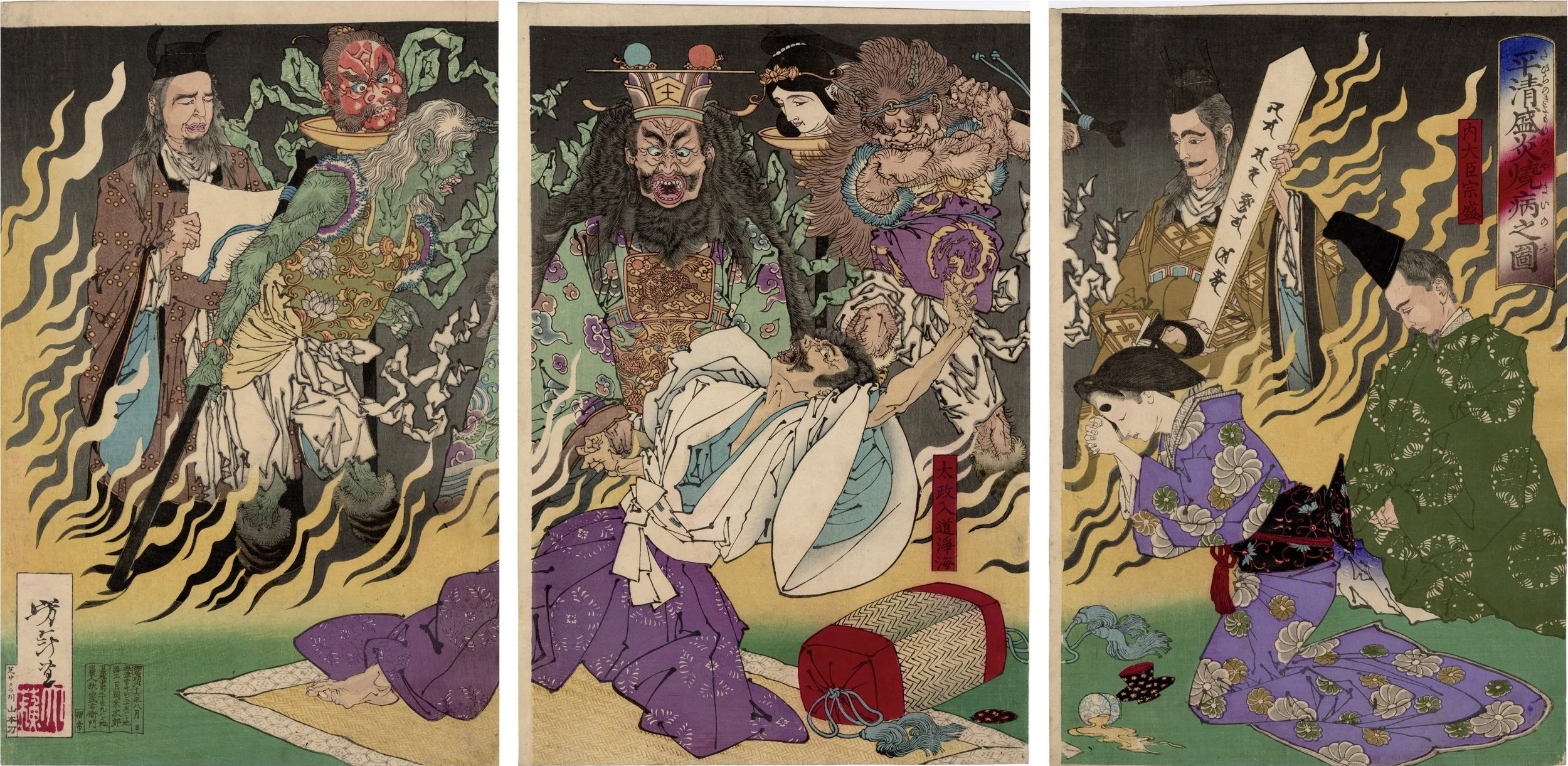
 Image 1 of 8
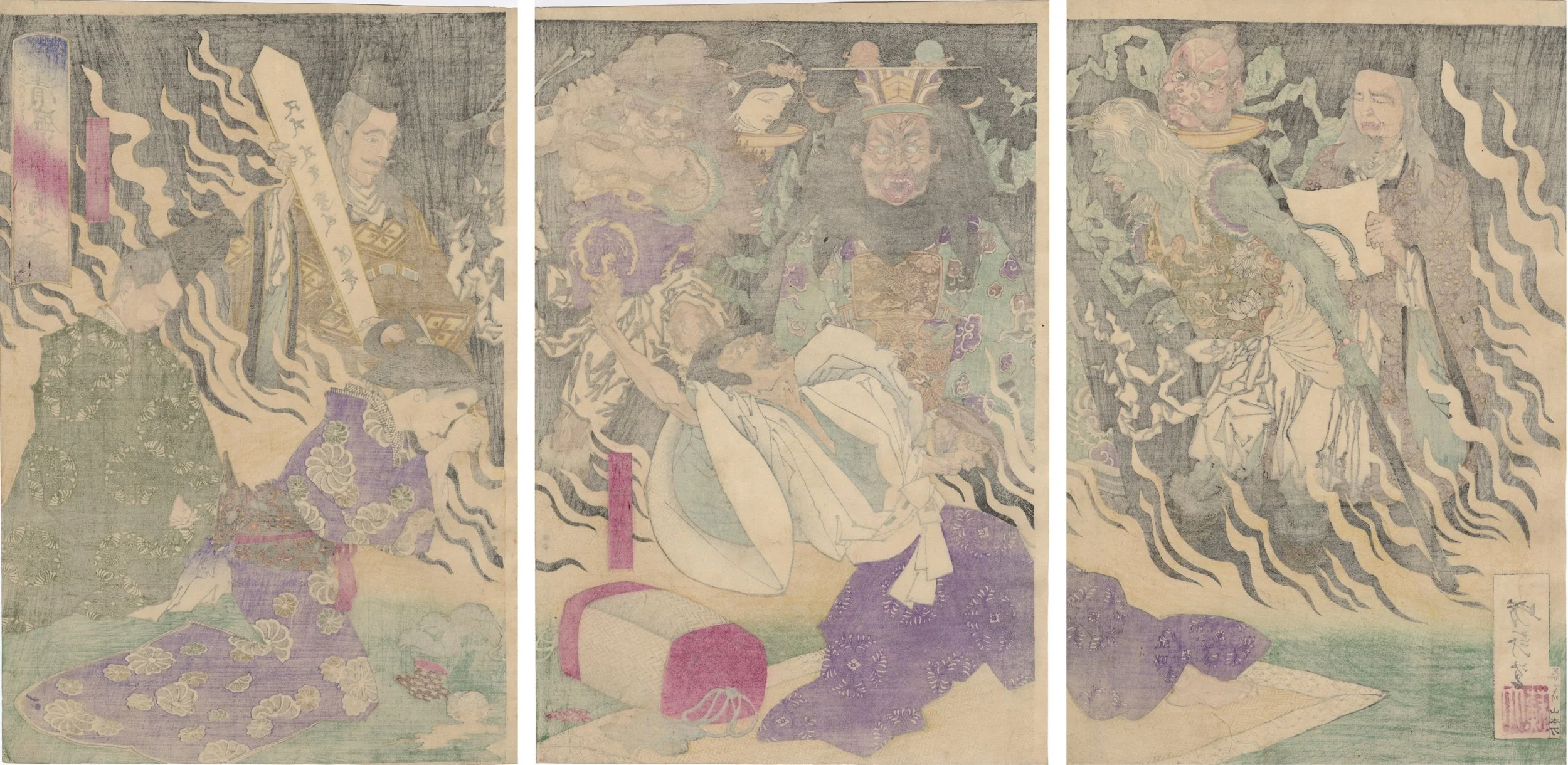 Image 2 of 8
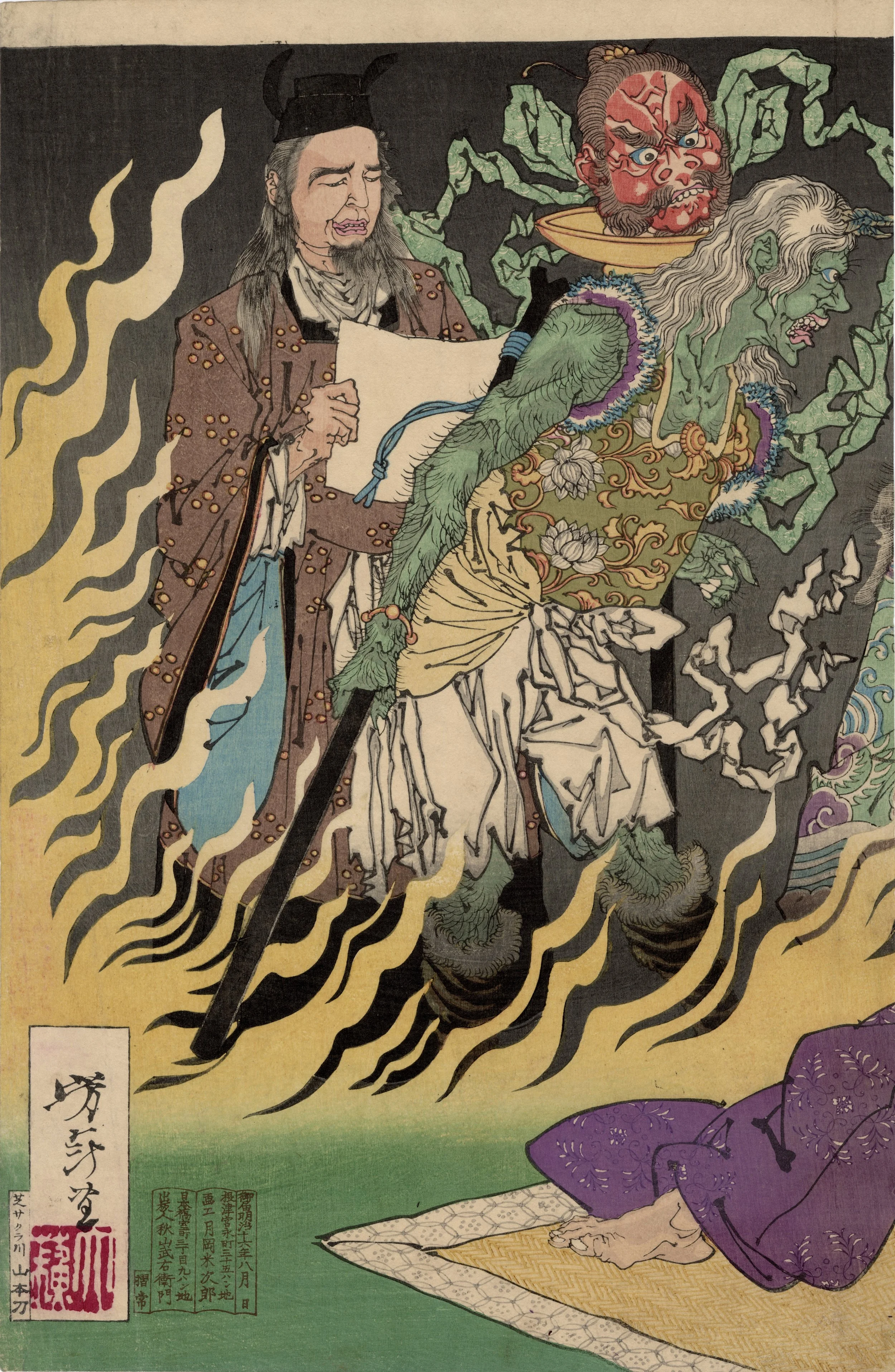 Image 3 of 8
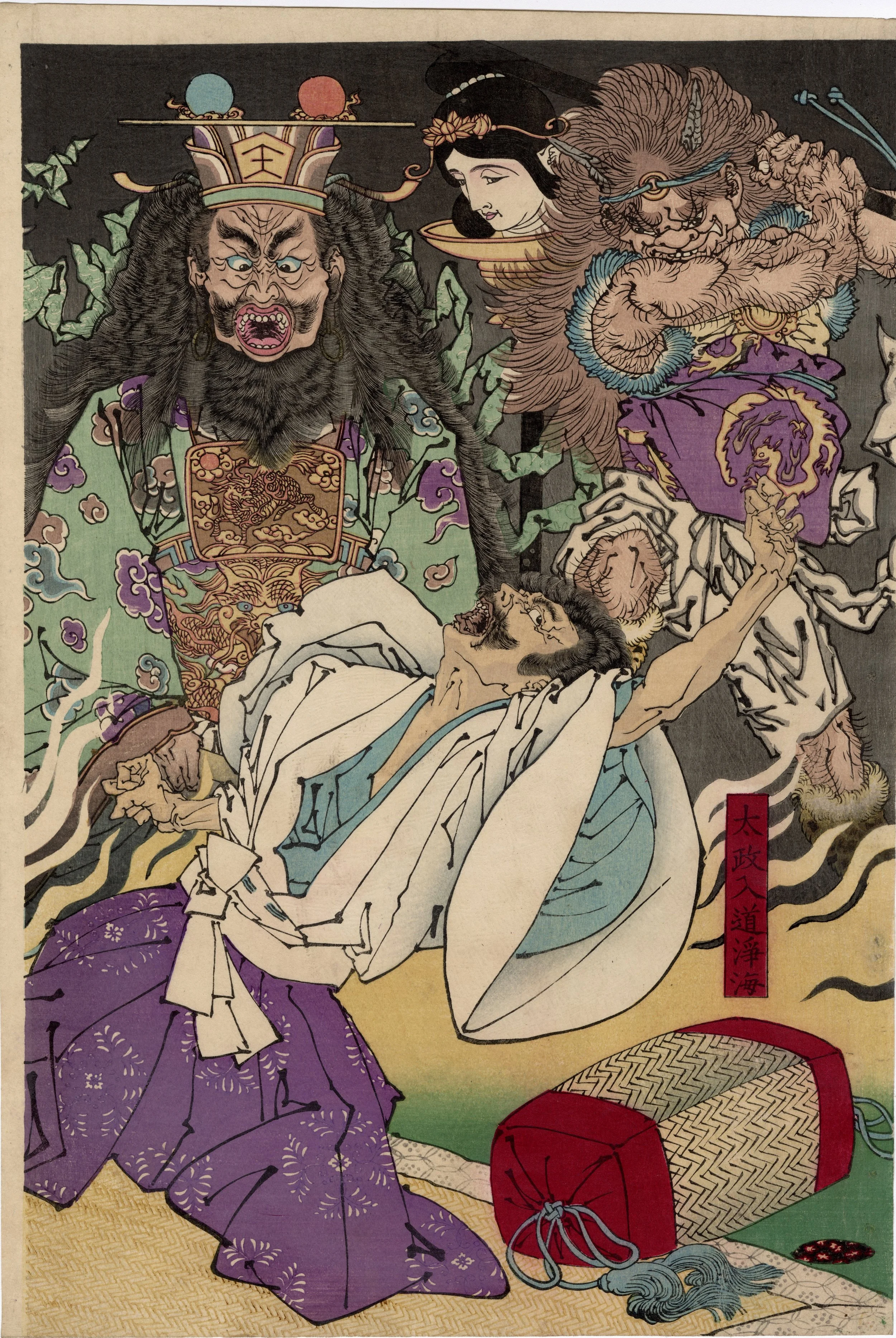 Image 4 of 8
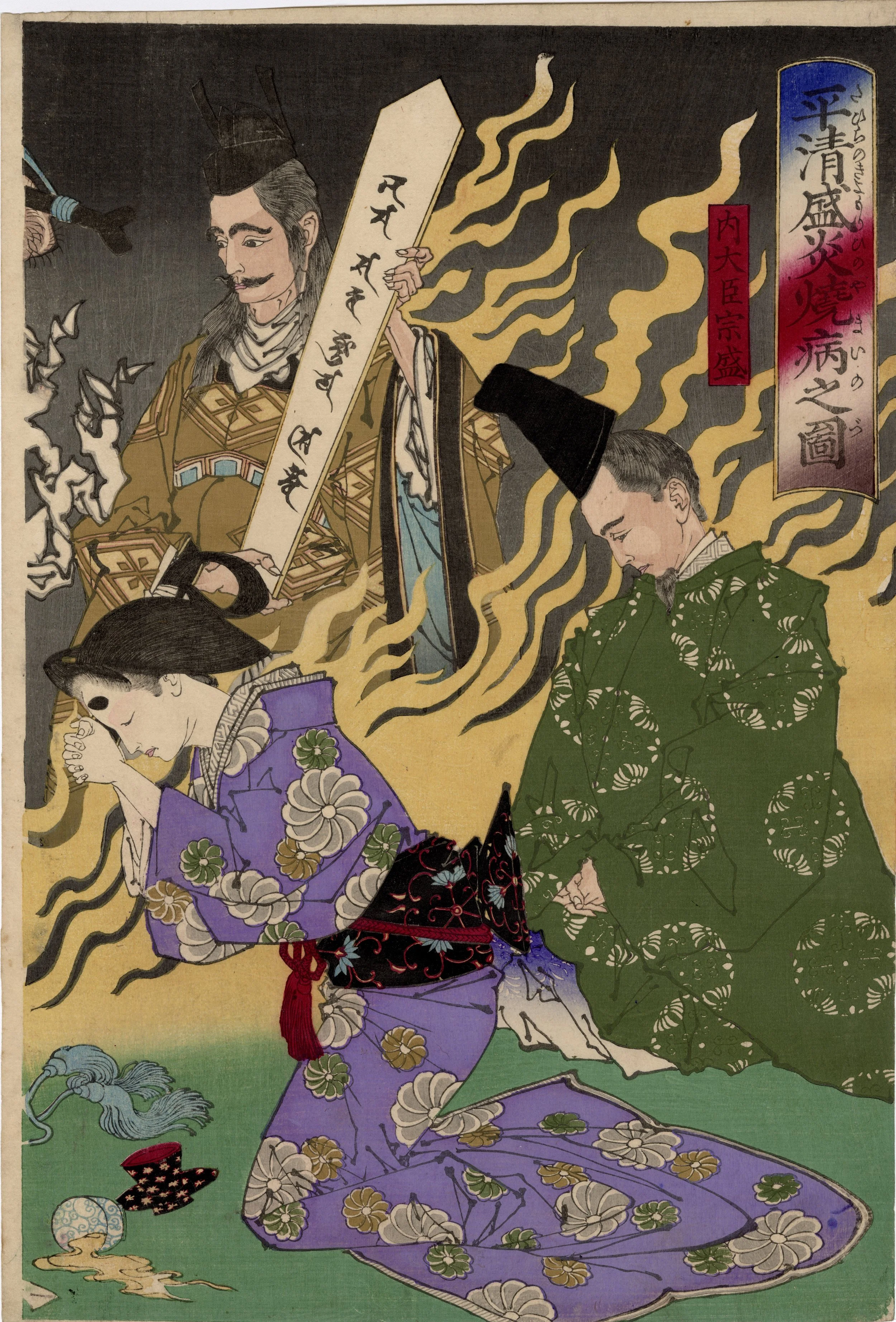 Image 5 of 8
 Image 6 of 8
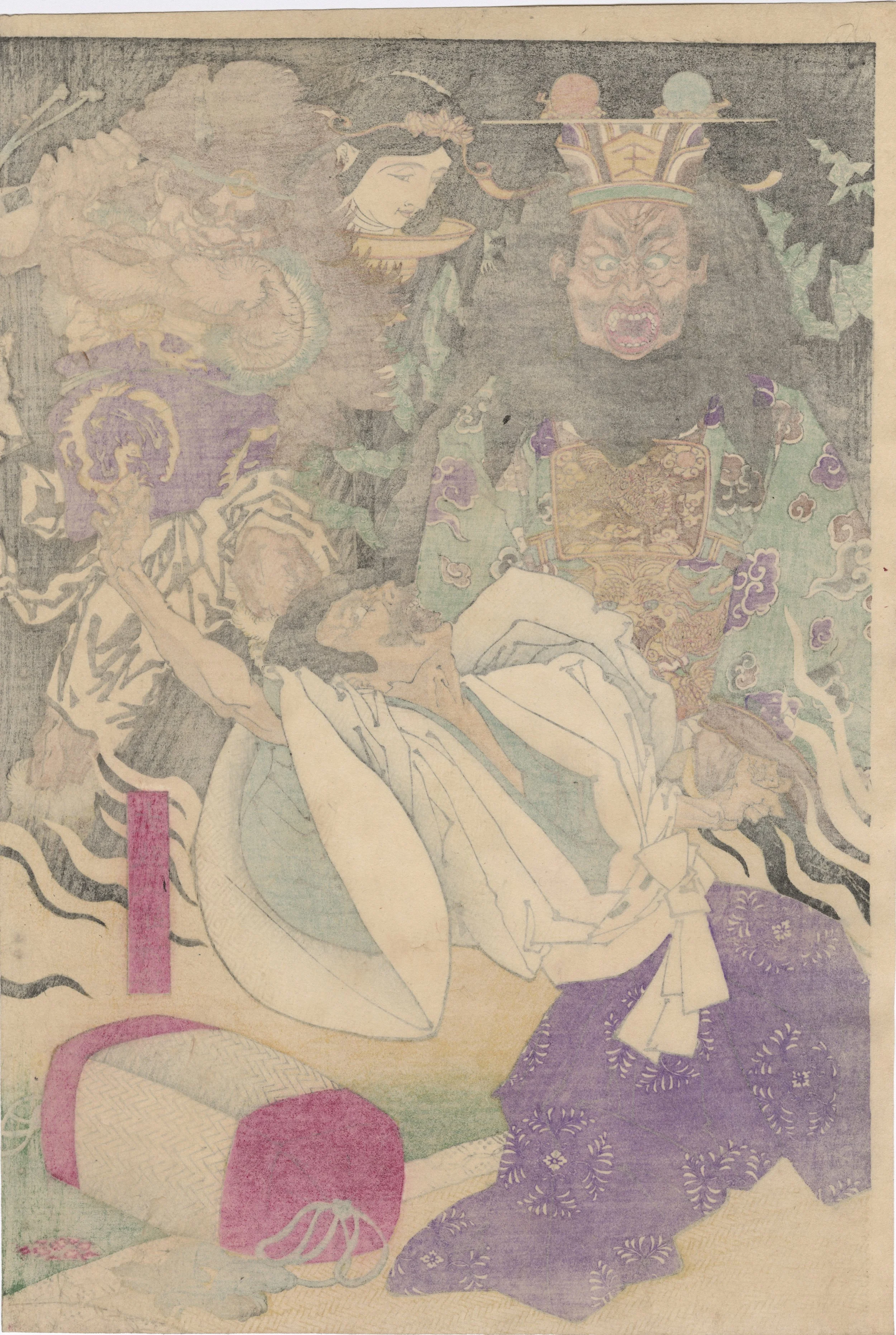 Image 7 of 8
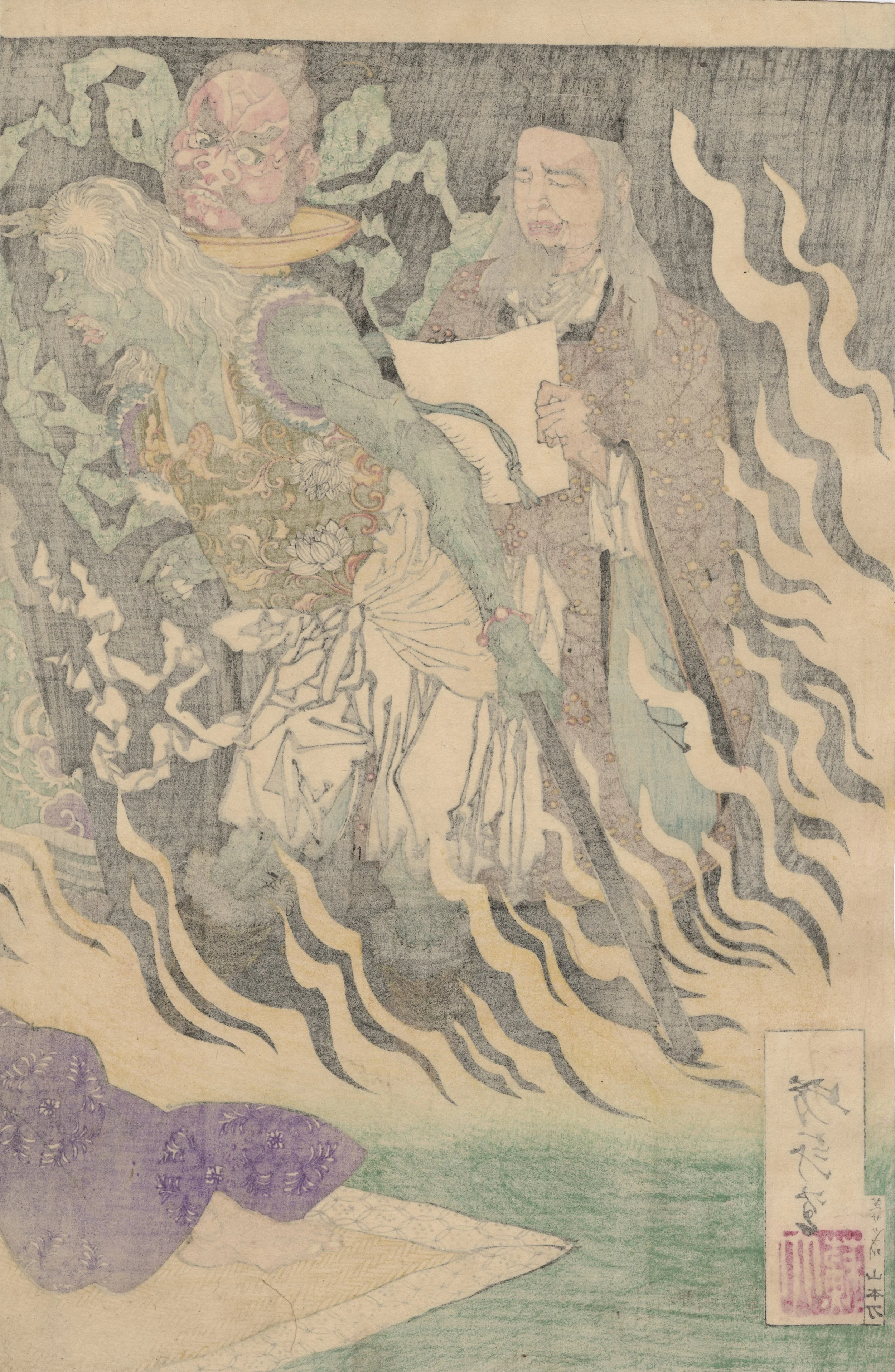 Image 8 of 8
Tsukioka Yoshitoshi (1839–1892)
Tsukioka Yoshitoshi may have lived for only 53 years, a short lifespan even in Edo times, but the history he witnessed and the myriad styles he embraced could have easily filled twice that many decades. Beginning as a more-or-less classic Ukiyo-e artist of the Utagawa school, in the waning days of the Shogunate, he developed a style that was both in-sync with Western styles and utterly his own. He was there as Japan metamorphized from a feudal land to a nascent modern society, and he managed to capture that elusive moment in time in more than 2000 woodblock prints for more than 50 publishers.
You could say he was the last great Ukiyo-e artist, and perhaps the first great post-Ukiyo-e artist. His fantastical designs ranged from history – often with buckets of blood – to bijin (beautiful women) to landscapes. He depicted people from a variety of angles and gave them intricate, and often grotesque, facial characteristics, a far cry from the simple, stereotypical visages common to Japanese woodblock prints. And he could have fun. One of his last great series, 1888’s “32 Aspects of Women,” humorously shows women through various realms of Japanese culture, and depicts very specifics moods and sensations – for example, “Cool,” “Thirsty” and “Itchy.” My favorite? “Disagreeable: Habits of a young woman of Nagoya in the Ansei era.” Ha! What a pill she looks like.
Yoshitoshi was born into a merchant family in 1839. He was an early student of Kuniyoshi, who gave him his name. Many of his warrior designs, especially the earlier ones, show a clear debt to the master, with all manner of high energy action filling his oban-size prints. He became known as a “war artist” specializing in bloody designs in the 1860s. He did numerous warrior, folklore and history series’ during this period.
But those were not his only genres. He also contributed to the epic “Processional Tokaido,” in which most of the great Ukiyo-e artists and publishers of the time combined forces to depict the Shogun’s journey to Kyoto to pay respects to the Emperor, and did his share of “Yokohama-e,” prints depicting the newly arrived Westerners.
He was tormented by a mysterious mental disorder – some say that’s what sparked such a violent imagination – and had numerous marriages and amorous affairs. He stopped working for a period, and when he came back called himself Taiso – resurrection. By the 1880’s his talent reached it’s zenith, with his epic “100 Aspects of the Moon,” and other series. His drawings and color schemes became more elaborate and more, well, his. They switched easily between bold and blunt and delicate and sensitive (and back again). Still suffering from mental illness, he died in 1892.
Partial citation: Marks, Andreas, Japanese Woodblock Prints, Artists, Publishers and Masterworks (Tuttle; 2010).