
 Image 1 of 2
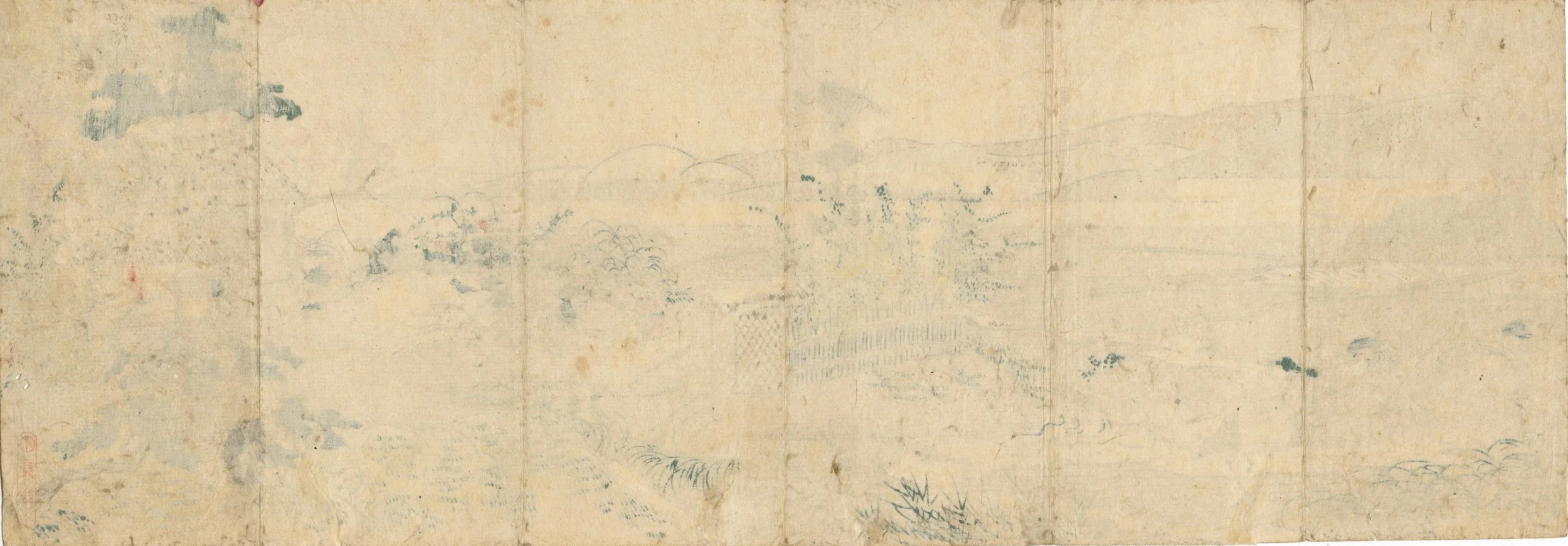 Image 2 of 2
北尾政美 Kitao Masayoshi (1764 - 1824)
摺物:农家图
Surimono: Farmers Harvesting and Threshing Rice
1790-93
木版画 | 横长判摺物 | 18.5cm x 52cm
Woodblock-print | Horizontal nagaban surimono | 18.5cm x 52cm
早期版次;整体品相完好;画面有数道纵向折痕;纸张因年代略有泛黄,并有轻微污渍
Fine impression; several vertical fold creases across the sheet; some age-related toning and light soiling.
$1,500
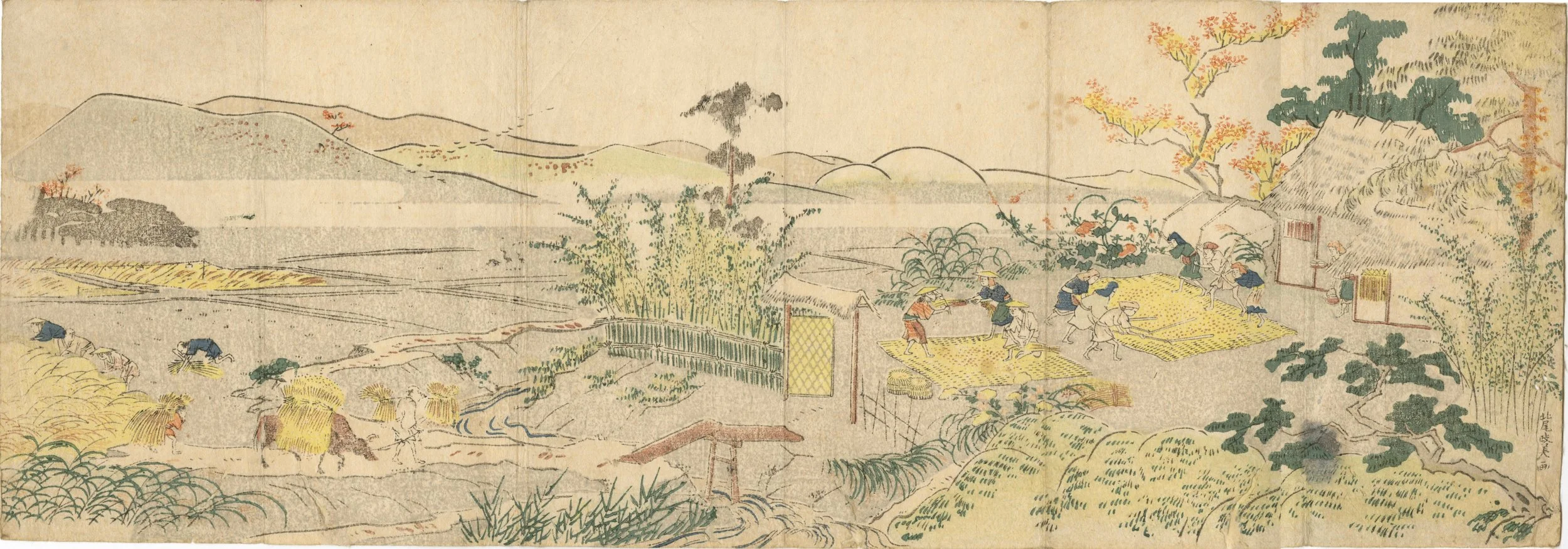
The autumn harvest is in full swing. In the fields, farmers bend down to thresh the rice, while others struggle beneath heavy bundles. Still others dry the rice on the ground – the next step. Mountains fade in the distance, a few trees dyed in autumn colors scattered among them. It is a romantic view for sure of sweaty, day-to-day labor.
Kitao Masami Kitao Masami was a disciple of Kitao Shigemasa known for his meticulous observation of everyday life. He later changed his name to Shukagata Keisai and became the official painter of the Tsuyama domain.
In this print we clearly see his painterly influences. The figures are just a few strokes yet their postures, their movements, are obvious. The nearby thatched cottages, bamboo fences, and fields, on the other hand, are depicted in great detail. The foreground bustle contrasts with the tranquil fields and distant, mist-shrouded mountains. Kitao captures two completely different emotions in the same design.
As an interesting aside, this print is an unusual size, measuring 52 centimeters in length. Unlike ordinary commercial ukiyo-e, which had set sizes, surimono were generally produced with funding from private individuals or literary groups and given as New Year's gifts, poetry gatherings, or other special occasions. They were not sold to the public. You can see how it was folded when it was presented to recipients. It was not until the early 19th century that nearly square colored paper plates gradually became mainstream for them. This print was created between 1790 and 1793; its elongated nagaban format exemplifies the diverse sizes of early surimono prints.
江户时代的浮世绘,画过无数繁华的街道、热闹的剧场与风姿绰约的美人,但也有画师将目光投向了远离城市的乡村。北尾政美的《农家图》,描绘的便是这样一个寻常的秋收时节。
秋收正忙。田野间,有人弯腰收割稻谷,有人背着沉甸甸的稻束沿小路往返;茅草屋前,农人们则忙着晾晒刚收获的谷物。远处山峦绵延,村舍隐约可见,几株染上秋色的树木散落其间。画中没有什么惊天动地的故事,只有农人们日复一日的劳作。
北尾政美以横长的构图,将田间劳作与乡村景色徐徐铺展开来。人物不过寥寥数笔,弯腰、挑担、行走的姿态却各有不同。近处的茅屋、竹篱与田野刻画得细致,远方的山峦则隐入淡淡的雾色之中。近处是人间的忙碌,远处是山野的清寂。两种截然不同的情致,被北尾政美收进了同一幅画里。
北尾政美是北尾重政的弟子,以出色的人物描绘和对日常生活的细致观察见长。他后来改名为锹形蕙斋,并成为津山藩的御用绘师。这幅创作于18世纪末的《农家图》,既保留了浮世绘对世俗生活的关注,又融入了传统山水画的笔意与趣味。在他的笔下,寻常的农家生活,也成为值得细细品味的风景。
值得一提的是,这幅《农家图》是一件尺寸颇为特殊的横长摺物,长达52厘米。与普通商业浮世绘不同,摺物通常由私人或文艺社团出资制作,作为新年贺礼、诗会纪念或其他特殊场合的赠礼,并不面向大众公开销售。18世纪末,摺物的形制尚未固定,各种尺寸与形式的作品并存。直到19世纪初,接近正方形的色纸判才逐渐成为主流。这幅《农家图》创作于1790至1793年,其修长的画幅,正是早期摺物多样形制的一个例子。
北尾政美 Kitao Masayoshi (1764 - 1824)
摺物:农家图
Surimono: Farmers Harvesting and Threshing Rice
1790-93
木版画 | 横长判摺物 | 18.5cm x 52cm
Woodblock-print | Horizontal nagaban surimono | 18.5cm x 52cm
早期版次;整体品相完好;画面有数道纵向折痕;纸张因年代略有泛黄,并有轻微污渍
Fine impression; several vertical fold creases across the sheet; some age-related toning and light soiling.
$1,500
The autumn harvest is in full swing. In the fields, farmers bend down to thresh the rice, while others struggle beneath heavy bundles. Still others dry the rice on the ground – the next step. Mountains fade in the distance, a few trees dyed in autumn colors scattered among them. It is a romantic view for sure of sweaty, day-to-day labor.
Kitao Masami Kitao Masami was a disciple of Kitao Shigemasa known for his meticulous observation of everyday life. He later changed his name to Shukagata Keisai and became the official painter of the Tsuyama domain.
In this print we clearly see his painterly influences. The figures are just a few strokes yet their postures, their movements, are obvious. The nearby thatched cottages, bamboo fences, and fields, on the other hand, are depicted in great detail. The foreground bustle contrasts with the tranquil fields and distant, mist-shrouded mountains. Kitao captures two completely different emotions in the same design.
As an interesting aside, this print is an unusual size, measuring 52 centimeters in length. Unlike ordinary commercial ukiyo-e, which had set sizes, surimono were generally produced with funding from private individuals or literary groups and given as New Year's gifts, poetry gatherings, or other special occasions. They were not sold to the public. You can see how it was folded when it was presented to recipients. It was not until the early 19th century that nearly square colored paper plates gradually became mainstream for them. This print was created between 1790 and 1793; its elongated nagaban format exemplifies the diverse sizes of early surimono prints.
江户时代的浮世绘,画过无数繁华的街道、热闹的剧场与风姿绰约的美人,但也有画师将目光投向了远离城市的乡村。北尾政美的《农家图》,描绘的便是这样一个寻常的秋收时节。
秋收正忙。田野间,有人弯腰收割稻谷,有人背着沉甸甸的稻束沿小路往返;茅草屋前,农人们则忙着晾晒刚收获的谷物。远处山峦绵延,村舍隐约可见,几株染上秋色的树木散落其间。画中没有什么惊天动地的故事,只有农人们日复一日的劳作。
北尾政美以横长的构图,将田间劳作与乡村景色徐徐铺展开来。人物不过寥寥数笔,弯腰、挑担、行走的姿态却各有不同。近处的茅屋、竹篱与田野刻画得细致,远方的山峦则隐入淡淡的雾色之中。近处是人间的忙碌,远处是山野的清寂。两种截然不同的情致,被北尾政美收进了同一幅画里。
北尾政美是北尾重政的弟子,以出色的人物描绘和对日常生活的细致观察见长。他后来改名为锹形蕙斋,并成为津山藩的御用绘师。这幅创作于18世纪末的《农家图》,既保留了浮世绘对世俗生活的关注,又融入了传统山水画的笔意与趣味。在他的笔下,寻常的农家生活,也成为值得细细品味的风景。
值得一提的是,这幅《农家图》是一件尺寸颇为特殊的横长摺物,长达52厘米。与普通商业浮世绘不同,摺物通常由私人或文艺社团出资制作,作为新年贺礼、诗会纪念或其他特殊场合的赠礼,并不面向大众公开销售。18世纪末,摺物的形制尚未固定,各种尺寸与形式的作品并存。直到19世纪初,接近正方形的色纸判才逐渐成为主流。这幅《农家图》创作于1790至1793年,其修长的画幅,正是早期摺物多样形制的一个例子。