
Ukiyo-e History · Chapter Four: The End
01. Satire and Survival: Ukiyo-e Under Censorship
Government censorship continued to tighten as the 19th Century reached the midpoint. Restrictions on subject matter became increasingly severe. Every print had to be approved by government inspectors before publication, and artists were encouraged to produce works that promoted morality and social order. Images of contemporary actors, courtesans, and even historical warriors were frequently prohibited, while many public figures could no longer be depicted by name.
But censorship has a way of pushing artists to become more inventive.
No one demonstrated this more brilliantly than that first love of mine, and another key member of the Utagawa School, Utagawa Kuniyoshi. (I told you we’d return to him.)
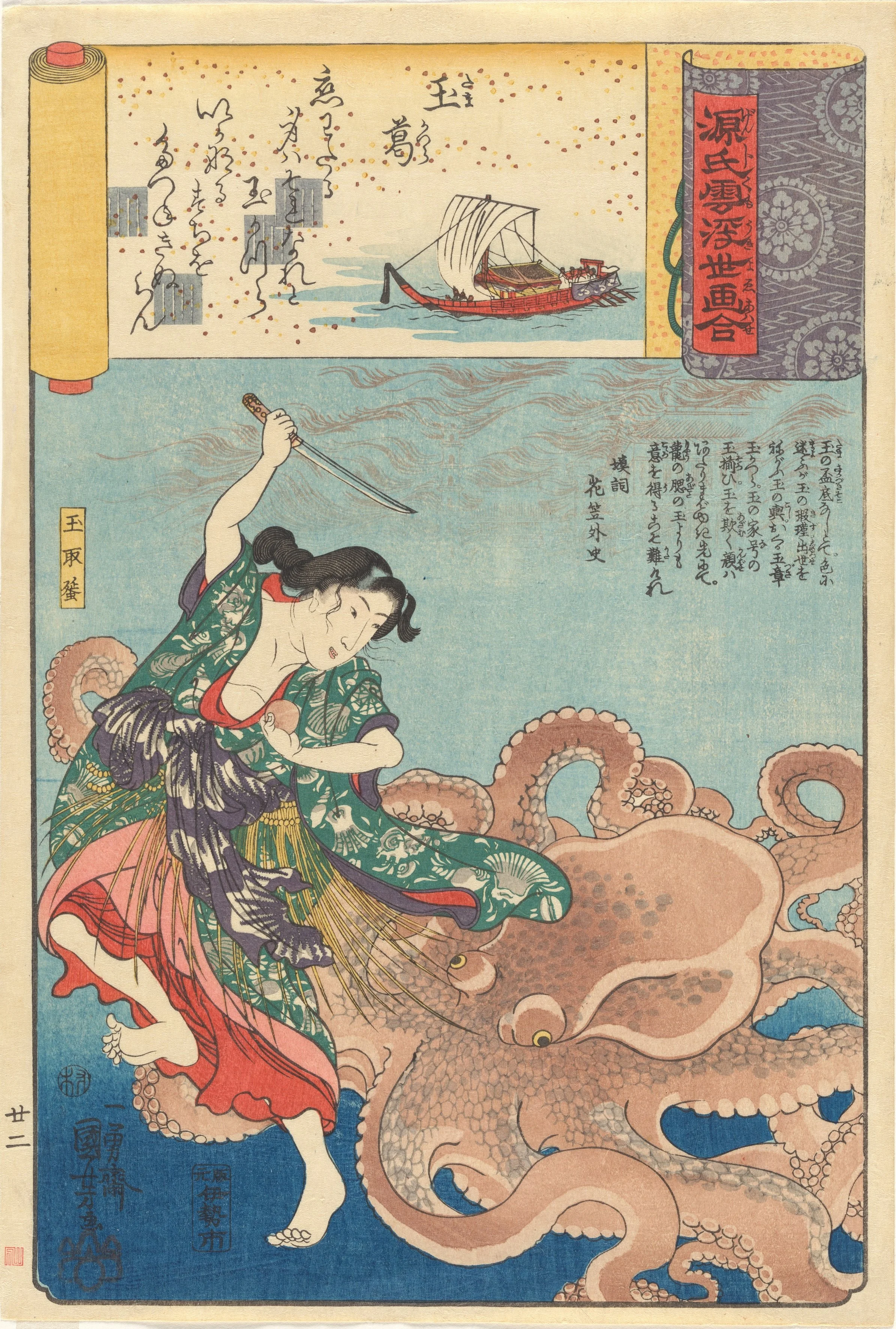
“‘A Lovely Garland’ (Tamakazura): Tamatori-ama,” from the series Scenes amid Genji Clouds Matched with Ukiyo-e Pictures (Genji-gumo ukiyo e-awase); Utagawa Kuniyoshi; 1845–46; The Metropolitan Museum of Art
Rather than confronting the authorities directly, Kuniyoshi learned to speak through history. Episodes from legendary tales such as the Kojiki, the Nihon Shoki, and The Tale of the Heike became vehicles through which contemporary politics could be discussed without being mentioned explicitly. Historical heroes stood in for living politicians, ancient battles echoed current conflicts, and legendary figures acquired unmistakably modern meanings.
While government officials saw historical prints, savvy Edoites knew better.
Kuniyoshi delighted in this game of visual disguise. His compositions often praised historical heroes on the surface while quietly mocking the incompetence, hypocrisy, and rigidity of the Tokugawa bureaucracy beneath. Works such as The Earth Spider Conjuring Monsters at the Mansion of Minamoto no Yorimitsu, widely understood as a satire on the architects of the Tenpo Reforms, demonstrated how political criticism could survive beneath layers of symbolism and storytelling.
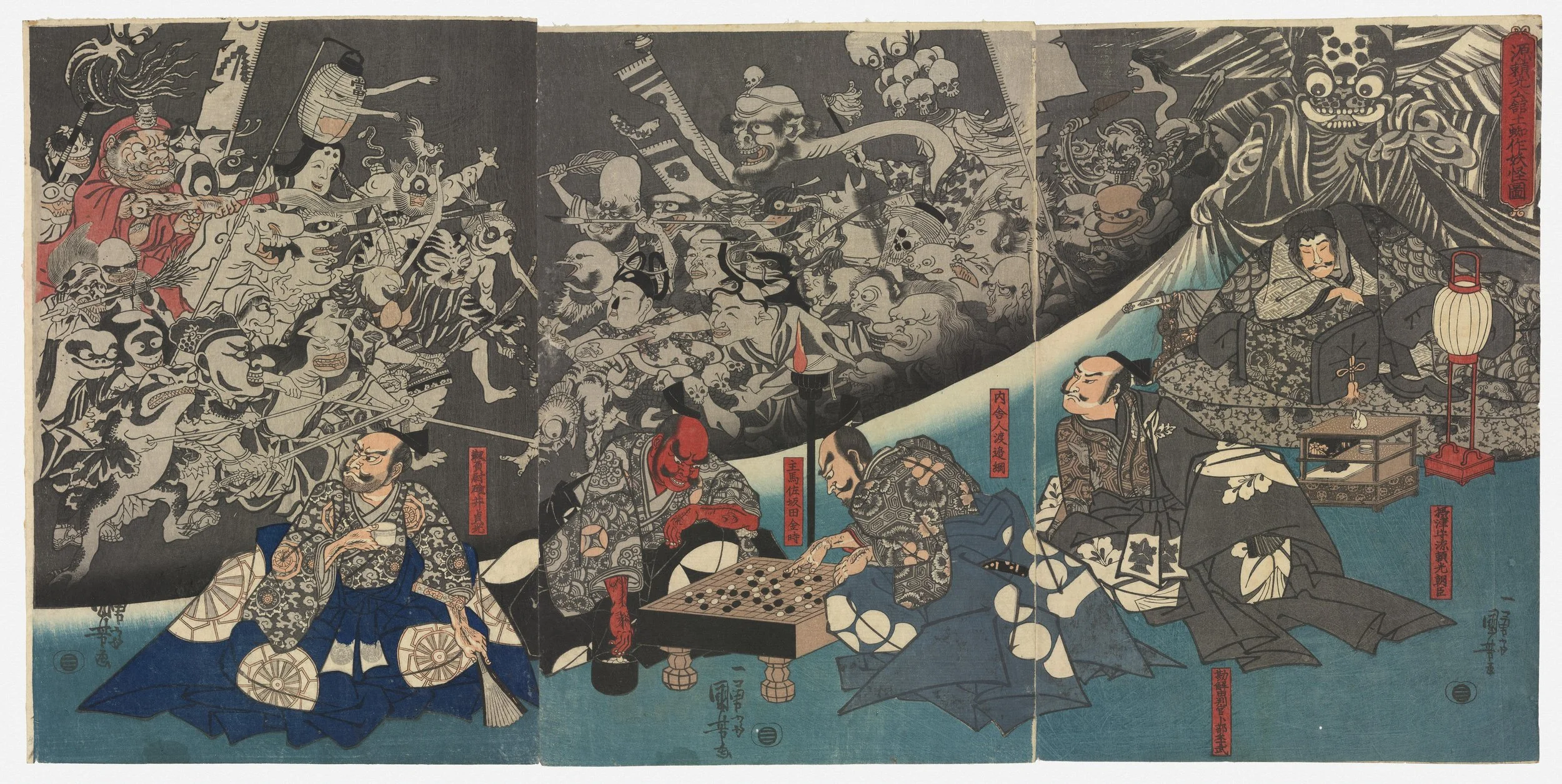
The Earth Spider Conjures up Demons at the Mansion of Minamoto no Raiko; Utagawa Kuniyoshi; 1843; National Museum of Asian Art
His success inspired many others.
Satirical prints soon responded to earthquakes, rising prices, financial crises, and shifting government policies. Ukiyo-e artists increasingly assumed a role that extended beyond entertainment. They became commentators on contemporary society, using woodblock prints to express ideas that could not always be spoken openly.
In 1853, and then again in 1854, Japan was forcefully awakened from it’s 250-year isolated slumber by the arrival of Commodore Matthew Perry's Black Ships.
This unprecedented event fascinated artists and audiences alike. But the Shogunate was thrown into turmoil. So, once again, historical narratives provided a convenient disguise. Scenes from medieval chronicles or legendary battles were reimagined to reflect the appearance of foreign ships and unfamiliar visitors. Some prints portrayed Westerners with admiration and curiosity; others expressed anxiety, suspicion, or outright hostility.
Together, these images reveal a society struggling to understand a rapidly changing world.
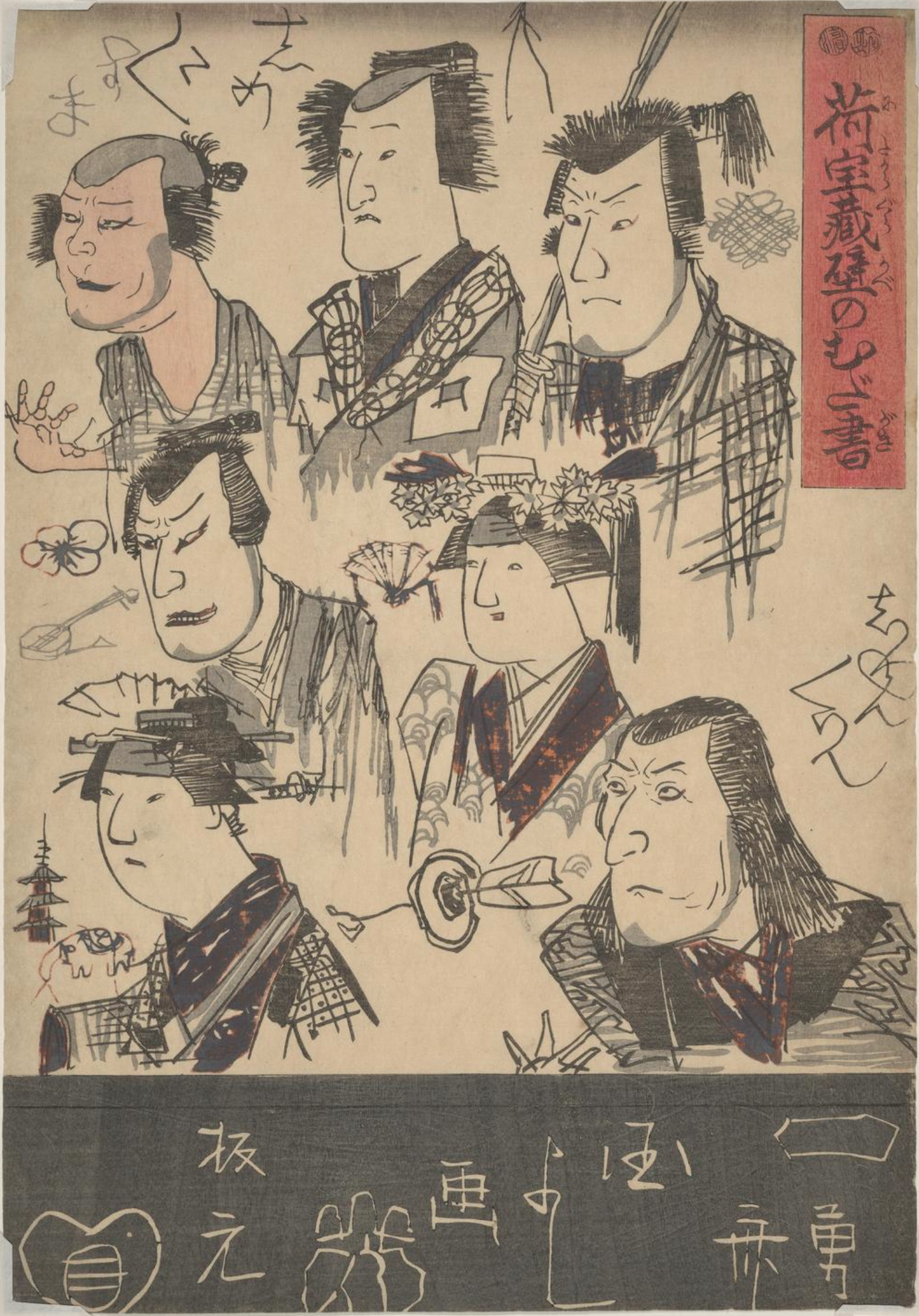
Storehouse of Treasured Goods: Scribblings on the Wall; Utagawa Kuniyoshi; 1848; The British Museum
02. The Last Bloom: War Prints and the Final Years of Ukiyo-e
With the West pounding on the front door, and the Tokugawa shogunate clearly tottering, Japan became increasingly unstable. Political divisions deepened between those who sought to preserve the shogunate and those who called for its overthrow. Armed conflicts broke out across the country, culminating in the Boshin War of 1868. After nearly three centuries of relative peace, war had returned to Japan. Ukiyo-e caught the wave.
Artists began producing dramatic battle scenes inspired by both contemporary events and famous conflicts from Japan's past. Recent wars were often presented through the visual language of classical history, allowing viewers to interpret present-day events through familiar heroic narratives. For ordinary people, these prints became one of the principal ways of following a rapidly changing political landscape.
When the new Meiji government emerged victorious, the subject matter did not disappear.
On the contrary, successive conflicts—including the Saga Rebellion and the Satsuma Rebellion—provided artists with new material. War prints continued to flourish, combining eyewitness reports, imagination, and theatrical composition into images that were as informative as they were dramatic.
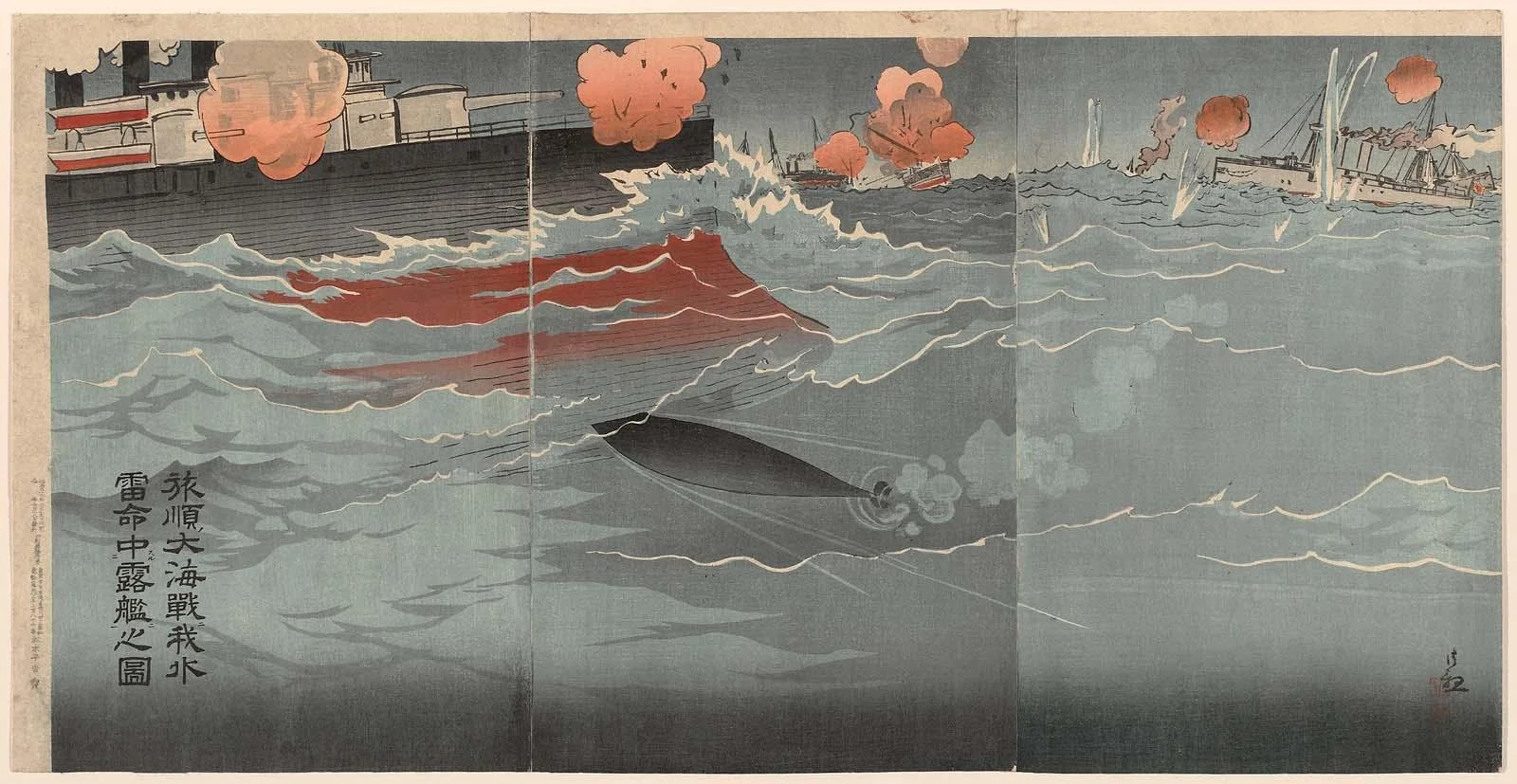
Our Torpedo Hitting a Russian Warship at the Great Naval Battle of Port Arthur; Kobayashi Kiyochika; 1904; Museum of Fine Arts, Boston
Yet this final flowering could not last.
The Japan that had sustained ukiyo-e for more than two centuries was disappearing. Photography spread rapidly. Newspapers became faster and more reliable sources of information, while new forms of entertainment transformed popular culture. The woodblock print gradually lost the role it had once played as Japan's primary visual medium.
Some artists searched for new ways to survive.
Among them, Tsukioka Yoshitoshi achieved remarkable popularity through muzan-e—"bloody prints" depicting murders, ghost stories, and sensational crimes. These shocking images reflected the public's fascination with violence during the turbulent early Meiji years while demonstrating Yoshitoshi's extraordinary technical skill and dramatic imagination.
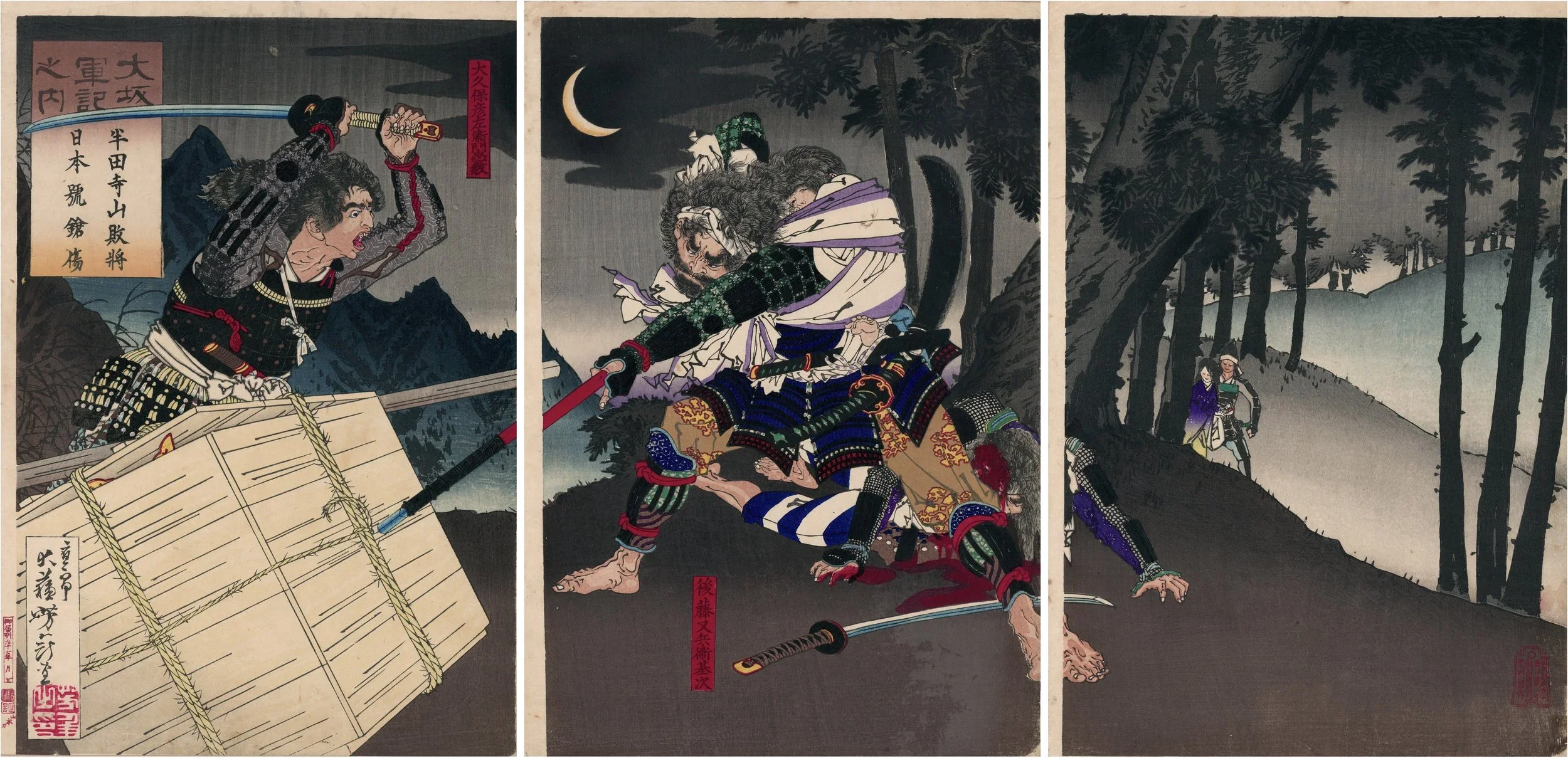
Okuko Hikozaemon Protects the Tokugawa Shogun;Tsukioka Yoshitoshi; 1884; Art of Ukiyoe
At the same time, ukiyo-e entered the age of journalism.
Publishers began issuing nishiki-e newspapers, richly coloured woodblock prints illustrating recent news stories reported in contemporary newspapers. Artists such as Yoshitoshi and Ochiai Yoshiiku transformed murders, political incidents, natural disasters, and human-interest stories into vivid visual narratives. For a brief period, ukiyo-e once again stood at the center of popular culture by combining the immediacy of journalism with the artistry of woodblock printing.
But even this revival proved temporary. Within only a few years, rising production costs and the continued expansion of modern printing technologies brought the age of nishiki-e newspapers to an end.

Postal Hochi Newspaper no. 645, Englishman raping a wine shopkeeper's daughter;Tsukioka Yoshitoshi; 1875; The Metropolitan Museum of Art
03. Epilogue
The journey of ukiyo-e may have come to an end, but its story did not.
Over the course of more than two centuries, ukiyo-e continually reinvented itself. What began as simple scenes of everyday life evolved into beauty prints and actor prints, before giving way to landscapes, satire, war prints, and illustrated news.
Every transformation reflected changing tastes, shifting social conditions, the pressures of censorship, or the arrival of new artistic ideas. Rather than following a fixed path, ukiyo-e evolved alongside Japan itself.
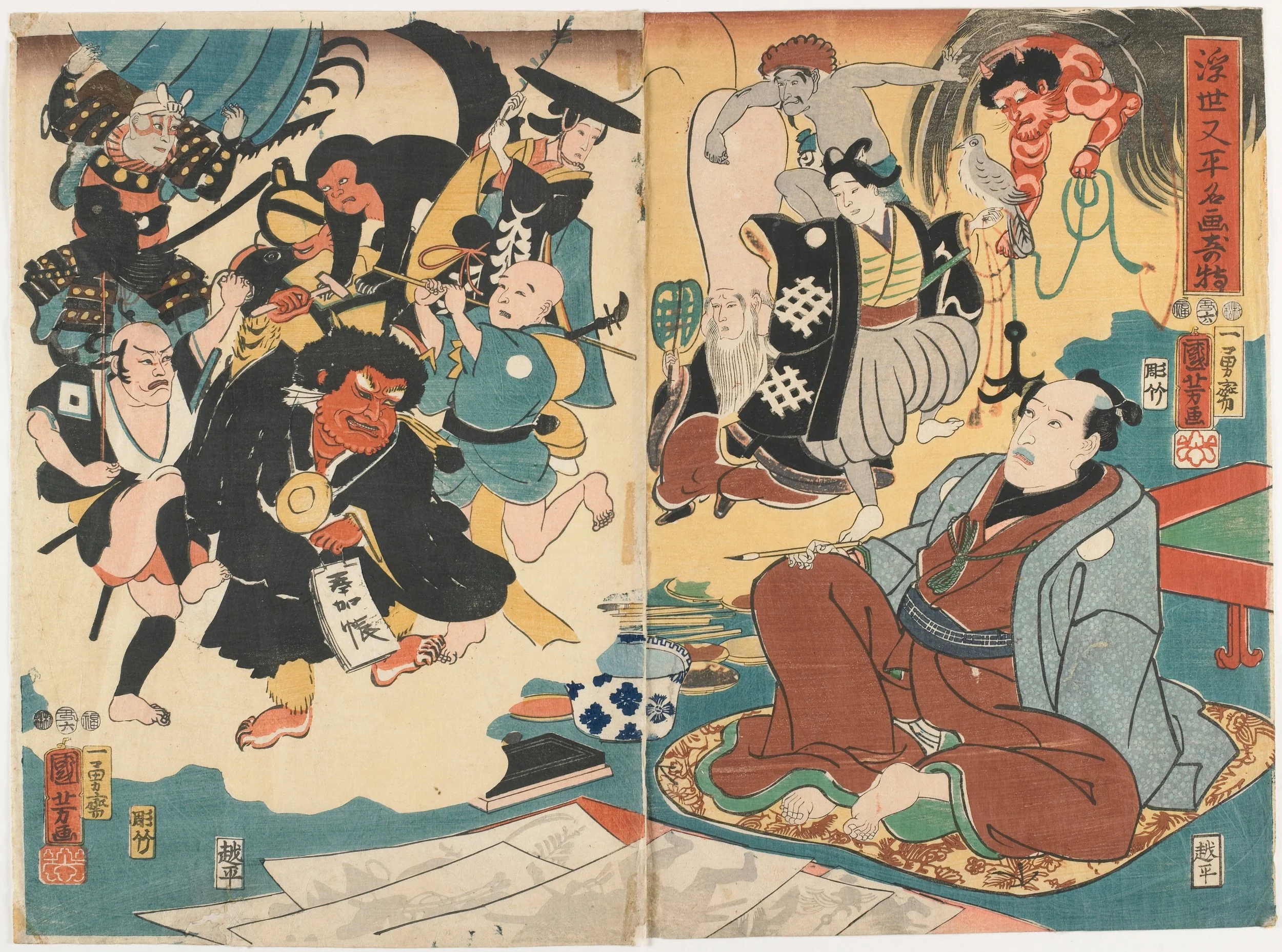
The Miracle of Famous Paintings by Ukiyo Matahei; Utagawa Kuniyoshi; 1853; Minneapolis Institute of Art
And yet, by all appearances, it should never have become one of the world's great artistic traditions.
Its subjects were rarely regarded as refined, nor were its themes particularly lofty. Its audience consisted largely of ordinary townspeople, and its creators often regarded themselves simply as craftsmen rather than artists. Yet these inexpensive prints would go on to captivate nineteenth-century Europe and, eventually, audiences around the world.
I have often wondered why.
Perhaps the answer lies not in technical brilliance or lofty ideals, but in the freedom and sincerity with which these artists observed the world around them.
The floating world was never meant to last. Perhaps that is why its artists cherished it so deeply—and why we still do today.
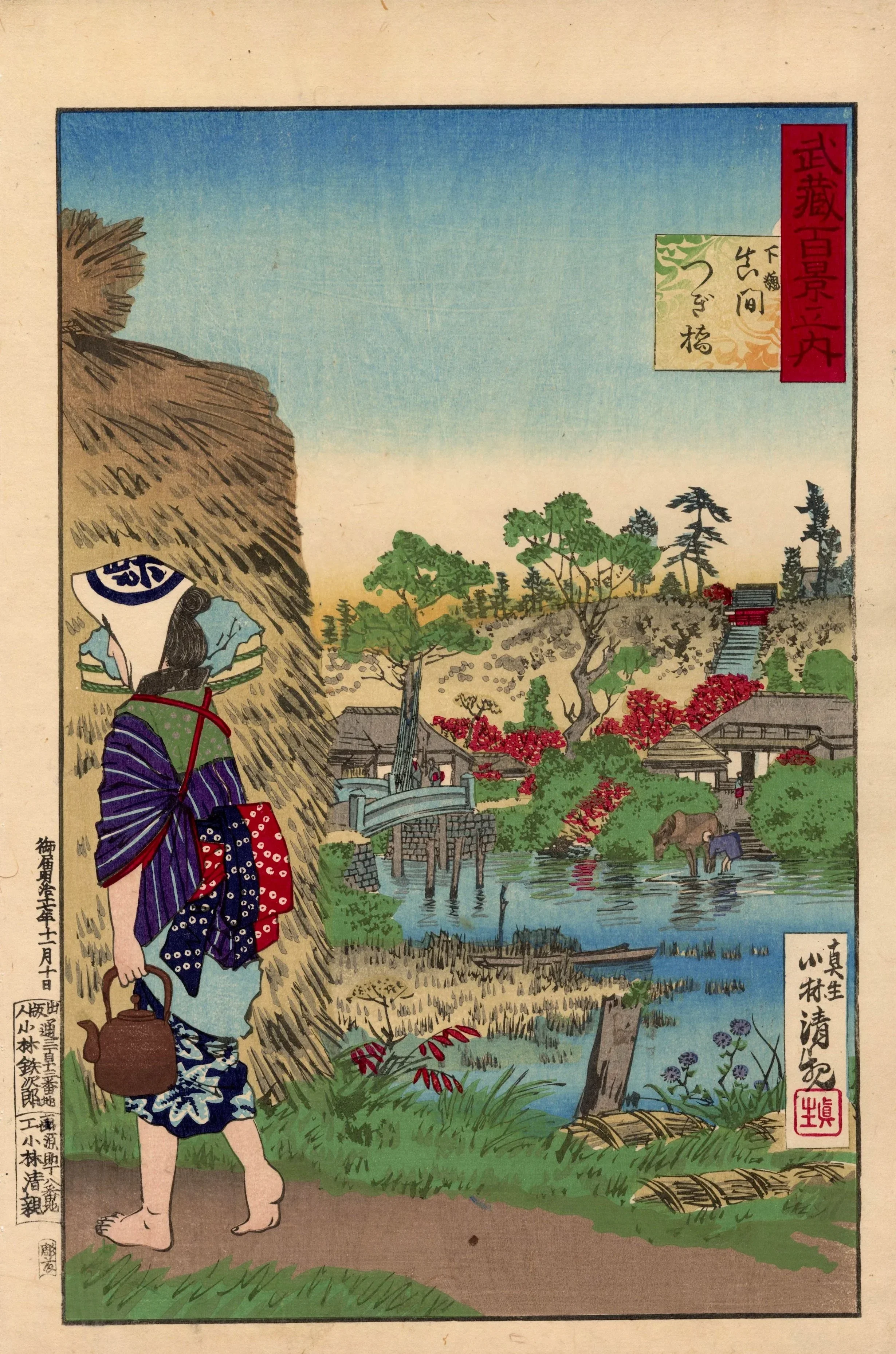
A bridge in Shimofusa, One Hundred Views of Musashi; Kobayashi Kiyochika; 1884; Art of Ukiyoe