
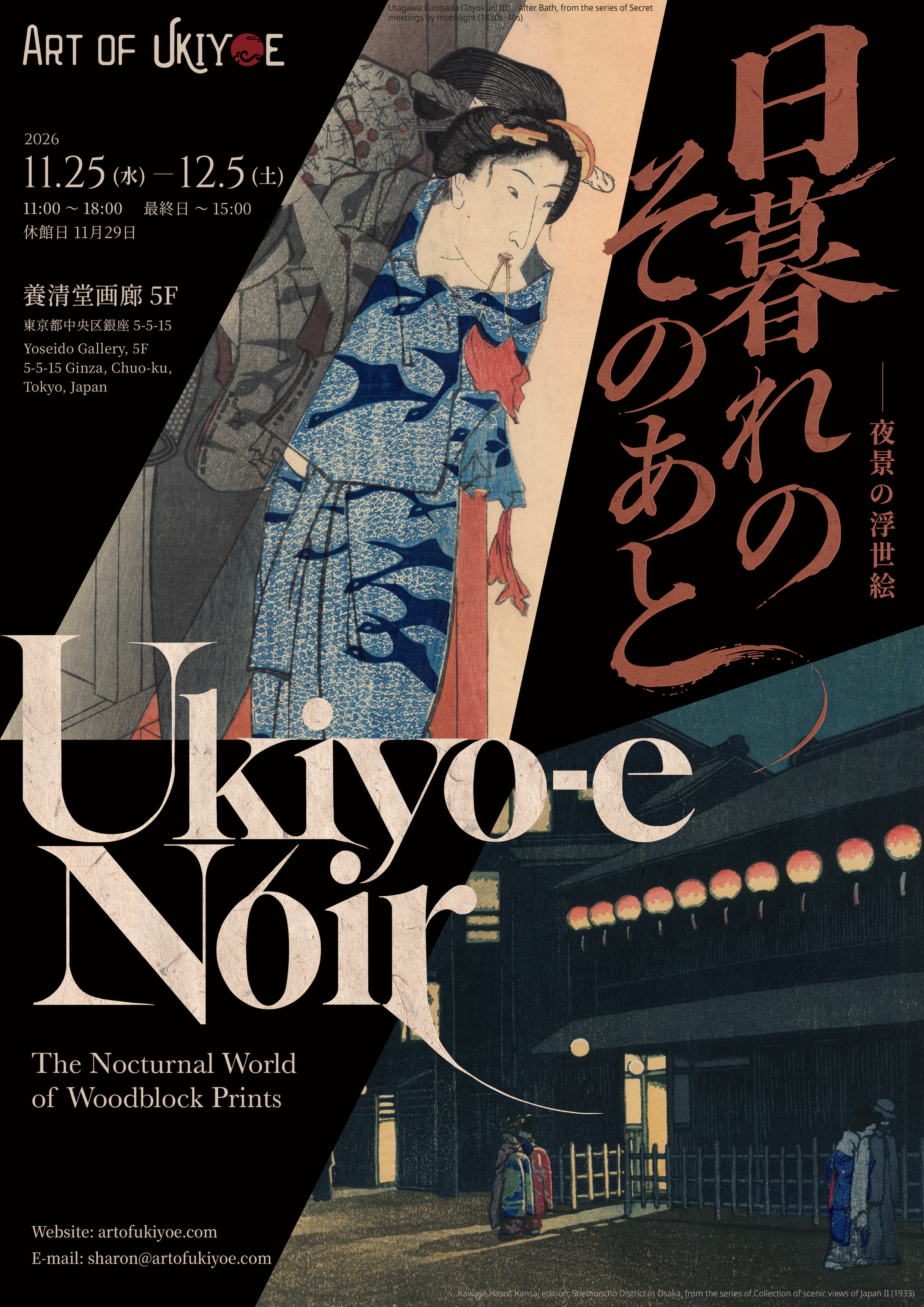
Night in Japan washes away the modern world, allowing us to step back into a vanished era. After dark come furtive mysteries -- a forbidden romance, a vicious crime, secrets to be revealed by a flash of lightning or a passing lantern. It brings moments of joyous celebration and moments of quiet solitude, beautiful dreams and frightening nightmares.
“Ukiyo-e Noir: The Nocturnal World of Woodblock Prints” transports us to Edo times and the early 20th Century to glimpse nighttime Japan as it once was. Great artists like Torii Kiyonaga, Utagawa Hiroshige and Kawase Hasui all embraced woodblock printing techniques that captured night and its enduring sense of wonder. Those masters are all highlighted in this show, along with many others.
With examples ranging from the early days of ukiyo-e to the sunset of shin-hanga, the exhibition showcases landscapes, warriors, Kabuki actors, beautiful women and more.
Art of Ukiyoe invites you to step into this world, and experience all the joy and fear and contrasts of light and dark that occurred when some of the greatest artists of all time blew out the candle and surrendered to the dark.
2026/11/25 – 12/5 (Closed 11/29)
11:00 AM – 6:00 PM (Final day until 3:00 PM)
Yoseido Gallery, 5F
5-5-15 Ginza, Chuo-ku, Tokyo, Japan
日暮れのそのあと:夜景の浮世絵
夜は、現代の風景を静かに覆い隠し、私たちを遠い過去の日本へと誘います。
日が暮れると、そこには数々の謎が姿を現します。許されぬ恋、凄惨な事件、稲妻の閃光や通り過ぎる提灯の灯りは、ふと秘密を照らし出します。夜は、賑やかな祭りのひとときも、ひとり静かに過ごす時間も、美しい夢も、恐ろしい悪夢も包み込んでいます。
「日暮れのそのあと:夜景の浮世絵」は、江戸時代から20世紀初頭へと時を遡り、かつての日本の夜の姿をたどる展覧会です。鳥居清長、歌川広重、川瀬巴水をはじめとする絵師たちは、木版画という表現を通して、夜の情景と、そこに秘められた尽きることのない魅力を描き出してきました。本展では、こうした巨匠たちを中心に、多彩な作品をご紹介します。
浮世絵の初期から新版画の時代に至るまで、風景画、武者絵、役者絵、美人画など、幅広い作品を展示します。
Art of Ukiyoeは、皆さまをこの夜の世界へとご案内します。喜びと恐れ、光と闇が交錯する世界。灯りを消し、闇に身を委ねたとき、絵師たちの目に映ったその景色を、どうぞご体感ください。
会期:2026年11月25日(水)~12月5日(土)
休廊日:11月29日(日)
開廊時間:11:00~18:00(最終日は15:00まで)
会場:養清堂画廊 5階
住所:東京都中央区銀座5丁目5-15
Exhibition Highlights
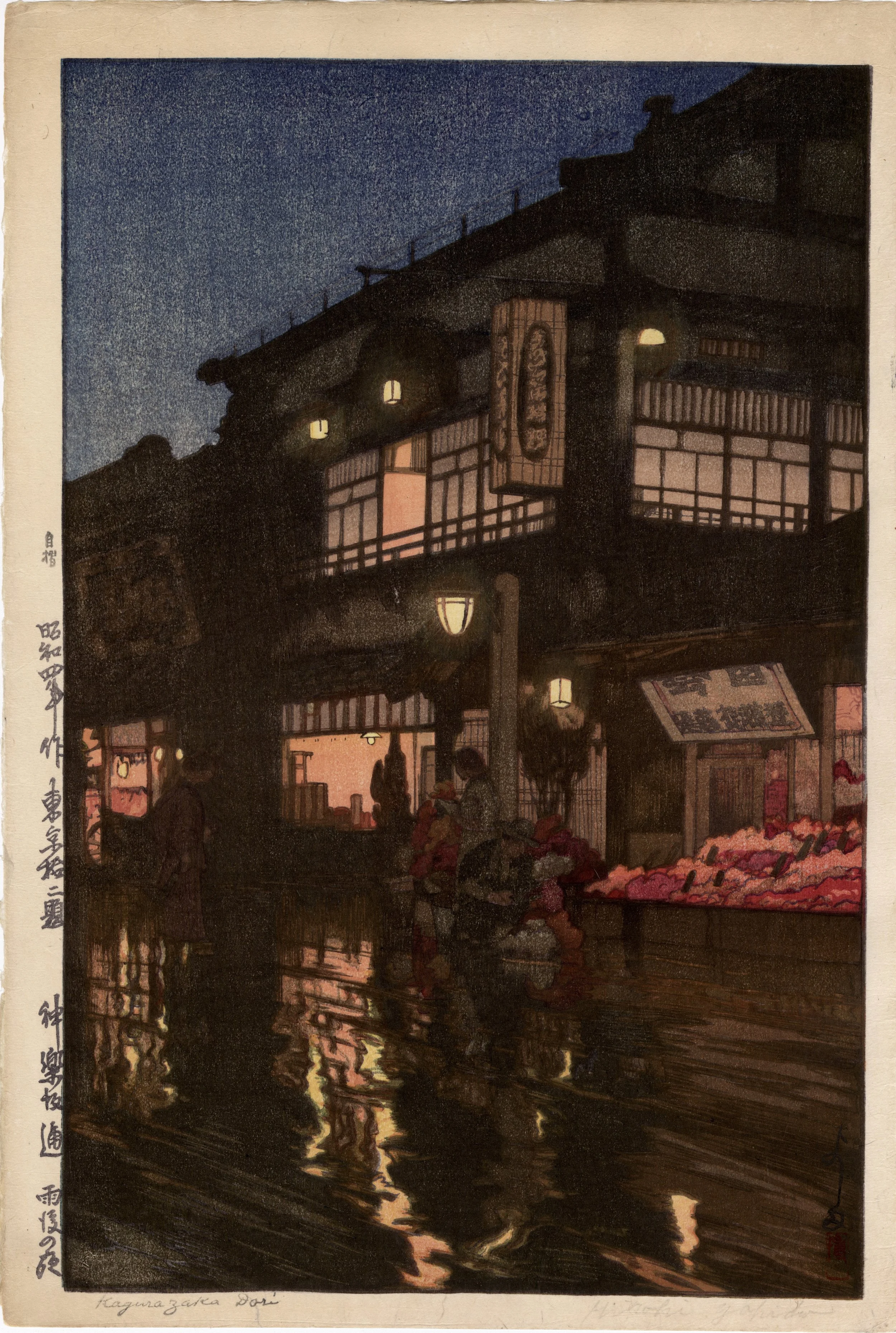
吉田博 Hiroshi Yoshida (1876–1950)
东京十二景 雨后的神乐坂
A Night After the Rain in Kagurazaka, from the series “Twelve Views of Tokyo
1929.”
木版画 | 纵绘大大判 | 40cm x 27.4cm
Woodblock-print | Large Oban tata-e | 40cm x 27.4cm
自摺;铅笔亲笔签名;品相近完美
Signed in brush and in pencil, with jizuri seal; great condition.
$3,800
Long before he designed woodblock prints, Hiroshi Yoshida was a painter, and an especially skilled watercolorist. Once he began creating woodblocks, both in his own studio and with other publishers, he sought to transfer the luminescent qualities of this delicate medium to prints, often with astounding success.
This is one of several designs wherein, by layering colors atop each other, Yoshida and his team dramatically brought to life Japanese streets on rainy nights. Kagurazaka road in Shinjuku was once a samurai neighborhood that, at the time of this print, was transitioning into a popular downtown. The dazzling reflections create a powerful dynamic.
While ukiyo-e artists were fond of night scenes — such as here and here — the printing technology of Shin Hanga allowed for a far more nuanced portrayal of shadows and water reflections. This print is a prime example. Interestingly, it is believed to be the first print where Yoshida and his team used a zinc key block, one that would never rub away.
Interested in purchasing?
Please contact us.
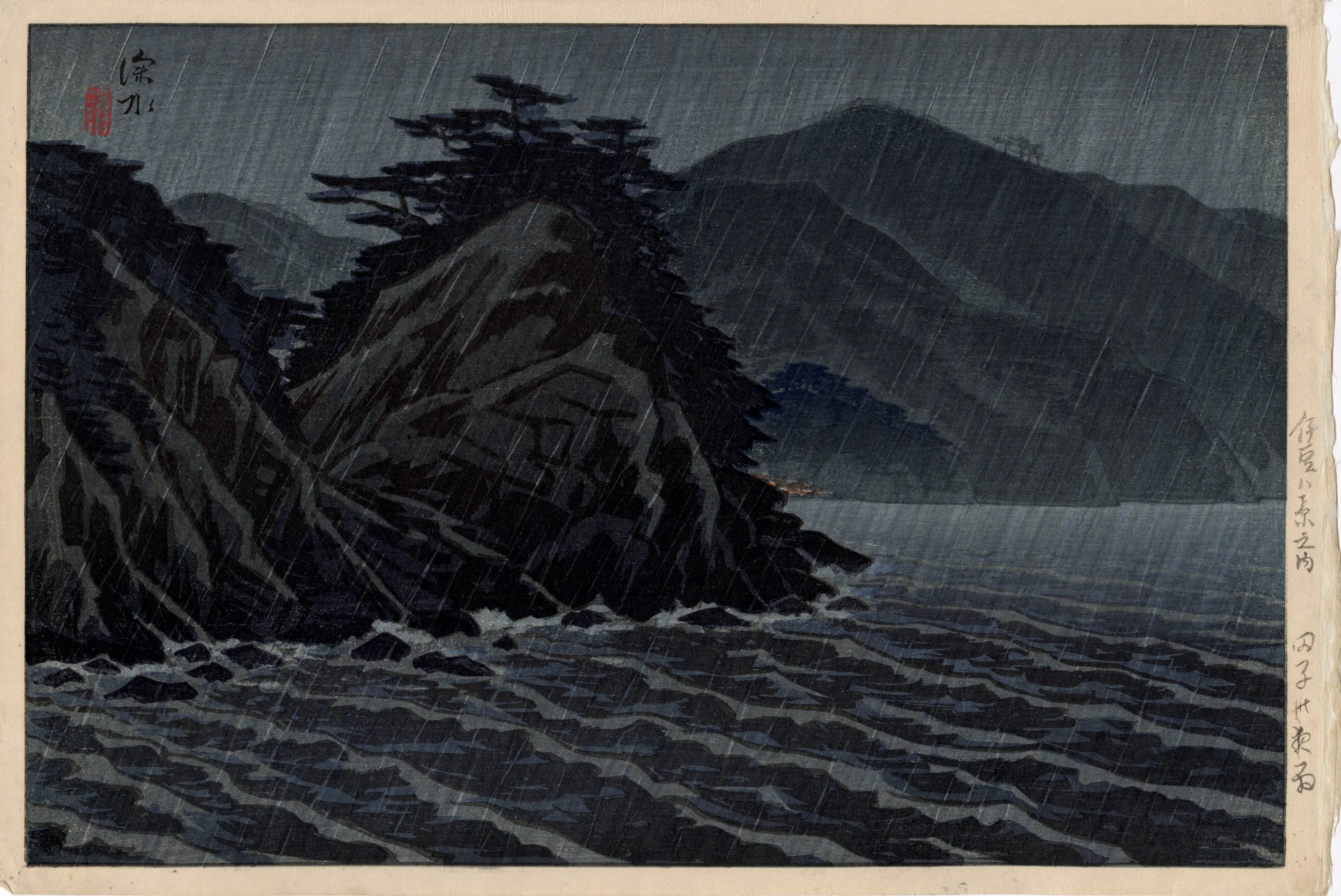
伊東深水 Ito Shinsui(1898-1972)
伊豆八景之内 田子夜雨
Night Rain at Tago, from the series “Eight Views of Izu.”
1939
木版画|横绘大大判|26.5cm x 39cm
Woodblock-print |Large Oban yoko-e|26.5cm x 39cm
早期版次;颜色鲜艳;品相非常好
Early edition; strong color; great condition.
$5,200
This simple design demonstrates how the slightest variation in tonality can lend itself to endless depth; there are numerous shades of gray here. From his 1939 series “Eight Views of Izu” for the publisher Watanabe Shozaburo, this rainy nightime scene captures the power of the surf and the warmth of the lights of the distant town. It came at a time in Shinsui’s career when he had occasionally returned to landscapes, after concentrating on portraits of beautfiul women.
You can almost hear the drum beat of the rain and the crashing surf.
Interested in purchasing?
Please contact us.

鳥居清長 Torii Kiyonaga(1752-1815)
梦见拦路强盗的三味线师傅
Hashira-e: Shamisen teacher dreaming of a highway robber
1783
木版画|柱绘|70cm x 12cm
Woodblock-print| Hashira-e|70cm x 12cm
早期版次;颜色鲜艳;品相非常好;背面胶纸残留
Fine impression and color; tape residue verso, otherwise in very good condition.
$9,500
Sometimes this medium is the message in ukiyo-e.
In this rare, spooky and endlessly fascinating design, Torii Kiyonaga uses a hashira-e (pillar print) vertical format to depict the otherworldly experience of dreaming. The bottom half is the conscious world, the top half the subconscious, both linked by the wispy connection of a dream bubble. The format allows to give each of these worlds their own distinct space while still competing with each other.
A samisen teacher has dozed off, perhaps after a long day. Her dreams come alive. But despite her placid expression, these are not sweet dreams, for from them. Instead she imagines being ravaged by a highway robber. He has removed her clothing and left her sobbing, a terrifying image.
This example is in remarkably good condition, with crisp lines and rich color.
Interested in purchasing?
Please contact us.
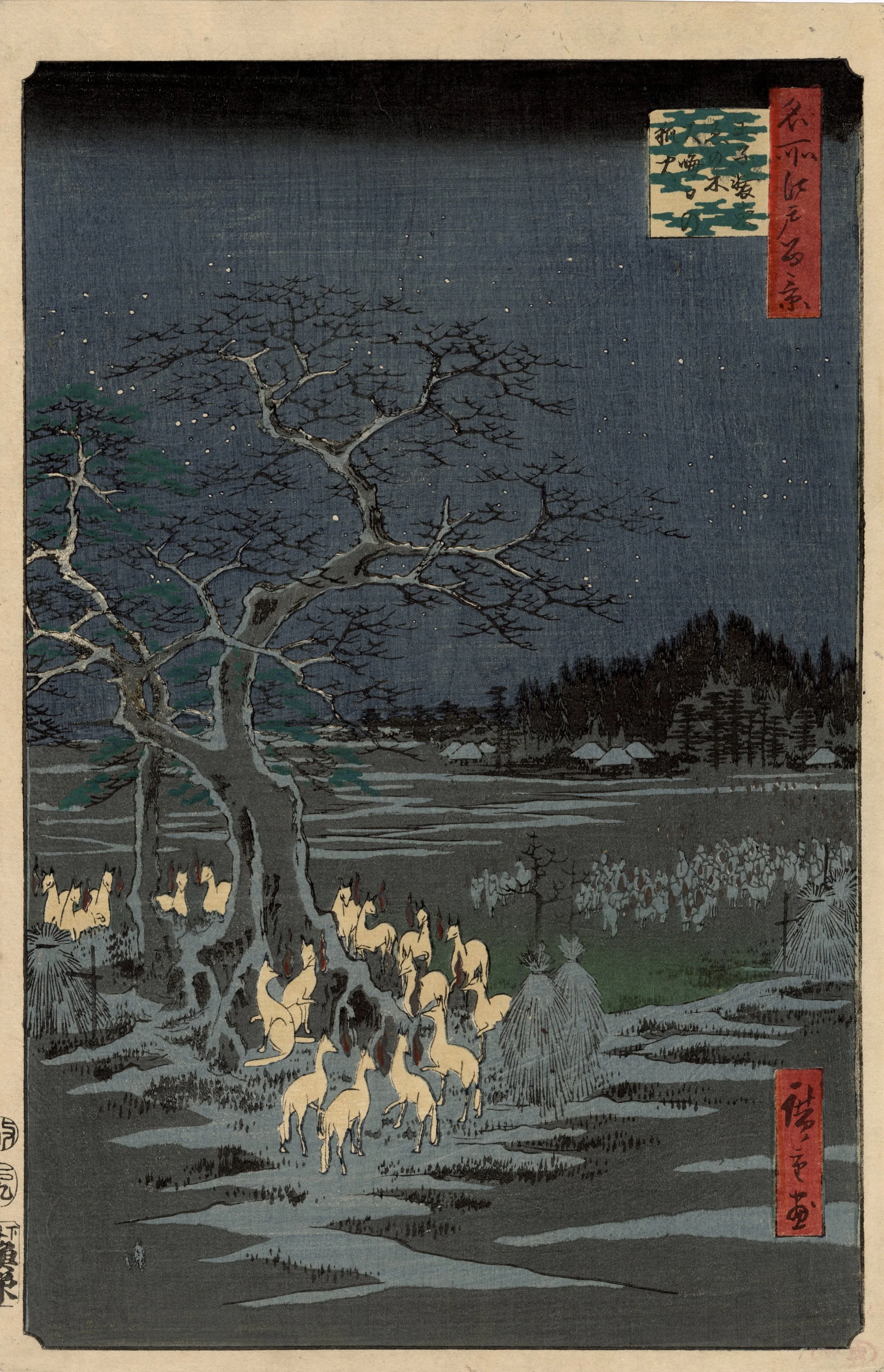
歌川広重 Utagawa Hiroshige (1797-1858)
名所江户百景 王子装束榎 除夕狐火
New Year's Eve Foxfires at the Changing Tree, Oji, from the series of “100 Famous Views of Edo.”
1857
木版画 | 纵绘大判 | 35.7cm x 23.2cm
Woodblock-print | Oban tate-e | 35.7cm x 23.2cm
早期版次带清晰的木纹;颜色鲜艳;整体品相非常好;边缘经轻微裁剪;
Early impression with woodgrain and strong color; slight trimming to margins, otherwise in good condition.
$22,000
On New Year’s Eve, from all the eight provinces of Kanto, the foxes gather at an ancient tree near Oji Shrine in Edo. They change their attire, and then enter the shrine to receive their commands for the New Year. From their mouths appear mysterious flames — “foxfires.” Farmers can tell by the flames what they can expect in the coming year’s crop.
Such is the mythical scene that Hiroshige portrays in this remarkable and, at least for him, unique print. Calling it a “haunting masterpiece” and one of the three best designs from “100 Famous Views of Edo,” the scholar Henry D. Smith II notes that while by this time in his storied career Hiroshige “held fast to his ingrained reliance on the certainties of the observed world. Here alone he ventured into the world of spirits.”
Indeed it is the only design from this series to involve fantasy. It creates a truly spooky yet irresistible tableau. And rarely will you find night so powerfully portrayed in ukiyo-e; we glimpse the spooky nocturnal world of the elusive foxes gathering silently for this solemn occasion. This example features a rich black sky and visible woodgrain sprinkled with twinkling stars.
The distant houses are dark. The ground is frozen with the deep cold of winter. All of Edo sleeps so the clever foxes can have the night to themselves.
Extraordinary.
Interested in purchasing?
Please contact us.
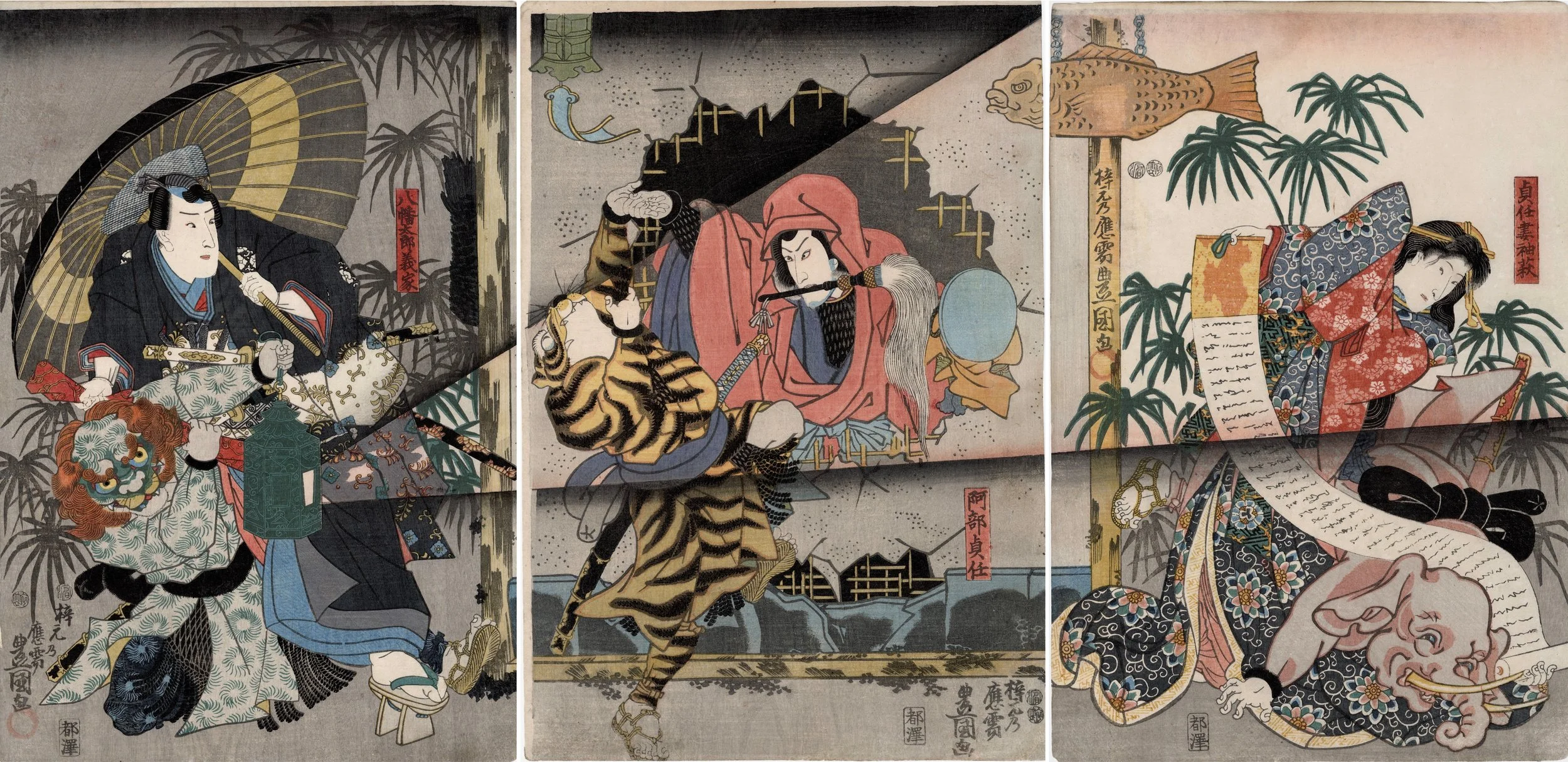
歌川国貞(三代歌川豐国) Utagawa Kunisada (Toyokuni III) (1786–1865)
光影三杰:奥州英雄(义家、贞任、袖萩)与灵兽奇阵
The Trio of Light: Oshu Heroes and the Array of Mythical Beasts
1847-52
木版画 | 三联续绘-纵绘大判 | 36.5cm×25cm×3
Woodblock-print | Triptych Oban tate-e triptych | 36.5cm×25cm×3
早期版次;颜色鲜艳;品相非常好
Fine impression, color and condition. Tape remnants verso.
$5,000
In his extraordinary, decades-long career, Utagawa Kunisada (who later took the name Toyokuni III after his master), created literally thousands of designs, many with a simple elegance.
This is not one of those prints.
This wild, jam-packed triptych is all action, all-the-time; simple it is not. It depicts a likely made-up Kabuki performance with, among others, the actor Ichimura Uzaemon XII as Hachiman Taro Yoshiie (far left). An actor dressed as a lion shines a light across the whole design, illuminating an actor dressed as a tiger (note the sandals), the actor Ichikawa Danjuro III as Abe Sadato and the actor Bando Shuka I as Sadato’s wife Sodehagi (remember, men played female roles in Kabuki) with, finally, another actor dressed as an elephant (note the hands).
Whew!
Leave it to Kunisada to include so many mythical beasts in a print that is both historical and theatrical.
This design dates from the 1840s when Kunisada was arguably at his peak. The actors are seemingly recreating the 1189 battle of Ōshū, which ended the storied Genpei War and led to the creation of the Kamakura shogunate, the first true military government.
Among the many aspects that sets this design apart is the powerful use of light and shadow, creating dramatic chiaroscuro. Triangular lantern beams were a favorite of Ukiyoe designers, allowing them to invent creative ways of displaying light and its effects. Less saturated pigment in the areas that fall within a lantern’s gaze create a remarkable sense of illumination, especially when contrasted with darker tones outside.
A bold, energetic and, yes, fun print -- and it’s in great condition.
在江户时代的浮世绘里,三代目歌川丰国(国贞)总能把老故事讲出新花样。这幅三联绘出自他创作巅峰的十九世纪五十年代前后,由当时著名的版元都泽庄次郎“应需”定制。这种“应邀”创作的背景,往往意味着更考究的用料与更大胆的设计。画作取材于平安时代的奥州合战,通过巧妙的光影变化和灵兽象征,为古老的战争故事增添了层次,让这段历史多了十足的舞台感与市井趣味。
整幅画作以强烈的明暗对比串联三个叙事场景,画面节奏错落有致。
左联景致掩映在竹林阴影之下,撑伞而立的源义家沉静从容,尽显正统武士的威严气度,搭配狮纹造型元素,暗喻源氏阵营的勇武气势与守护力量。
中间画面光影反差浓烈,破碎的帐幕分割空间,端坐其中的安倍贞任神色冷峻,身旁虎纹武士姿态凌厉奔放。猛虎自带的荒野野性,恰好呼应奥州地域风貌,也象征着安倍一族顽强不屈、奋力反抗的风骨。
右联氛围趋于温婉沉静,安倍贞任之妻袖萩静执长卷,与神象默然相望。白象承载着传统佛教寓意,代表智慧与隐忍,赋予乱世之中女性独有的柔韧底色,画面点缀的鲤鱼纹样,也暗含逆势而行、不甘宿命的精神内涵。
国贞素来擅长役者绘,深谙人物神态与肢体动态的刻画,也将这种舞台化的表达方式,巧妙地融入在了这幅武者绘创作里。他一改浮世绘常见的平涂方式,借深浅色块与明暗光影营造层次,如同舞台聚光一般烘托整体气氛。同时画家以狮、虎、象等灵兽寄托寓意,为冰冷的历史战事赋予浪漫色彩,也真切反映出江户时代世人对于英雄传说与命运际遇的独特理解。
Interested in purchasing?
Please contact us.

歌川国貞(三代歌川豐国) Utagawa Kunisada (Toyokuni III) (1786–1865)
月影暗逢之夜 浴后
After Bath, from the series of Secret meetings by moonlight
1830s~40s
木版画 | 纵绘大判 | 38.5cm x 26.5cm
Woodblock-print | Oban tate-e | 38.5cm x 26.5cm
早期版次;颜色鲜艳;品相非常好
Fine impression, color and condition
$2,500
A woman has just emerged from the bath and will soon meet her illicit lover in this classic, lantern-lit design. The great Kunisada has diagonally cut the composition in two with the light of the lantern versus the darkness beyond. This one image perhaps best captures the sense of mystery and romance of "Ukiyo-e Noir."
Interested in purchasing?
Please contact us.

月岡芳年 Tsukioka Yoshitoshi(1839–1892)
大坂軍記之内 半田寺山敗将日本號鎗傷
Okuko Hikozaemon Protects the Tokugawa Shogun from the Spear of Goro Matabei Mototsugu, from the series of The Siege of Osaka
1884
木版画|三幅续绘-纵绘大判|37cm × 25cm × 3
Woodblock|Triptych-Oban-tate-e|37cm × 25cm × 3
早期版次;颜色鲜艳;品相非常好
Fine impression, color and condition
$4,600
冷月如钩,黑云四散,松风簌簌,四百年前的某个夜里,一位身背襁褓的武士在已放倒多名敌人后丝毫不惧面前气势汹汹、挥刀而来的对手,提起手中的名枪“日本号”便向身前的驾笼奋力刺去;而在那驾笼之中躲藏着的,便是一代枭雄德川家康(1543-1616)。
以上的描述,便是对本作的精炼写照。画面中央那位手持名枪“日本号”的武士,即丰臣家的家臣后藤基次(1560-1615),在他肩头面露惧色的孩子,则是丰臣秀赖之子国松。与之相对的画面左部,高举长刀、放声大喊预备劈砍而来的德川家武士名为大久保忠教(1560-1639),一看便是要竭尽全力保卫住藏在驾笼中的自家主公。芳年以其独特的暴力美学,描绘了一幅传统演义中的经典场面,无论是电影感十足的构图,还是简练又不失细腻的画风,都能让观者大呼过瘾。
Interested in purchasing?
Please contact us.

川瀨巴水 Kawase Hasui ( 1883–1957)
日本風景集II 関西編 大坂宗右ェ門町の夕
Kansai edition: Soemoncho District in Osaka, from the series of Collection of scenic views of Japan II
1933
木版画 | 纵绘大大判 | 38.5cm x 26cm
Woodblock-print | Large Oban tate-e | 38.5cm x 26cm
第二版次;品相非常好
Second edition; very good condition
$4,800
Today the Soemoncho District of Osaka is known for its raucous and rollicking bar scene, but this nocturnal streetscape from 1933 is all calm and quiet. Then again, it is only dusk, day turning into night, so perhaps the noisy hours are still to come. Traditional Japan mixes with hints of the West. We have kimonos and lanterns, along with bowler hats and a telephone pole.
Nighttime scenes were always popular in Ukiyoe, such as this, but the improved woodblock printing technology of the Shin Hanga era allowed for even more nuanced portrayals of the noir world. Look how Hasui masterfully depicts the slanted light emerging from the open restaurant doors, and how it illuminates the edges of the geisha’s sashes and the black cloak of the solitary man a little bit further down the dark street.
The rows of orange-red lanterns slide away in diminishing perspective, casting their somber glow.
And in the sky we discern the last fading of the day. Here comes the Osaka night.
“再见,再见,直到再来的那一天。”——《宗右卫门町布鲁斯》
《日本风景集(关西篇)》,是巴水于1933至1941年间创作的风景画系列。全套共计24幅,囊括了大阪、兵库、奈良、京都等日本关西多地的风景名胜,整体气质优雅而辽远。
宗右卫门町,位于大阪市中心区道顿堀北侧,是大阪南部著名的娱乐区之一。自江户时代起,此地就弥漫着浓厚的风月区气息;到19世纪中期更是进阶为了真正的花街;在整个明治大正期至昭和初期,宗右卫门町都是大阪南地五花街的重要组成部分。老字号茶屋与高级料亭鳞次栉比,各路玩家与众多艺伎们徜徉其间。“今晚去宗右卫门町”,俨然已是当时许多人的一种生活状态。
在巴水到访的年月里,宗右卫门町的境况已是颓态初露。但响彻街区的三味线和手鼓声,却又能让你的心持续地漂浮在这昏黄的夜里。画面最右的阴影里,一位艺伎与客人缱绻走过。他们身后茶屋内透出的灯光,又柔软的照亮了门前并肩而行的一双艺伎。屋檐下,排排的灯笼火跃动得正旺,二三层窗中的光亮内,传来的是一阵阵笑语欢声。宽阔的路面上散布着微醺的光影,随机参差的拓痕恍若脚步凌乱,形成了天鹅绒般的质感,为这幅旧时代的夜与光,增添着一丝梦幻。
川瀨巴水 Kawase Hasui ( 1883–1957)
上野清水堂の雪
Snow at Ueno Kiyomizudo
1929
木版画 | 纵绘大大判 | 40cm x 27.2cm
Woodblock-print | Large Oban tate -e | 40cm x 27.2cm
酒井川口合版;品相非常好
Published by Sakai/Kawaguchi; fine condition.
$16,000
Interested in purchasing?
Please contact us.