
Ukiyo-e History · Chapter Two: The Rise
A time of remarkable change during the middle Edo period
To help readers better understand the charm of ukiyo-e, we have divided the first section of our Ukiyo-e Series, The History of Ukiyo-e, into four chapters:
Chapter One — A Unique Art Form is Born
The pioneering artists of the early Edo period
Chapter Two — The Rise
A time of remarkable change during the middle Edo period
Chapter Three — The Golden Age
Innovation, imagination, and artistic maturity in the late Edo period
Final Chapter — The End
From the final years of the Tokugawa shogunate to the last Ukiyo-e artists of the modern era
01. An Art Form Transformed
If you love ukiyo-e, you probably find the history around it irresistible: I know I do. The epic of Japan from the 16th Century until the Meiji Period in the late 19th Century is so fascinating, so page-turning, and so unlike anything else in the human experience.
And it is inextricably linked to the lifespan of this art. For more than 200 years, Japan was cut off from the rest of the world. Think of it like the Galapagos Islands, where, because they were also utterly secluded, unique species evolved and thrived. Ukiyo-e is like that: there was and is nothing like it because it grew up in a unique geographic vacuum.
It was in 1603 (Keichō 8), that Tokugawa Ieyasu established the Tokugawa shogunate in Edo after being appointed Sei-i Taishōgun. For the next three centuries, Japan enjoyed a period of peace unprecedented in history. As the old aristocracy and warrior class gradually lost their influence, agriculture and commerce flourished, and ordinary townspeople became increasingly prosperous. For the first time, they were able to enjoy the arts and cultural life that had once belonged almost exclusively to the elite.
As discussed in Part 1, it was in this changing world that ukiyo-e – “Pictures of the Floating World” -- was born. Rather than celebrating emperors or warriors, it depicted the people themselves and the lively world they inhabited. By the middle of the eighteenth century, it was thriving. Then, rather unexpectedly, a New Year's tradition transformed it forever.
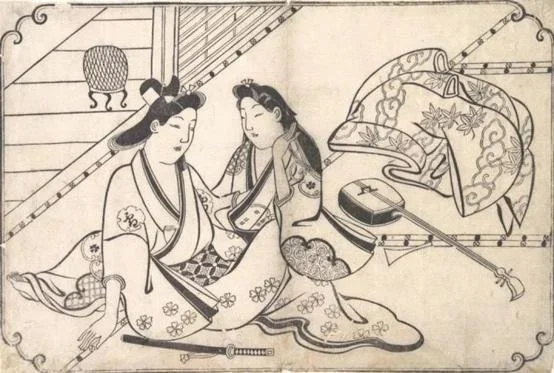
Two Lovers; Hishikawa Moronobu; c. 1675–1680; The Metropolitan Museum of Art
Around 1765, a funny tradition emerged among Edo’s wealthy literati -- exchanging e-goyomi, or illustrated calendars.
Japan was still using the lunar calendar, so every year the pattern of long months (30 days) and short months (29 days) changed. An e-goyomi quietly recorded that information, but there was one rule: it was never supposed to be obvious.
The calendar had to be hidden inside the design itself. If anyone could spot it at a glance, the print was considered unimaginative. The more cleverly the information was concealed, the more admiration it earned.
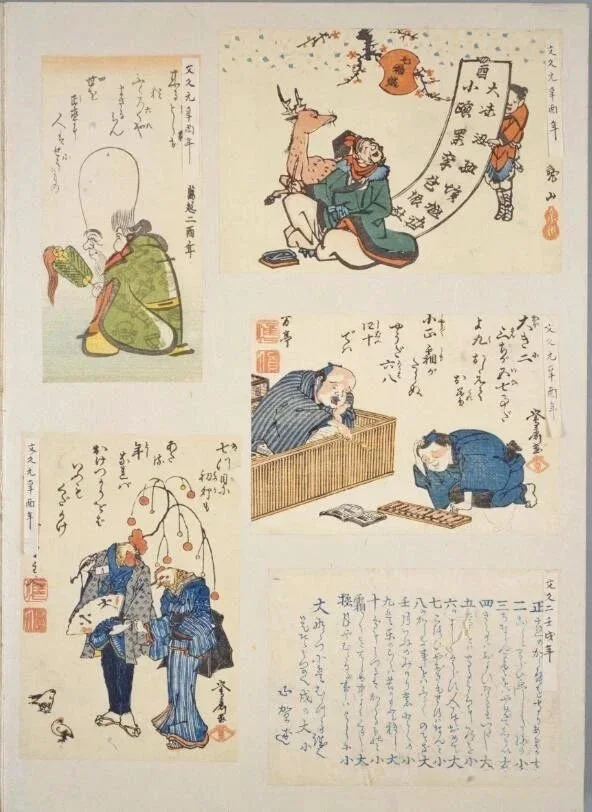
e-goyomi
What began as a seasonal custom quickly became a game of wits. Patrons challenged one another to come up with ever more ingenious designs, then commissioned artists to bring those ideas to life. The finished prints were exchanged as New Year's gifts, but they weren't signed by the artists. Instead, they carried the name of the person who had conceived the design—a discreet way of showing off not artistic talent, but intellectual ingenuity.
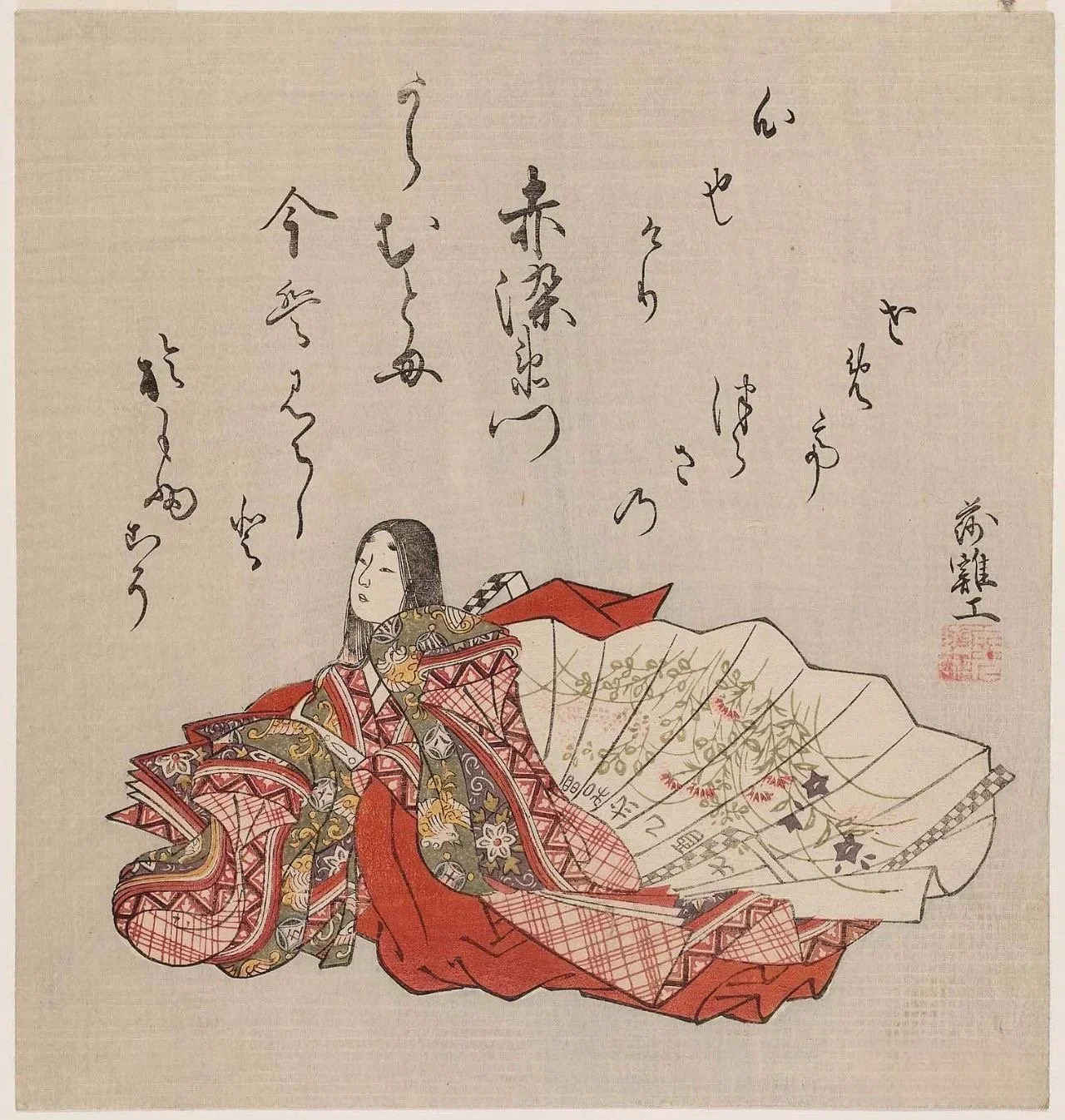
Akazome Emon, from an untitled series of female poets; Sakei; 1765; Museum of Fine Arts, Boston
Of course, once people started competing, they didn’t know when to stop.
Soon it was no longer enough to have the cleverest idea. They began comparing the quality of the carving, the precision of the printing, even the brilliance of the colors. Fortunately for ukiyo-e artists, these patrons had both refined taste and deep pockets. They were willing to spend whatever it took to create the finest prints.
That friendly rivalry sparked one of the greatest technical breakthroughs in the history of ukiyo-e. It gave birth to nishiki-e—magnificent multicolor prints. Single sheets were now produced using more than a dozen separate woodblocks, each responsible for a different color. Compared with the earlier beni-zuri-e, which had no more than four colors, these new prints were richer and more vibrant. Their dazzling colors reminded people of luxurious woven brocade, giving rise to the name nishiki-e—literally, "brocade prints."
Everything had to be exceptional, starting with the artist. A successful nishiki-e required someone with refined taste, elegant brushwork, and enough sensitivity to understand the ideas of the poets and patrons who commissioned the work. Few were better suited to the task than Suzuki Harunobu, the artist now celebrated as the father of nishiki-e. Other favorites who were contemporaries or came soon after included Isoda Koryusai, whose samurai background gave him an unusually sophisticated artistic education; and Kitao Shigemasa, who has more or less fallen into obscurity.
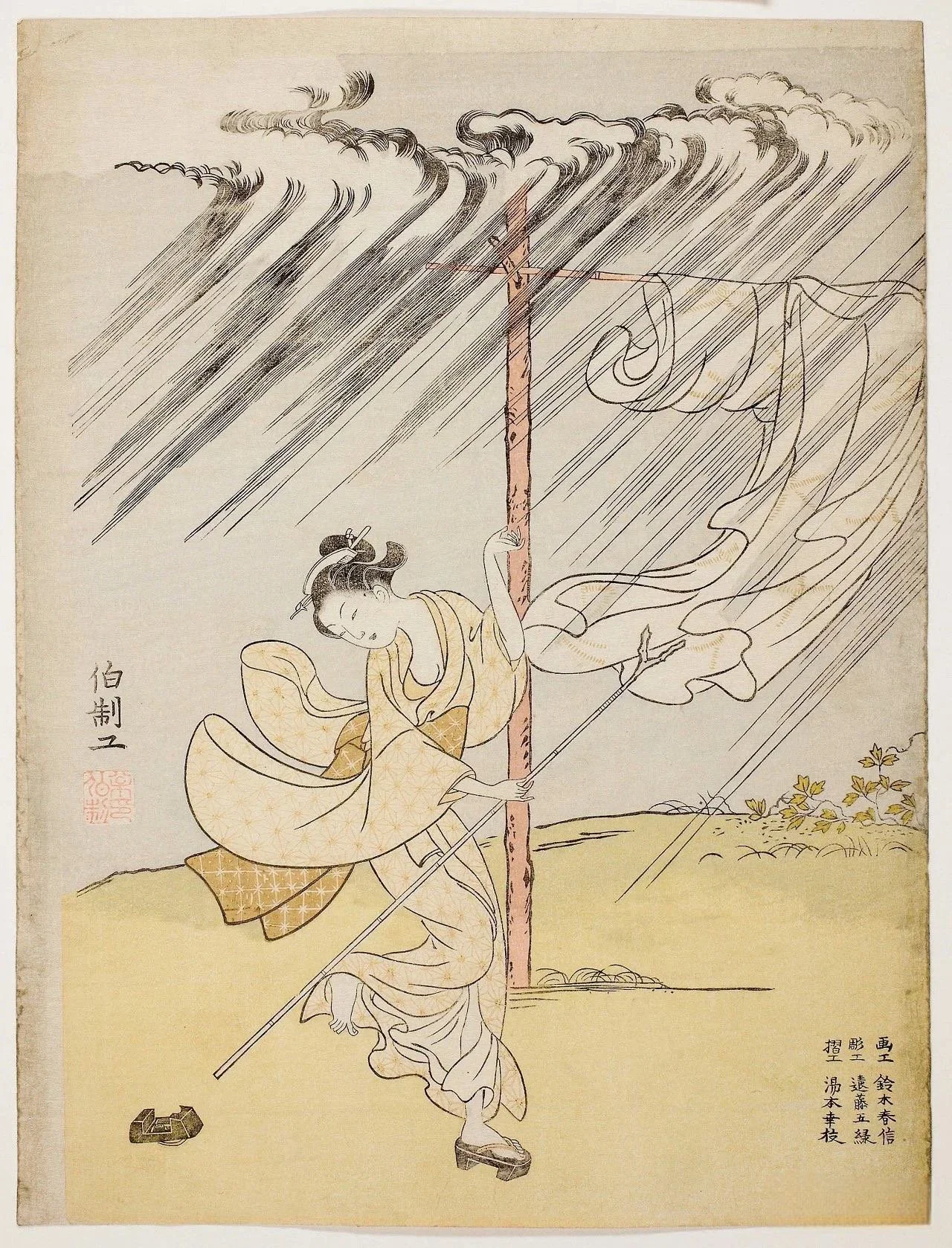
A Young Woman in a Summer Shower; Suzuki Harunobu; 1765; Museum of Fine Arts, Boston
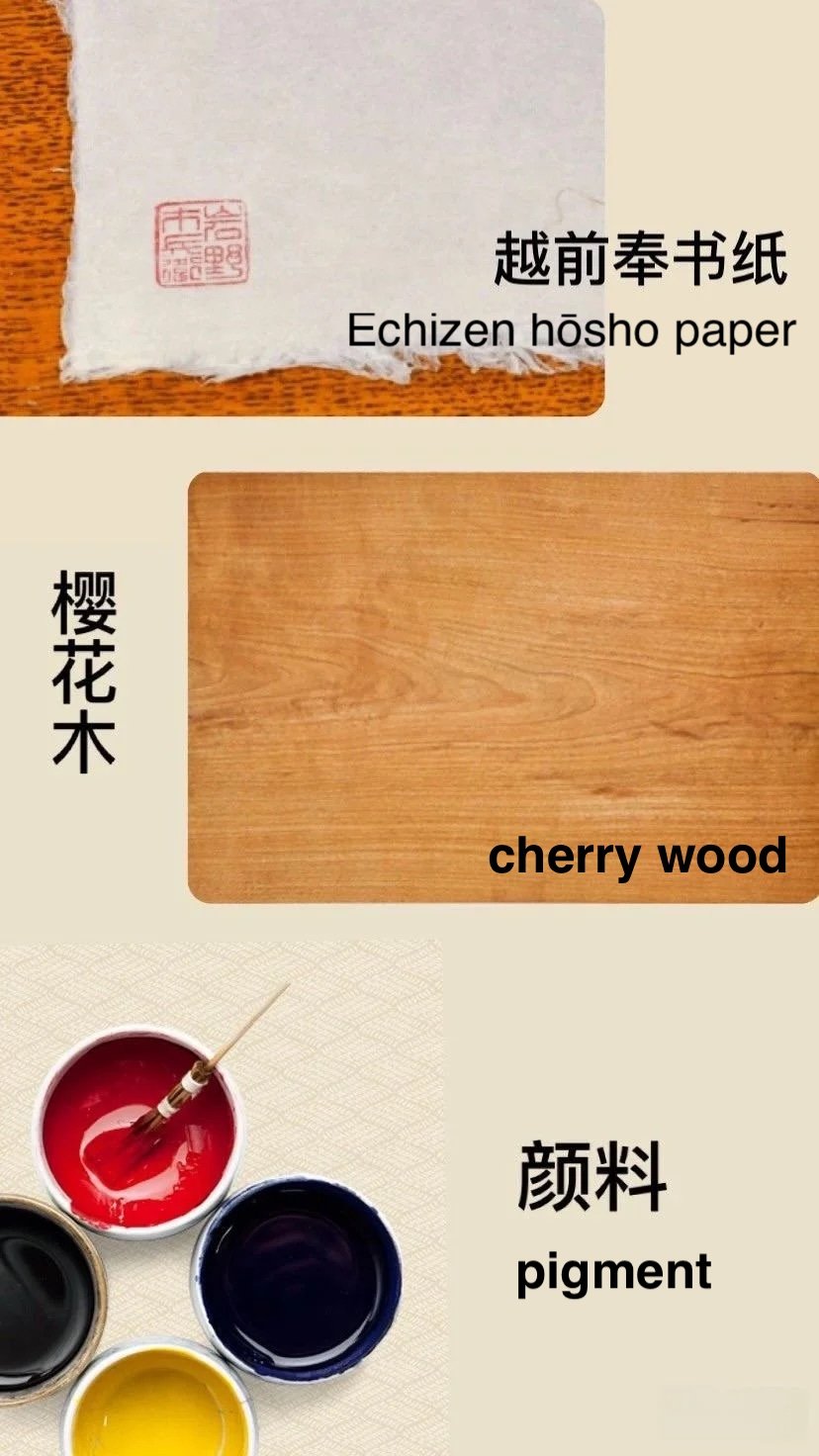
The printing blocks were carved from carefully selected cherry or magnolia wood. The paper had to be the finest Echizen hosho paper, prized for its strength and smooth surface. Even the pigments demanded special attention, mixed with finely ground gofun—powdered oyster shell—to create colors that were soft, luminous, and remarkably subtle.
None of this came cheaply. A first-edition nishiki-e sold for 96 mon (a few dollars today). An ordinary print cost only 5 mon. Without wealthy patrons willing to spend freely in pursuit of perfection, nishiki-e might never have developed into the artistic achievement that we admire today.
Harunobu, more than anyone else, was at the center of this revolution. But he did not live to see just how influential it would become -- only five years after helping usher in the age of nishiki-e, he died suddenly in 1770.
His career was brief, but astonishingly productive. In just a few short years, he created well over a thousand prints, many of which are now regarded as masterpieces of 18th-century Japanese art.
His women with their elegantly drawn oval faces, their thoughts perhaps elsewhere, had an ethereal and childlike quality. His children themselves seemingly possessed mature wisdom. His interior and exterior settings completed the picture of a vanished and dream-like world, calm prevailing always. Inky blacks were boldly juxtaposed with soft palettes of pink and orange.
There is a classical quality in his work, a painterly sense of movement and light, and a romantic evocation of the court world. His beauties – and it is prints of beauties that dominate his repertoire -- have fine eyebrows and cherry lips, and slender frames cossetted within elegantly folding kimonos. They seem to glide through the air, like a breeze in spring; they are like beauties that breathe.
Some too are engaged in intimate acts – like many ukiyo-e masters, Harunobu produced many erotic works, often without his signature.
His Eight Parlour Views (Zashiki Hakkei), inspired by Muxi's Eight Views of Xiaoxiang, transformed a classical Chinese theme into intimate scenes of everyday life in Edo. His Thirty-six Immortal Poets, meanwhile, reveal another side of the artist. Waka, Chinese verse, and haiku appear throughout the series, reflecting both his literary interests and the cultured world in which he worked.
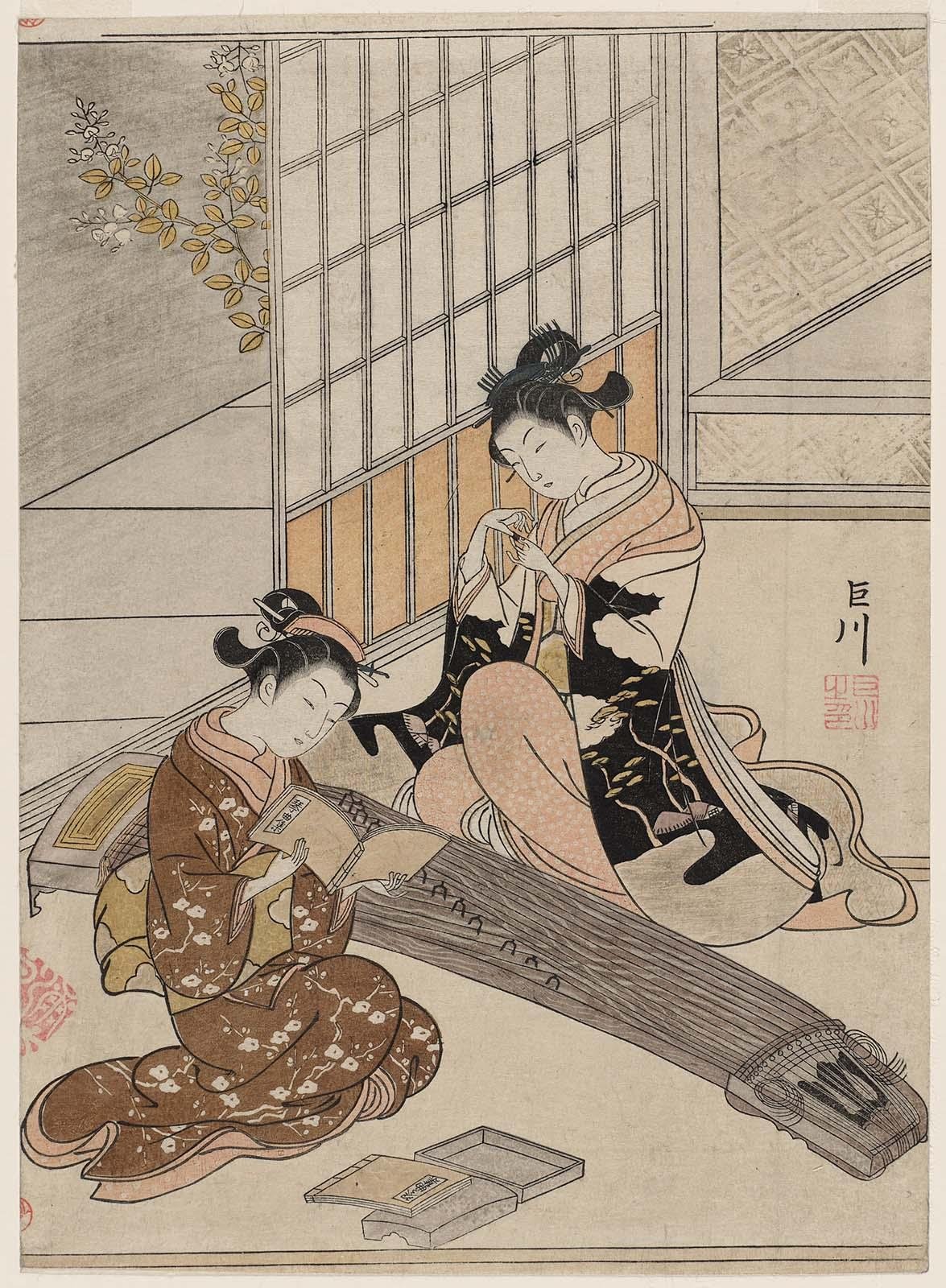
Descending Geese of the Koto Bridges, from the series Eight Views of the Parlor (Zashiki hakkei); Suzuki Harunobu; 1766; Museum of Fine Arts, Boston
Perhaps no image demonstrates this better than his portrait of the teahouse waitress Kasamori Osen. So enchanting was her likeness that admirers travelled from across Japan simply for the chance to see the real woman behind the print.
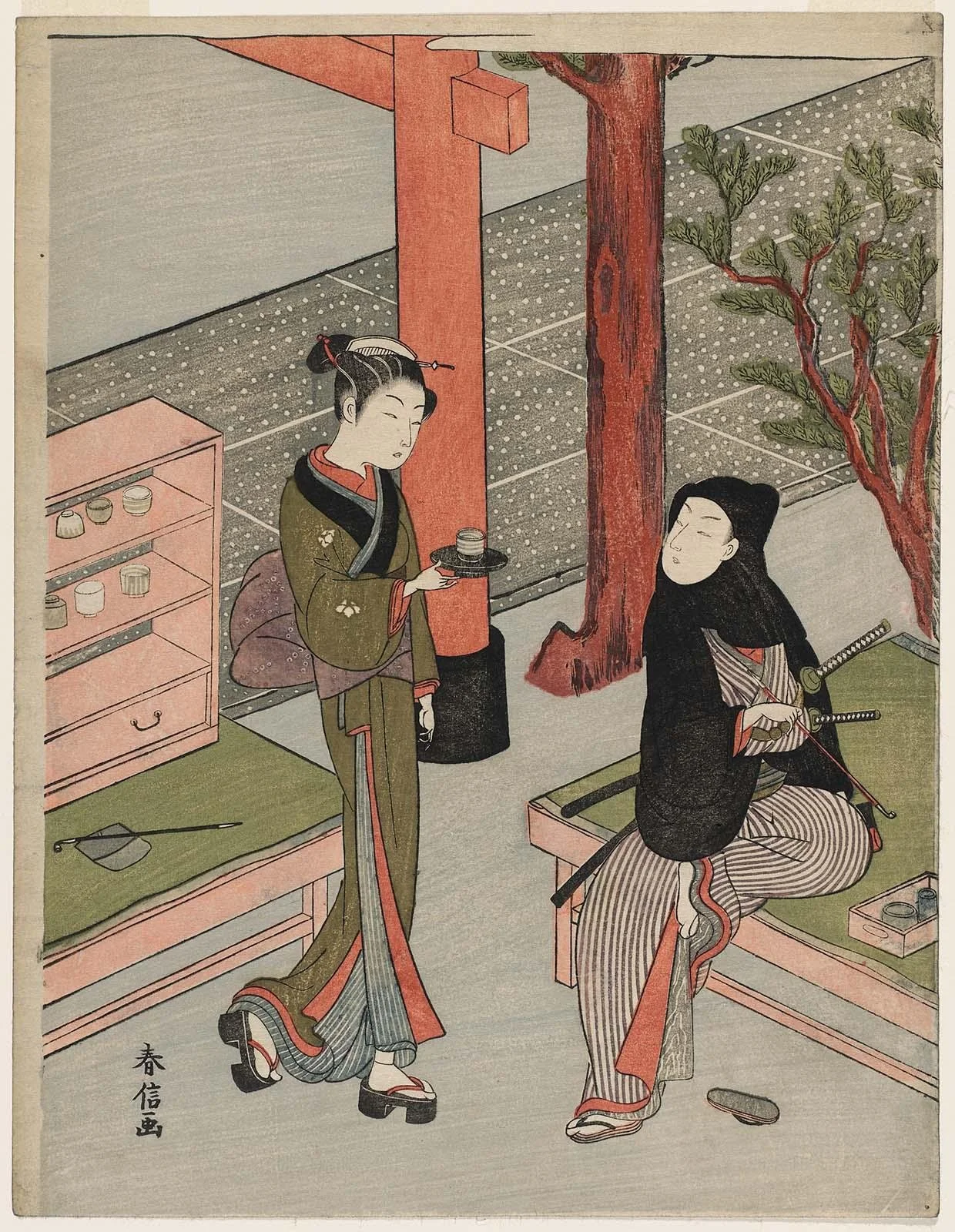
Osen of the Kagiya and a Young Samurai in a Black Hood; Suzuki Harunobu; 1768–69; Museum of Fine Arts, Boston
02. 3 Great Names Emerge
All the pieces were in place, and an extraordinary ukiyo-e epoch began. For me, this is one of the most marvelous periods, producing exquisite images that are timeless, as simultaneously beautiful and unattainable as they were when they were printed. Three fascinating names that will never fade – Utamaro, Kiyonaga and Sharaku – rose to prominence and have remained famous ever since.
Two subjects came to dominate the genre: bijin-ga and yakusha-e, portraits of Kabuki actors. Together, they would define the golden age of ukiyo-e.
The world of bijin-ga ranged from goddesses, imperial consorts, court ladies, and the daughters of samurai families to the wives of wealthy merchants, ordinary townswomen, teahouse waitresses, bathhouse attendants, and the celebrated courtesans of the pleasure quarters.
Yakusha-e reflected a different side of Edo life. Kabuki had become one of the favorite forms of entertainment, and audiences were just as fascinated by its stars as modern fans are by film actors or pop idols. Ukiyo-e publishers saw an opportunity. Actor prints promoted new productions, celebrated famous performers, and gave theatergoers something to take home after the curtain fell.
In many ways, they were the eighteenth-century equivalent of celebrity posters.
If Harunobu laid the foundations of bijin-ga, it was Torii Kiyonaga who redefined what beauty looked like.
Rather than portraying idealized young girls, Kiyonaga turned his attention to the women he saw every day in Edo. His figures were taller, healthier, and more confident, reflecting a new ideal of feminine beauty that felt both elegant and unmistakably alive.
One glance at a Kiyonaga print is usually enough to recognize his hand.
His women are instantly recognizable for their unusually elongated proportions—roughly eight heads tall—graceful postures, flowing lines, and luminous colors. They seem to move effortlessly across the picture surface, and before long the so-called "Kiyonaga beauty" became the style every ukiyo-e artist wanted to imitate.
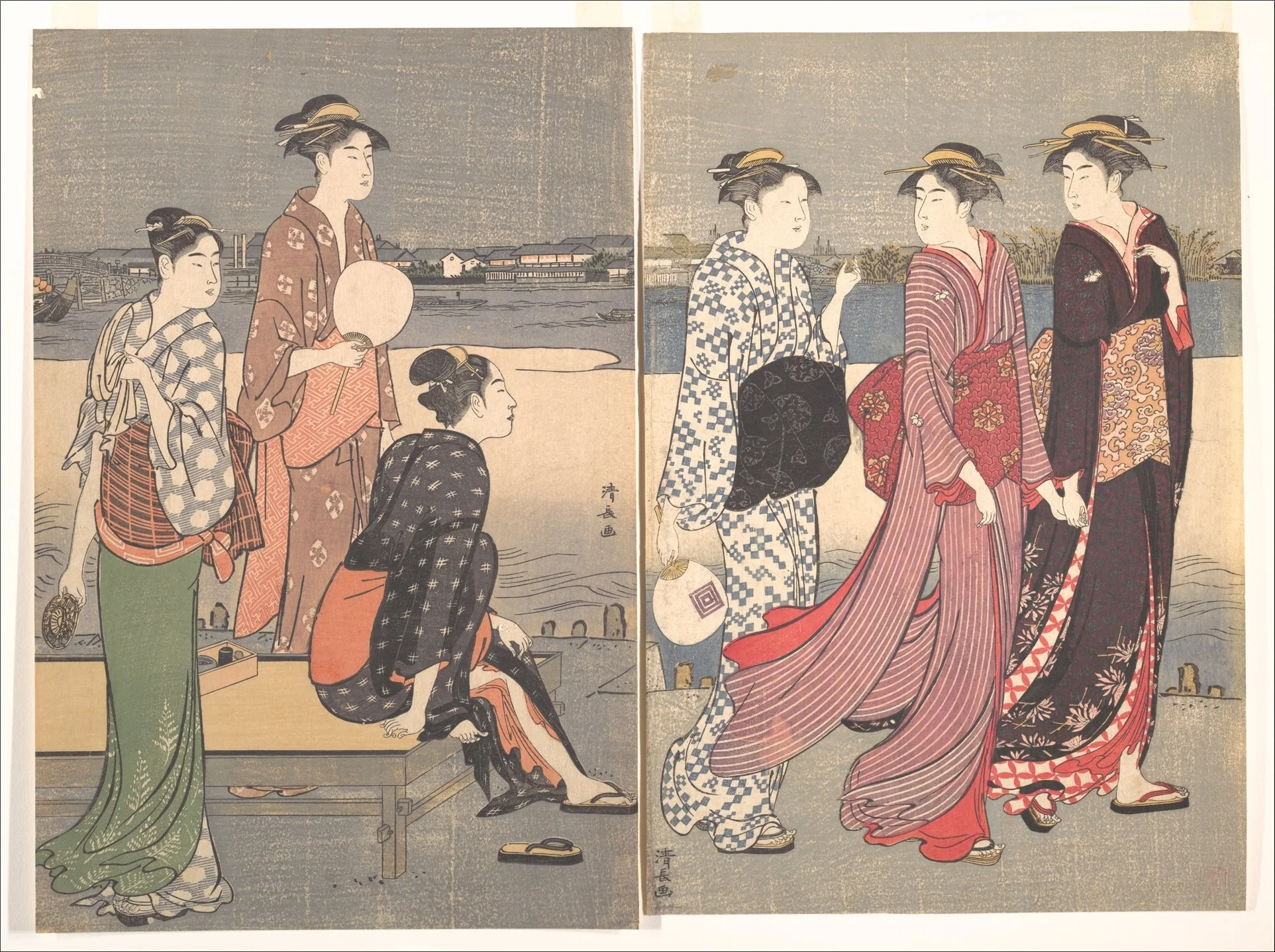
Enjoying the Evening Cool on the Banks of the Sumida River; Torii Kiyonaga; 1784; The Metropolitan Museum of Art
Then came the artist who would take bijin-ga even further.
Kitagawa Utamaro was something of a late bloomer. He rose to prominence later than many of his contemporaries, yet ultimately surpassed them all. Drawing on everything earlier masters had achieved while refusing to be limited by tradition, he transformed bijin-ga into one of the highest achievements in the history of ukiyo-e.
Utamaro's greatest achievement was that he changed the way artists looked at women.
Earlier bijin-ga often celebrated beauty in a general, idealized sense. The women were elegant, but they could easily have been mistaken for one another. Utamaro took a different approach. Rather than painting beauty itself, he became interested in the individuality behind it.
He could capture a woman’s complex emotions simply by the angle of her almond-shaped eyes or the ripe shape of her slightly parsed lips. So many of these women seem as if from a dream, and as if they are lost in their own dreams; they appear to be simultaneously of this world and from another one that we mere mortals cannot imagine.
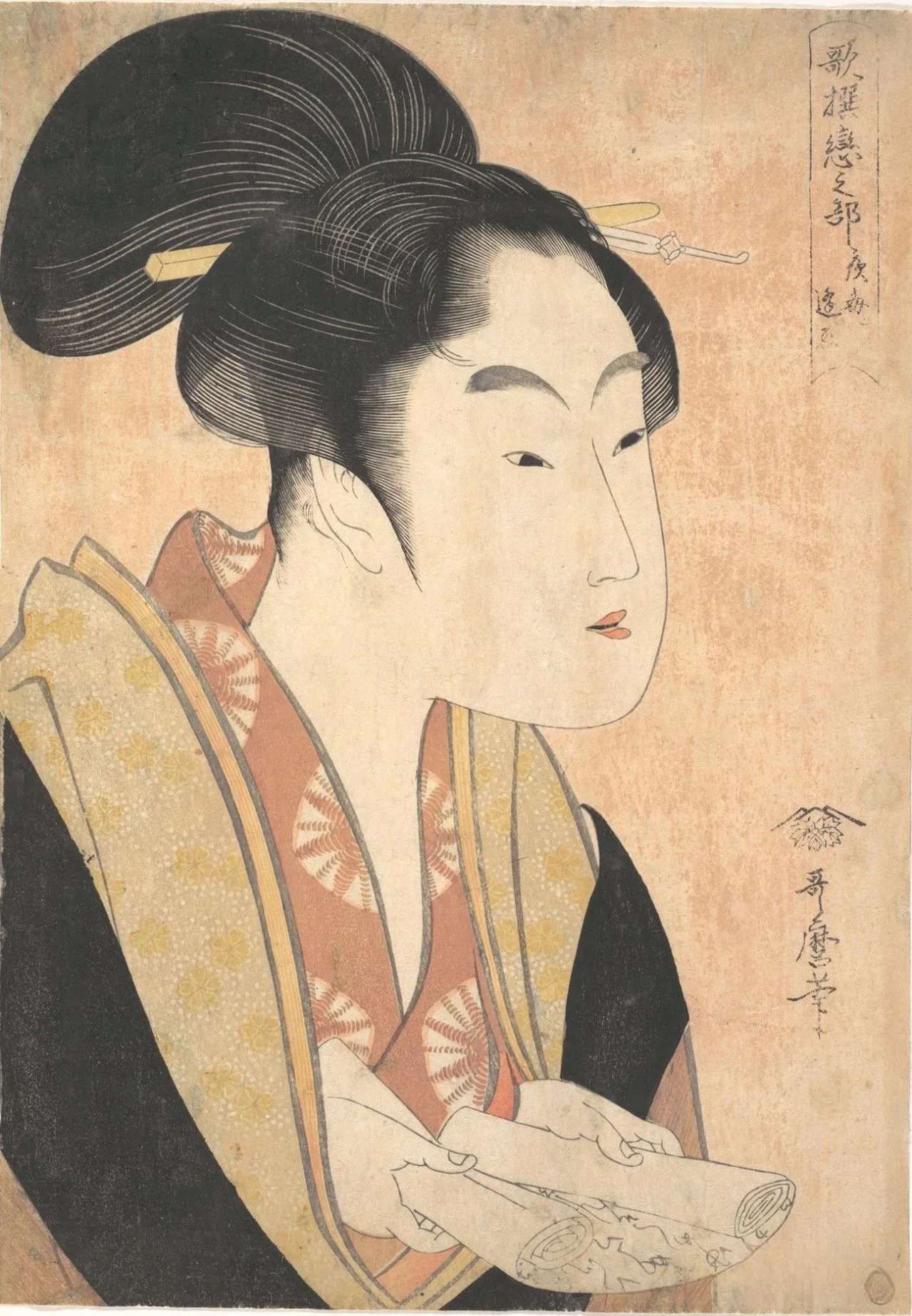
A Young Woman Reading A Letter; Kitagawa Utamaro; 1790s; The Metropolitan Museum of Art
Some appear thoughtful, others playful or quietly melancholic. A slight tilt of the head, a fleeting smile, or the way a hand touches a sleeve is often enough to reveal an emotion. His women are no longer simply beautiful—they feel unmistakably human.
This new way of seeing reached its height in his celebrated series Ten Types in the Physiognomic Study of Women and A Collection of Reigning Beauties, where every face possesses its own distinct character.
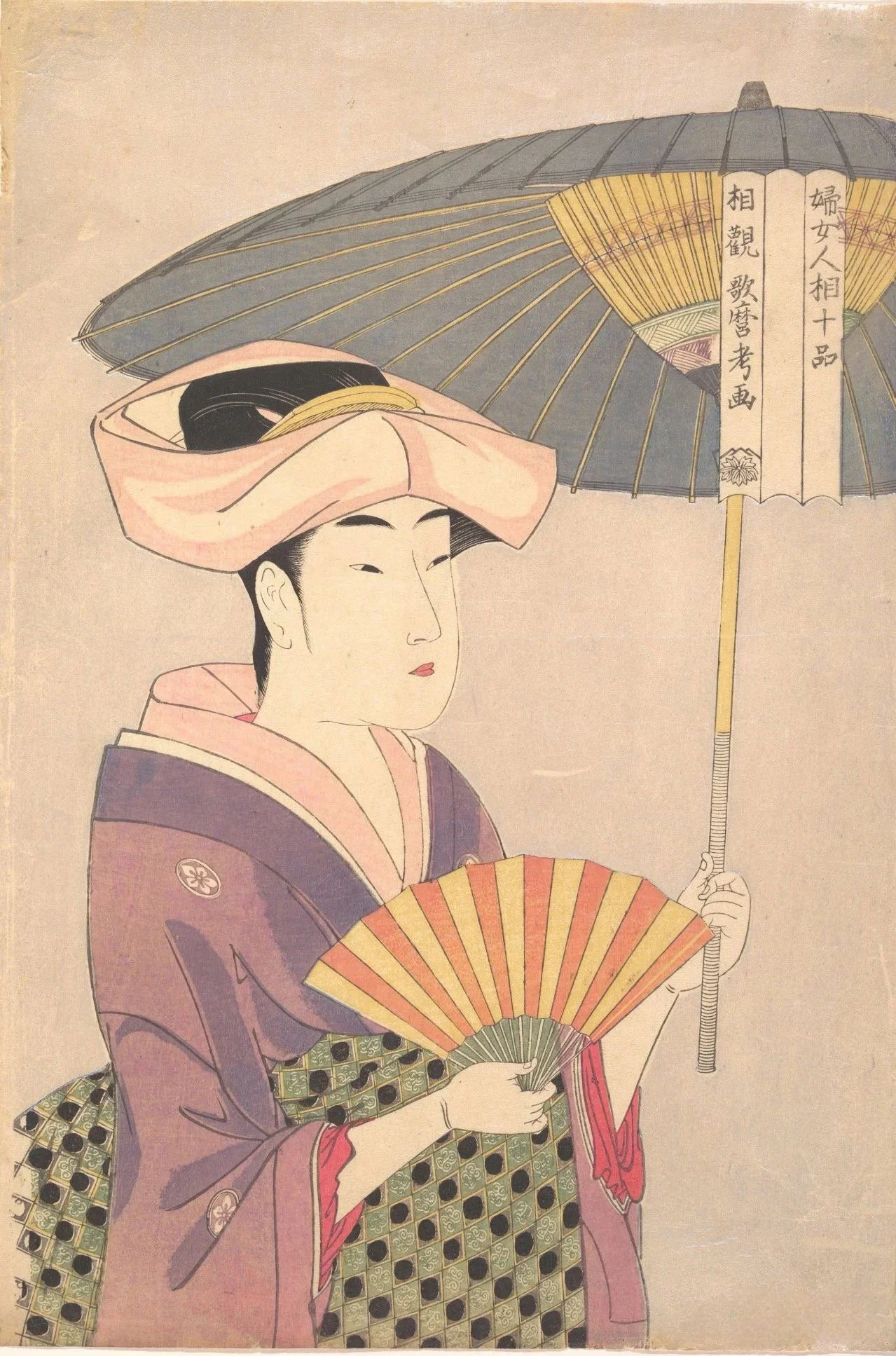
“Woman Holding Up a Parasol” from the series Ten Classes of Women’s Physiognomy; Kitagawa Utamaro; 1792-93; The Metropolitan Museum of Art
Utamaro also produced remarkable studies of birds, insects, flowers, shells, and other forms of nature, observing them with the same patience and sensitivity that he brought to his portraits. Whether depicting a dragonfly resting on a reed or a mother cradling her child, his attention was always focused on quiet moments.
To many people today, Utamaro is remembered as the great master of bijin-ga. Yet his real gift lay not simply in depicting beauty, but in observing life itself.
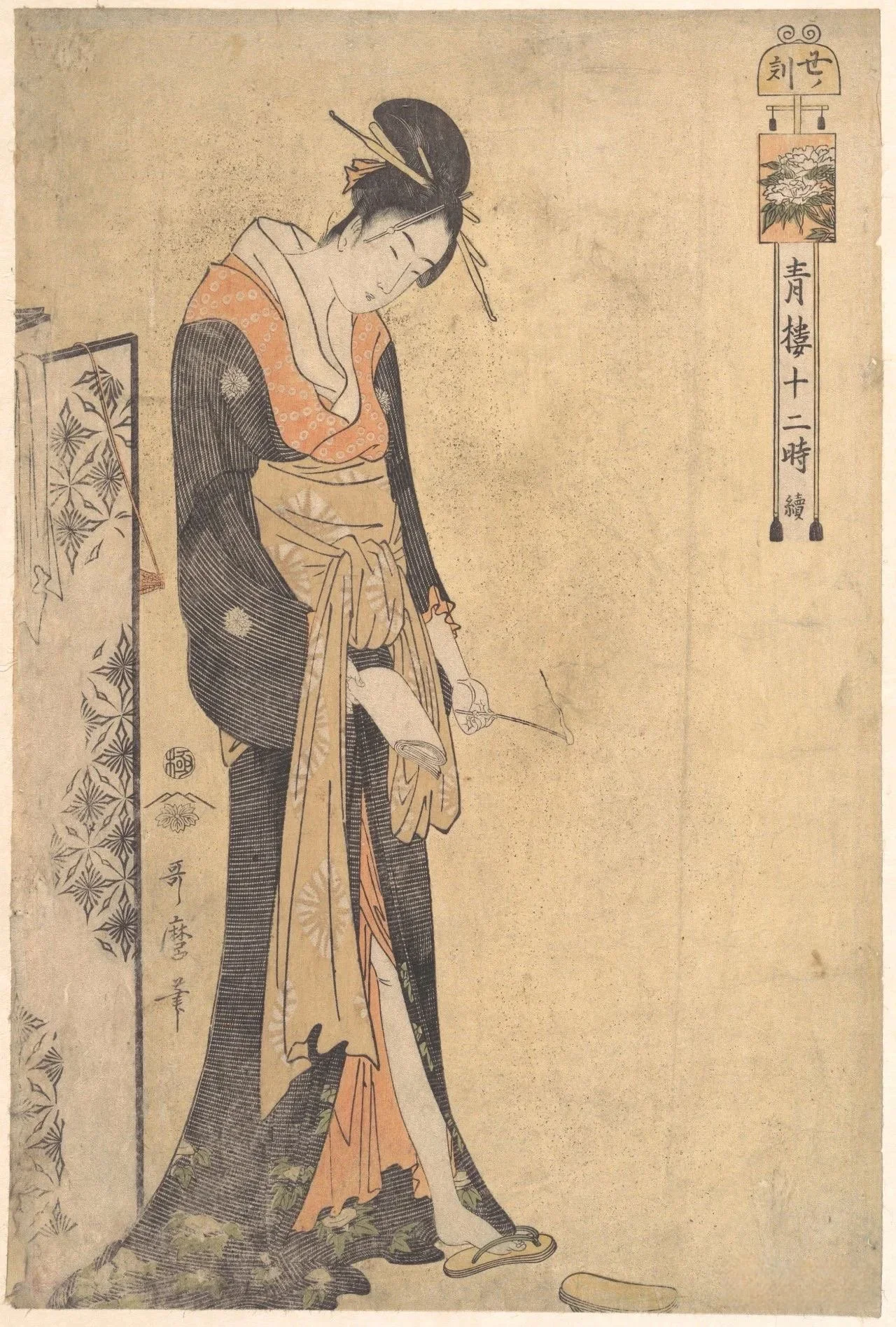
The Hour of the Ox; Kitagawa Utamaro; 1794; The Metropolitan Museum of Art
But success can be a curse. By the end of the eighteenth century, ukiyo-e had become one of the defining forms of popular culture in Edo. Its influence was everywhere—and that inevitably attracted the attention of the government.
The Shogunate was facing mounting financial difficulties. A series of poor harvests and economic problems prompted the government to introduce the Kansei Reforms (1787–1793), an ambitious program intended to restore public order and encourage frugality.
Luxury was discouraged. Extravagance was criticized. The pleasure quarters and Kabuki theatres came under increasing scrutiny. Ukiyo-e publishers were instructed to exercise greater restraint. Prints portraying famous courtesans, popular actors, or scenes considered excessively lavish were restricted, and artists found themselves working within ever tighter limits.
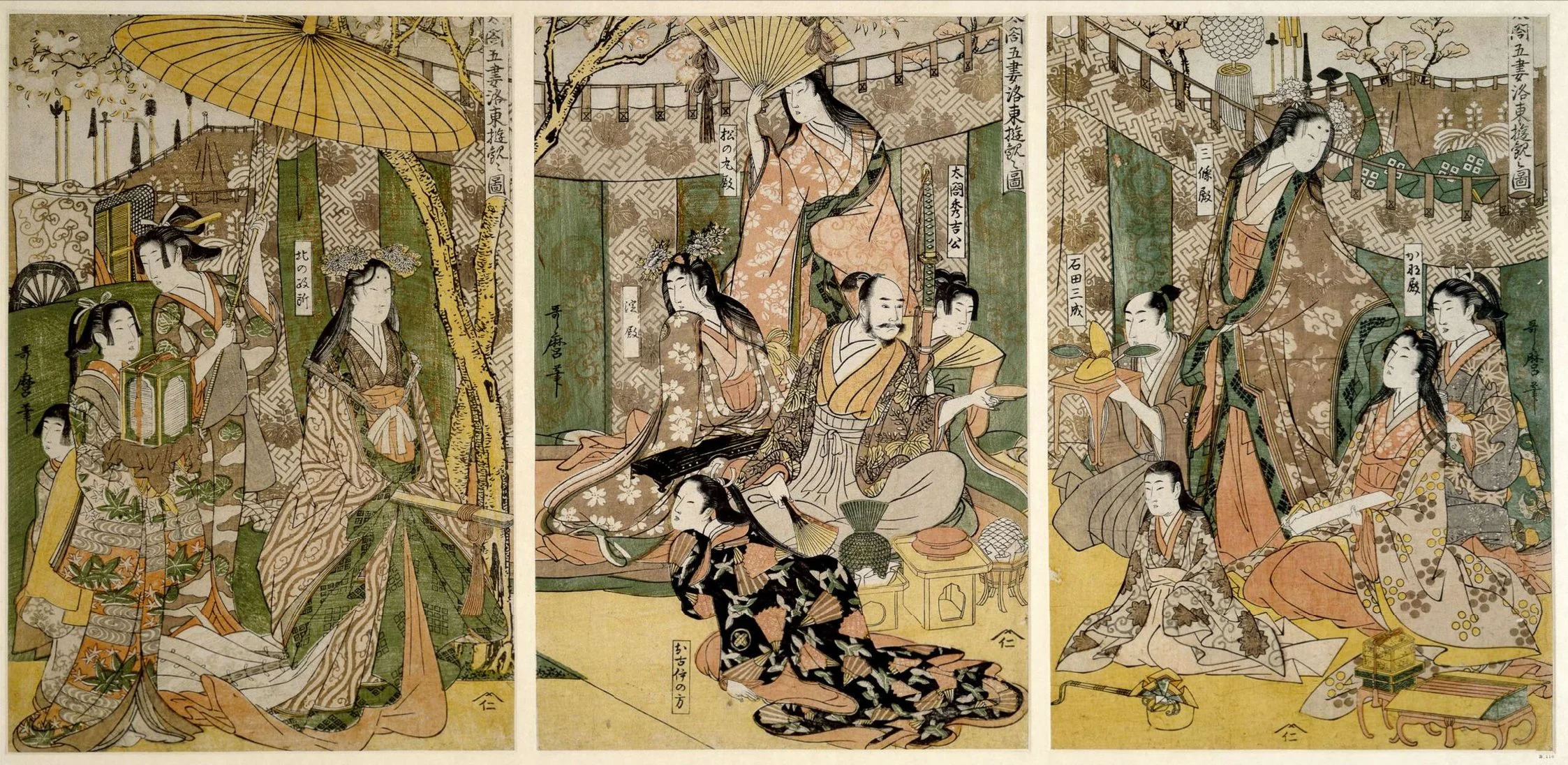
Picture of Hideyoshi and his Five Wives Viewing the Cherry-blossom at Higashiyama; Kitagawa Utamaro; 1803-04; The British Museum
But history has proven again and again that censorship rarely suppresses creativity. Quite the opposite. It inspires artists and publishers to become more inventive. Symbolism grew more subtle, visual metaphors became more sophisticated, and designers discovered new ways of expressing ideas without stating them too openly.
The history of ukiyo-e is therefore not only a story of artistic innovation, but also one of constant negotiation between creativity and authority. If anything, some of ukiyo-e's most remarkable artists emerged precisely during this period. None is more fascinating than Toshusai Sharaku, a painter whose career remains one of the greatest mysteries in Japanese art history and who appeared almost out of nowhere.
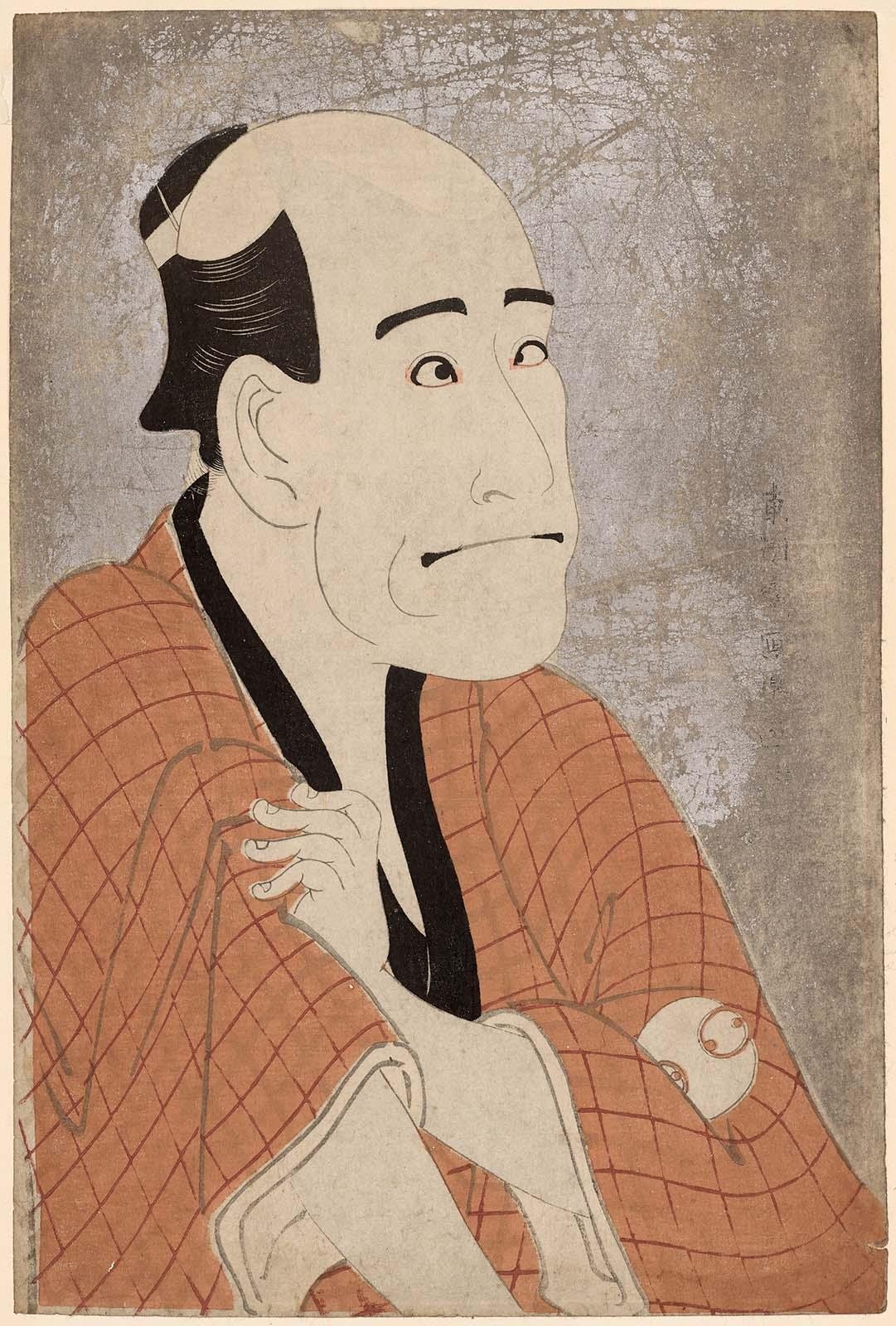
Actor Arashi Ryūzō II as the Moneylender Ishibe Kinkichi; Toshūsai Sharaku; 1794; Museum of Fine Arts, Boston
In the spring of 1794, he abruptly published a series of striking actor portraits unlike anything audiences had seen before. Then, less than a year later, he vanished just as abruptly. In the space of only ten months, he created around 140 designs before disappearing from the historical record altogether. Who was he?
Over the past two centuries, scholars have proposed dozens of theories. Some believe he was a Noh actor. Others suggest he may have worked within the publishing world, or that "Sharaku" was not one person at all but the collective name of several artists. None of these ideas has been conclusively proven. But the mystery added to his fame.
Instead of idealizing his subjects, Sharaku captured fleeting expressions—a raised eyebrow, a tense jaw, a sly smile, a moment of arrogance or anxiety. He painted actors not as glamorous stars, but as complicated human beings. No so flattering features – a big nose, for example – could be exaggerated for comic effect.
It was a bold approach, though not necessarily a successful one at the time.
Many theater-goers preferred images that celebrated their favorite performers rather than exaggerated their imperfections. As a result, Sharaku's prints are thought to have sold poorly; another possible reason is career came to an abrupt end.
But history has a habit of changing its mind.
Today, Sharaku is regarded as one of the greatest portrait artists of the Edo period. The very qualities that puzzled his contemporaries—psychological depth, dramatic realism, uncompromising individuality, a dollop of humor —are now recognized as the reasons his work remains so compelling.
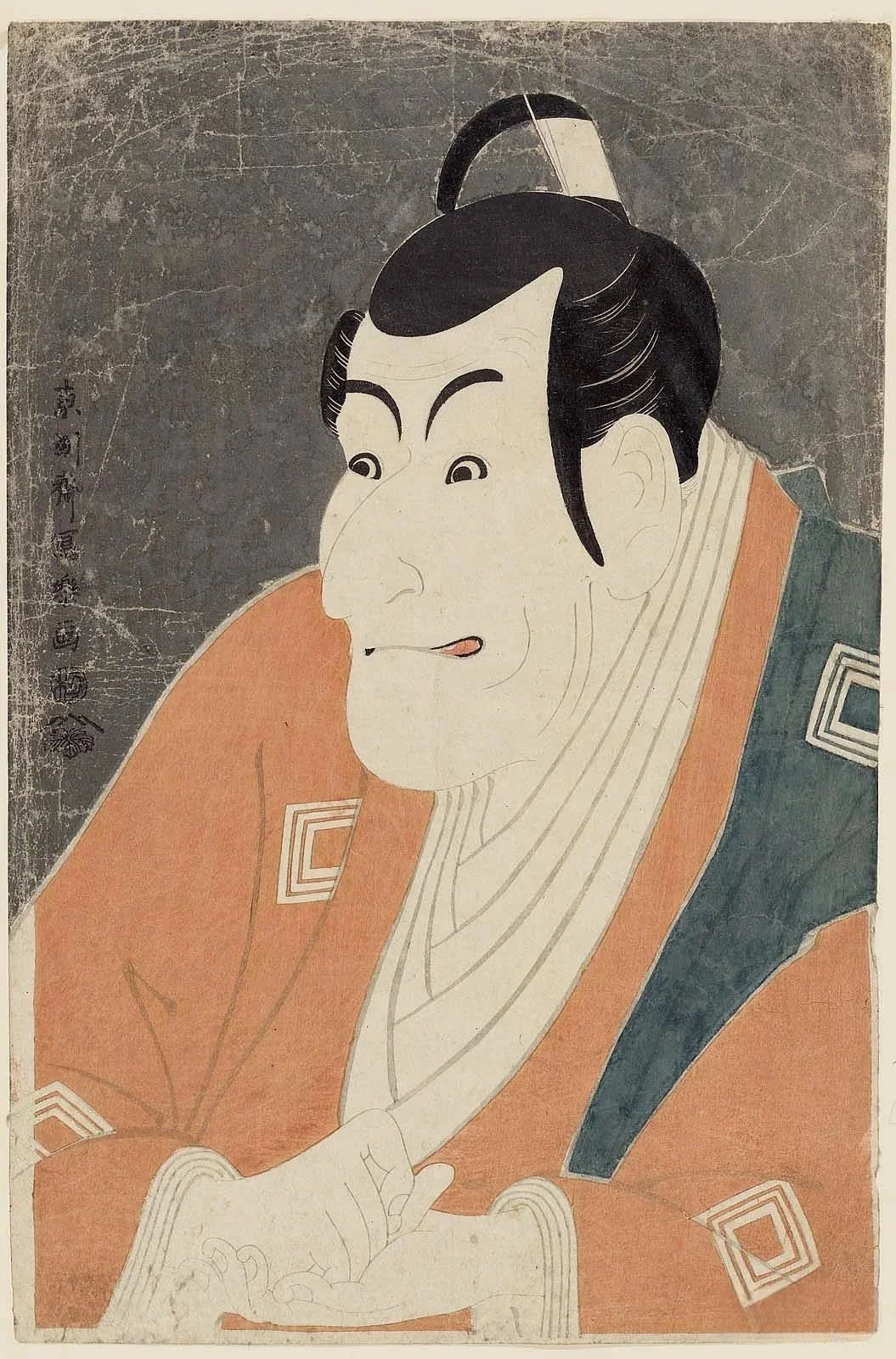
Actor Ichikawa Ebizo as Takemura Sadanoshin;Toshūsai Sharaku; 1794; Museum of Fine Arts, Boston
03. One Era Fades, Another Begins
Sharaku's disappearance marked the end of one remarkable chapter, but ukiyo-e was fast evolving.
As the nineteenth century dawned, Edo was changing rapidly. The city's population continued to grow, commerce flourished, and ordinary townspeople enjoyed greater prosperity than ever before. Their interests became increasingly diverse, and ukiyo-e evolved alongside them.
Publishers were quick to recognize these changing tastes.
Beautiful women and Kabuki actors remained enduring favorites, but they were no longer enough on their own. People wanted travel, adventure, history, fashion, famous places, ghost stories, legendary heroes, and scenes from everyday life. Ukiyo-e responded with remarkable versatility, constantly reinventing itself to reflect the interests of a changing society.
By the close of the eighteenth century, ukiyo-e had been transformed. What had begun as modest monochrome prints had grown into a vibrant, mass-produced art form. New techniques, new subjects, and a succession of remarkable artists had reshaped not only the appearance of ukiyo-e, but also the way ordinary people experience art – and would for literally centuries to come.
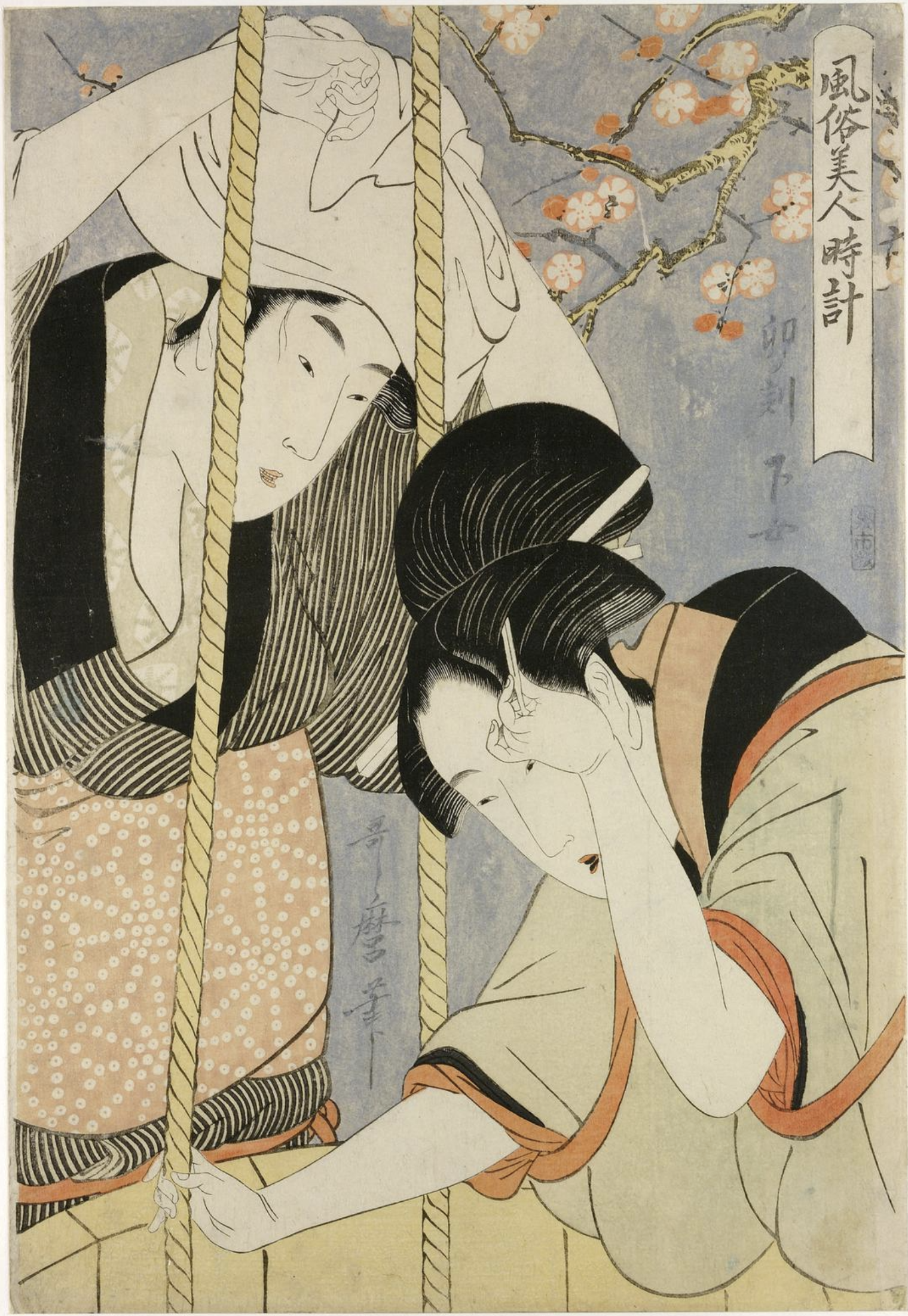
“Hour of the Hare [6am], Servant Women” from the series Customs of Beauties Around the Clock; Kitagawa Utamaro; 1795-1800; The British Museum